World
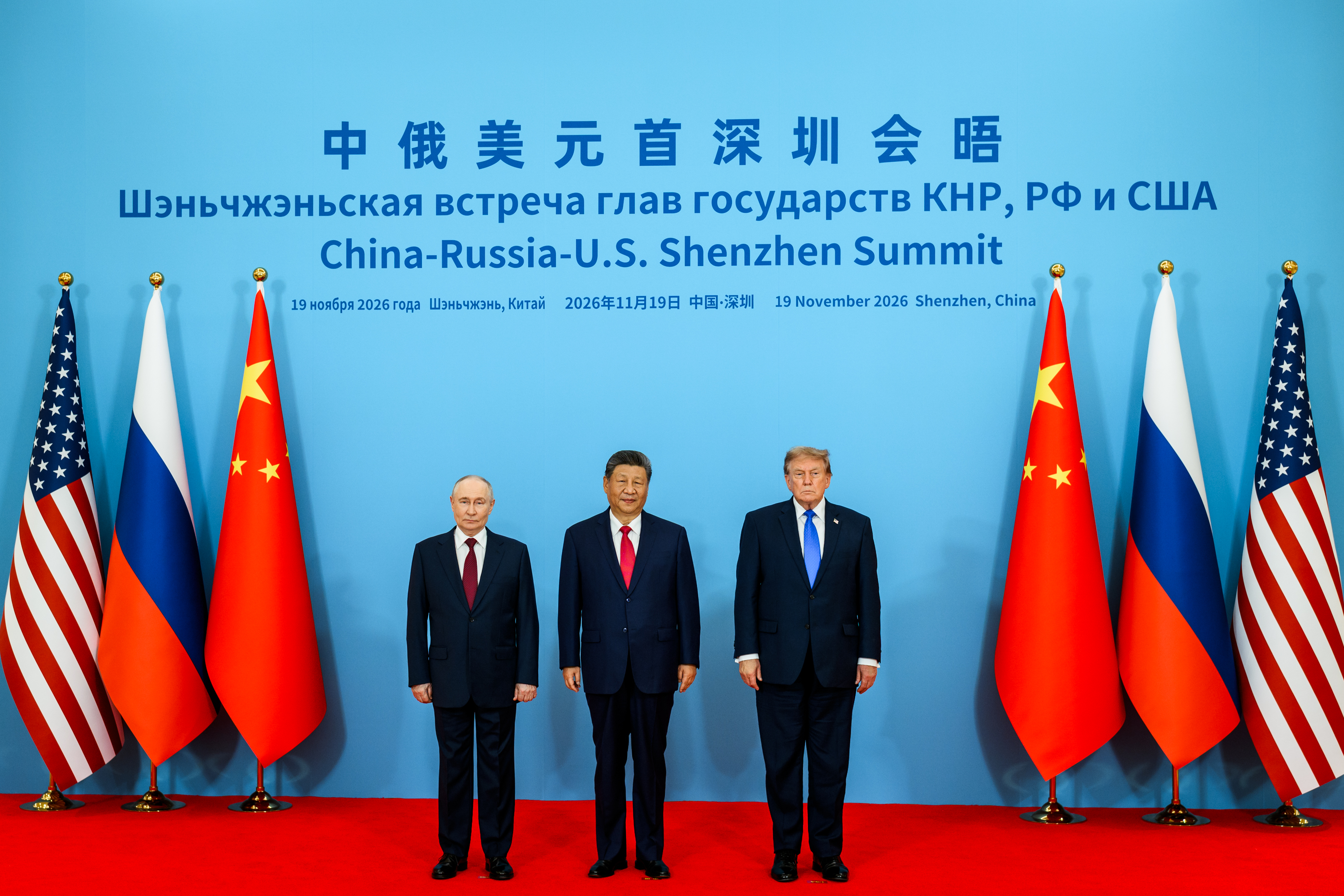
Trump, Xi and Putin Sign Peace Declaration in Shenzhen After 90-Minute Trilateral
Trump, Xi and Putin signed a four-point Declaration Toward Peace after their first trilateral in Shenzhen, but it says nothing on Ukraine or Iran.
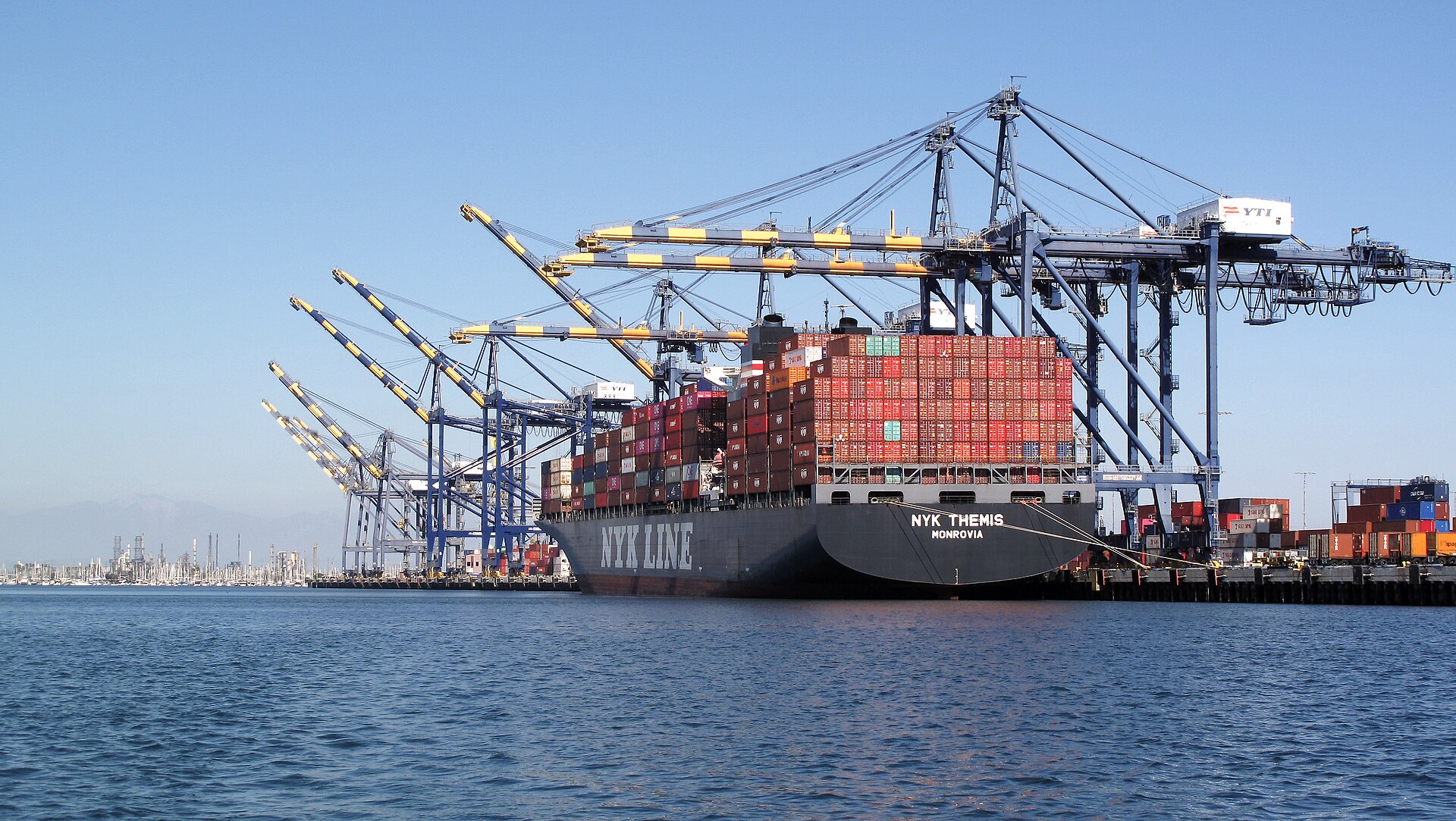
TL;DR — the direct answer: The Trump administration on Wednesday, 25 November 2026, proposed new tariffs on 14 major trading partners, including China, the European Union, Japan, South Korea, Taiwan, India and Vietnam, in a move aimed at what Washington calls structural excess industrial capacity. The duties follow an eight-month Section 301 investigation into 16 economies that concluded each of the 14 had acted in ways that burden or restrict American commerce, largely by building factory capacity far beyond what market demand would support, often with government subsidies and inputs from non-market economies. The proposed rates run from up to 15 percent for the European Union, Japan, South Korea, Switzerland and Taiwan, to up to 18 percent for five Southeast Asian economies, up to 25 percent for India and up to 35 percent for Vietnam, with China facing a new 20 percent levy on top of roughly 25 percent in tariffs left over from President Donald Trump's first term. The duties are proposals only: a public comment period runs until 5 January 2027, with hearings starting on 25 January, so nothing takes effect before then. Markets reacted sharply, with S&P 500 futures down 2.1 percent and Nasdaq 100 futures down 3.1 percent when the news broke, before a volatile session in which stocks fell steeply and then recovered much of the ground.
What happened: The Office of the United States Trade Representative, known as USTR, announced the proposed duties on Wednesday after completing its investigation into alleged excess manufacturing capacity among America's trading partners. The probe was launched on 11 March 2026, when USTR self-initiated Section 301 investigations under the Trade Act of 1974 into 16 economies, and it ran for eight months, including public hearings from 5 to 8 May at which nearly 140 witnesses testified and more than 1,070 written comments were received. On 25 November, USTR issued affirmative determinations in 14 of those investigations, each backed by an economy-specific report, and published proposed tariff action for public comment. The 14 economies are China, the European Union, Japan, South Korea, Taiwan, Switzerland, Bangladesh, Cambodia, Indonesia, Malaysia, Thailand, Singapore, India and Vietnam. No determination has been made yet for the other two economies investigated, Mexico and Norway. A senior American official said Washington had concluded that each of the 14 creates, sustains or contributes to structural excess capacity and production in manufacturing through acts, policies and practices that are unreasonable and burden or restrict United States commerce. USTR defines structural excess capacity as situations where countries promote production and capacity divorced from the realities of demand and market principles, including through industrial policies, subsidies and the use of components imported from non-market economies. The proposed tariffs would apply to all goods from each economy except for products listed in annexes to the Federal Register notices, and for economies other than China they would exempt goods already covered by Section 232 tariffs, including steel, aluminium and copper articles, vehicles and parts, wood products, patented pharmaceuticals and semiconductors.
Why it's trending: This is the Trump administration's biggest trade move since the Supreme Court struck down its earlier tariff regime in February 2026, and it lands on the eve of Thanksgiving, when markets were already on edge. The February ruling threw out the tariffs imposed under the International Emergency Economic Powers Act, known as IEEPA, and the administration has spent the months since rebuilding its tariff wall on sturdier legal foundations: Section 301 tariffs on forced labour practices in July, and now these excess-capacity tariffs, which together largely replace what the court removed. The scale is what makes the announcement so striking. The 14 economies cover most of America's major trading partners, including close allies such as Japan, the European Union and South Korea, and the duties would touch everything from cars and chemicals to clothes, electronics and solar panels. The market reaction showed how seriously investors took it: futures on the S&P 500 fell 2.1 percent and those on the Nasdaq 100 fell 3.1 percent when the reports first emerged, and Asian stocks tumbled the same day as the tariff threat hit sentiment. The announcement also matters because of the way it frames the argument. Washington is no longer presenting tariffs as a bargaining chip in a negotiation, or as a response to a single country's behaviour, but as a structural answer to a global problem: factories built with state support producing far more than the world can buy, with the surplus washing up in American markets at prices domestic producers cannot match. China is named as the worst offender, blamed most for flooding world markets with cheap exports, but the fact that allies are on the list too signals that the administration sees the problem as systemic rather than bilateral.
Background / context: The investigation's roots lie in a long-running American complaint that China, and increasingly other economies, have built industrial capacity with state support that has no connection to real demand. USTR's China report, the most extensive of the 14, covers aluminium, automotive, batteries, chemicals, consumer electronics, glass, machine tools, medical devices, non-ferrous metals, paper, plastics, power equipment, rail, robotics, semiconductors, ships, solar, steel, telecommunications, textiles, tyres and wind. For the European Union the highlighted sectors are automotive, chemicals and pharmaceuticals; for India they are pharmaceuticals and medical devices, steel, solar, and information and communications technology; for Vietnam, textiles, apparel and footwear, along with shipbuilding, cement and information technology. For every economy other than China, USTR also cited a failure to address global excess capacity, including through imports of inputs and foreign direct investment from non-market economies, and its Vietnam findings went further, citing the encouragement of, or failure to address, transshipment from other non-market economies. The proposed rates broadly track the deals the administration has struck with trading partners over the past two years. The European Union's rate is fixed at 15 percent, matching its reciprocal trade agreement, and lower rates are possible elsewhere if agreements are finalised: Vietnam could fall to 20 percent, India to 17 percent, Singapore to 10 percent, and China to up to 10 percent for some goods. The administration has also held confidential consultations with each of the economies investigated, and the comment period is a formal part of the Section 301 process rather than a formality: written comments and requests to appear at the hearings are due by 5 January 2027, and the public hearings begin on 25 January 2027 at the United States International Trade Commission.
What we know / what's unconfirmed: Confirmed: USTR proposed additional tariffs on 14 economies on Wednesday, 25 November 2026, after an eight-month Section 301 investigation into 16 economies launched on 11 March; the proposed rates are up to 15 percent for the EU, Japan, South Korea, Switzerland and Taiwan, up to 18 percent for Bangladesh, Cambodia, Indonesia, Malaysia and Thailand, up to 20 percent for Singapore and China, up to 25 percent for India and up to 35 percent for Vietnam; no determination has been made yet for Mexico or Norway; written comments are due by 5 January 2027 and public hearings begin on 25 January 2027; and a senior official said implementation could be pushed into January. Two details in the original brief need correcting. First, the brief said the highest rates hit China: Vietnam's proposed new rate of 35 percent is the highest of the 14, and China's 20 percent is the highest total burden only because it sits on top of roughly 25 percent in tariffs from Trump's first term. Second, the brief said Nasdaq 100 futures fell 3.2 percent: Reuters reported them down 3.1 percent at the announcement, with S&P 500 futures down 2.1 percent. What remains unconfirmed is the final shape of the duties. These are proposals, not tariffs in effect, and the rates, scope and timing may all change after the comment period and hearings. It is also not clear how the affected economies will respond: the European Union, Japan and others have agreements with Washington that set expectations, but none has yet said publicly whether it will accept the new duties, challenge them, or retaliate. The administration has not said when the tariffs would take effect, only that the process could push implementation into January.
What happens next: The immediate next step is the public comment process. Businesses, importers, manufacturers and foreign governments have until 5 January 2027 to file written comments and request to appear at the hearings, which begin on 25 January 2027 at the International Trade Commission. USTR will then finalise the duties, and a senior official said that could push implementation into January. In the meantime, companies that import from the 14 economies will be recalculating their costs and supply chains, and some may accelerate shipments to beat any effective date, a pattern seen in earlier tariff rounds. The political calendar matters too: the duties arrive as the administration rebuilds the tariff regime the Supreme Court struck down, and the Section 301 route, with its formal findings, hearings and comment periods, is designed to be harder to challenge in court than the emergency-powers route was. Whether the duties survive contact with the affected economies is another question. Several of the 14, including the European Union and Japan, have reciprocal trade agreements with Washington that were supposed to settle tariff levels, and the new proposals test whether those deals hold. China, which faces the heaviest combined burden, has not yet responded publicly. For markets, the announcement adds a fresh source of volatility to a November that has already been brutal for technology stocks: the S&P 500 fell as much as 3.2 percent intraday on Wednesday before closing down just 0.25 percent, and the Nasdaq fell as much as 4.6 percent before closing down 0.62 percent, with hot inflation data and a strong growth reading hitting on the same day, so the tariff news was one of several forces moving prices.
Q: What did the US propose on 25 November?
A: The Office of the United States Trade Representative proposed new Section 301 tariffs on 14 economies, including China, the European Union, Japan, South Korea, Taiwan, India and Vietnam, to combat what it calls structural excess industrial capacity. The duties follow an eight-month investigation into 16 economies launched on 11 March 2026. They are proposals only, and nothing takes effect until after a public comment period and hearings.
Q: Which countries face the highest proposed tariffs?
A: Vietnam faces the highest proposed new rate, at up to 35 percent, followed by India at up to 25 percent. China faces a new levy of 20 percent, but that sits on top of roughly 25 percent in tariffs imposed during President Donald Trump's first term, giving China the highest total burden. The European Union, Japan, South Korea, Switzerland and Taiwan face up to 15 percent, and five Southeast Asian economies face up to 18 percent.
Q: What is structural excess capacity?
A: USTR defines it as production and capacity persistently in excess of what would exist under market-oriented conditions, created, sustained or contributed to by government policies or interventions. In practice it means factories built with state support, subsidies and inputs from non-market economies, producing far more than real demand can absorb, with the surplus exported at prices domestic producers cannot match.
Q: Why were Mexico and Norway not included?
A: USTR investigated 16 economies but made affirmative determinations for only 14 of them. It has not yet made a determination for Mexico or Norway, and no tariffs were proposed on goods from either country for the time being. The investigation into those two economies remains open.
Q: When could the tariffs take effect?
A: Not before the formal process runs its course. Written comments and requests to appear at the public hearings are due by 5 January 2027, and the hearings begin on 25 January 2027 at the United States International Trade Commission. A senior American official said that could push implementation into January, and the rates and scope may change after the comment period.
Sources: Reuters — US proposes new tariffs on 14 trading partners to fight excess factory capacity, The Straits Times — US proposes tariffs on 14 trading partners, Holland & Knight — USTR Proposes Tariffs Following 14 Section 301 Manufacturing Excess Capacity Investigations, Thompson Coburn — USTR finds Structural Excess Capacity Practices in 14 Economies, Proposes New Section 301 Tariffs, and Korea Times — Nasdaq sinks about 4% as AI rout, fresh Trump tariffs spook Wall St.
Trump, Xi and Putin signed a four-point Declaration Toward Peace after their first trilateral in Shenzhen, but it says nothing on Ukraine or Iran.
The Dow fell 561 points and the S&P 500 dropped for a fifth straight day, slipping below its 200-day moving average as Nvidia gave up its earnings gains.
US stocks fell on 10 November after October inflation came in hotter than expected, with the Dow down 162 points and Nvidia sliding 6%.