World
Trump, Xi and Putin Hold First-Ever Trilateral Talks in Shenzhen Today
Trump, Xi and Putin hold the first-ever trilateral meeting of the three leaders in Shenzhen today, with nuclear arms, Ukraine and Iran on the agenda.
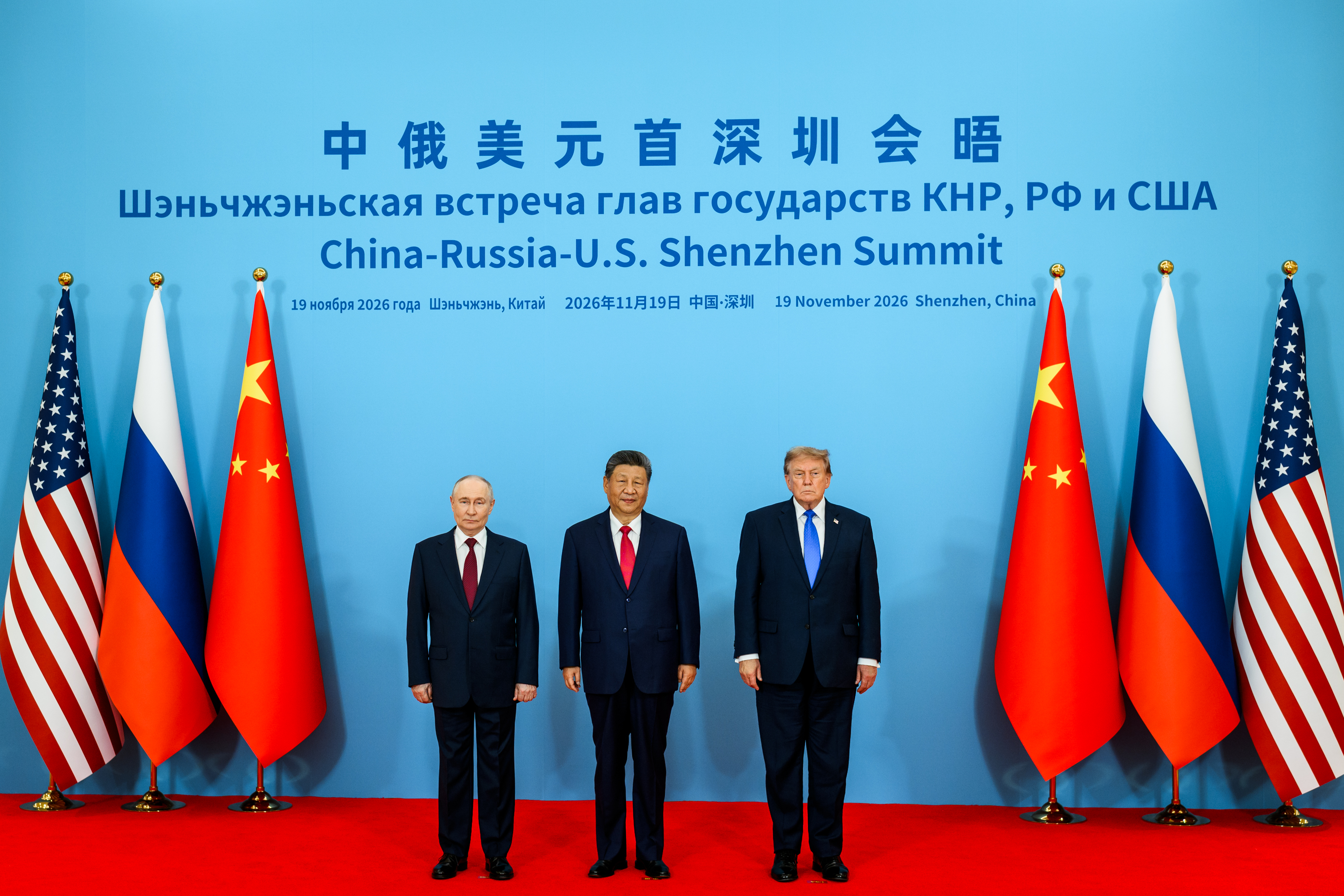
TL;DR — the direct answer: Donald Trump, Xi Jinping and Vladimir Putin signed a four-point Declaration Toward Peace on Thursday, 19 November, after the first-ever trilateral meeting of the three leaders, held at the Kylin Villa in Shenzhen. The talks ran for about 90 minutes, longer than the hour the Kremlin had expected. The declaration commits the three countries to reforming the United Nations, increasing the production and supply of refined petroleum products, upholding the immunity of state officials from international courts, and holding a dialogue on reducing nuclear risks, reaffirming that a nuclear war cannot be won and must never be fought. But it says nothing about Ukraine or Iran, the two wars Trump said he raised with both leaders, sets no timetable for any talks, and promises no arms-control negotiations. Putin himself acknowledged afterwards that the declaration did not set ambitious goals. Hours later in Berlin, US envoy Jared Kushner told European allies that Russia is comfortable with security guarantees for Ukraine based on NATO's Article 5, a claim Moscow has not confirmed.
What happened: The day was sequenced the way China, as host, wanted it. Trump held a bilateral meeting with Xi at 12:45 p.m. local time, his third substantial meeting with the Chinese leader this year, and then sat down with Xi and Putin for the trilateral at 2:30 p.m. at the Kylin Villa, a lakeside state guesthouse in the wooded hills outside central Shenzhen. A separate bilateral meeting between Trump and Putin was also held. The three-way talks lasted about 90 minutes, according to USA Today, running past the hour the Kremlin had said to expect. The leaders then issued the joint declaration, titled the Russia-China-US Heads of State Declaration Toward Peace. Its four points are United Nations reform, more refined petroleum products on the market, a swipe at the International Criminal Court that says state officials' immunity must be upheld and the court must not abuse its power, and a dialogue on reducing nuclear risks and preventing proliferation. The context for that last point is stark: the United States and Russia each hold more than 5,000 nuclear warheads, and China more than 600, according to figures reported by AP. Putin told reporters afterwards that the declaration did not set ambitious goals and that nobody would be forced to comply with its decisions.
Why it's trending: No sitting leaders of the United States, China and Russia had ever met three-way before, and the meeting was staged as history: the first trilateral of the world's three biggest nuclear powers, on Chinese soil, in the middle of two wars. That staging is also what made it so argued about. Critics compared it to the 1945 Yalta conference, where the wartime allied leaders redrew the map of Europe, and warned that the three men might carve the world into spheres of influence, with Ukraine and Europe left outside the room. Germany's Chancellor Friedrich Merz called the meeting a photo op and warned that any deal made without Europe at the table would fail. Senate Foreign Relations Democrats, including Tim Kaine, had warned beforehand that the meeting must not become a convergence of would-be strongmen carving up the world. And Xi was visibly at the centre of it all: it was his summit, in his city, at his guesthouse, with both visitors coming to him. The gap between the billing and the paper is the story of the day: a historic photograph, and a declaration that commits its signatories to very little.
Background / context: The trilateral was first proposed by Trump, who has promoted his relationships with Xi and Putin as a route to nuclear arms control and to ending the wars in Ukraine and Iran. The last time Trump and Putin met, in Alaska last year, the talks failed to produce a deal on Ukraine. The bilateral US-Russia treaty on atomic weapons expired in February, and China has consistently rejected joining trilateral arms reduction talks, arguing that its arsenal is far smaller than the other two. Xi and Putin held their own bilateral talks on Wednesday, their fifth meeting of the year, and describe their countries' partnership as having no limits. The meeting came two days after the Quad summit in Manila, where Trump met the leaders of India, Japan and Australia, and with a fragile US-China trade detente due to expire in January. The APEC summit itself continued around the trilateral, with its own leaders' statement limited to pledges on trade, technology innovation and economic growth.
What we know / what's unconfirmed: Confirmed: the three participants, the date of Thursday, 19 November, the venue at the Kylin Villa in Shenzhen, the start time of 2:30 p.m. local time, the roughly 90-minute duration, the four points of the Declaration Toward Peace, the statement that a nuclear war cannot be won and must never be fought, Putin's remark that the declaration set no ambitious goals, and the absence of any mention of Ukraine or Iran in the text. Also confirmed: the Trump-Xi bilateral before the trilateral, the separate Trump-Putin bilateral, and Kushner's remarks in Berlin, where he said Russia is comfortable with the idea of security guarantees for Ukraine based on Article 5, that Trump is open to the idea but that it has to be in America's interest and part of a broader security package, and that Trump called into the Berlin talks after his meeting with Putin. Two points need flagging. First, the Kremlin said before the meeting that it would last no more than an hour, but it ran about 90 minutes, so the hour was an expectation, not the result. Second, the brief for this story said Sen. Tim Kaine called the meeting something that made him a little sick, but that quote could not be verified in two separate searches and is not used here; Kaine's verified position is as a signatory of the Senate Foreign Relations Democrats' statement warning against spheres of influence. Unconfirmed: Kushner's claim about Russia, which Moscow has not commented on; any timetable for the promised nuclear-risk dialogue; and whether Trump will meet North Korean leader Kim Jong-un during his visit to China, which remained unresolved.
What happens next: The centre of gravity now moves to Berlin, where the Coalition of the Willing, about 40 European leaders with President Volodymyr Zelenskyy, met on Thursday to work on Ukraine's postwar security arrangements. Kushner said Washington and Europe are moving much closer on a potential peace agreement, and that Trump wants Europe at the table, but the last round of talks, in Abu Dhabi last week, produced no major breakthrough, and Putin has vowed to retaliate against Ukraine for three aerial attacks this week on the Kerch Bridge. The test of Shenzhen will be whether the promised dialogue on nuclear risks ever gets a date, and whether the Berlin process produces anything firmer than the declaration. For now, the three leaders have a photograph and a piece of paper that says peace, and the two wars it does not mention are still being fought.
Q: What did Trump, Xi and Putin agree in Shenzhen?
A: They signed a four-point Declaration Toward Peace: reforming the United Nations, increasing the production and supply of refined petroleum products, upholding the immunity of state officials from international courts, and holding a dialogue on reducing nuclear risks and preventing proliferation. It reaffirms that a nuclear war cannot be won and must never be fought.
Q: How long did the trilateral meeting last?
A: About 90 minutes, according to USA Today. The Kremlin had said beforehand that it was expected to last no more than an hour, so the meeting ran longer than planned. It began at 2:30 p.m. local time at the Kylin Villa in Shenzhen.
Q: Why is Ukraine not mentioned in the declaration?
A: The declaration says nothing about Ukraine or Iran, even though Trump said he raised both wars with the two leaders. Ukraine and Europe had no seat at the meeting, which is why European leaders gathered in Berlin the same day, with President Zelenskyy, to discuss Ukraine's postwar security.
Q: What did Jared Kushner say in Berlin?
A: The US envoy said Russia is comfortable with the idea of security guarantees for postwar Ukraine based on NATO's Article 5, under which an attack on one member is treated as an attack on all, and that Trump is open to the idea as part of a broader security package. Russia has not commented on his claim.
Q: What happens next on nuclear arms?
A: The three leaders promised only a dialogue on reducing nuclear risks, with no timetable and no commitment to negotiate a trilateral arms reduction treaty, which Trump has pushed since his first term and China has consistently rejected. Whether that dialogue ever gets a date is now the open question.
Sources: GMA News — Trump, Xi and Putin release 'peace declaration' from unprecedented summit, The Indian Express — Trump-Xi-Putin APEC summit: 5 key takeaways from historic meeting, USA Today — Trump, Putin, Xi hold first-ever three-way talks, and Al Jazeera — Kushner says Russia 'comfortable' with NATO-like guarantees for Ukraine.
Trump, Xi and Putin hold the first-ever trilateral meeting of the three leaders in Shenzhen today, with nuclear arms, Ukraine and Iran on the agenda.
A US official said on 9 November that Russia and Ukraine are privately showing some flexibility on territory ahead of two days of US-mediated peace…
President Donald Trump said on 9 November that US military action against Iran is not necessary and the war is effectively over, as the House prepares…