Tech
How to Spot an AI-Generated Image: 7 Checks That Still Work in 2026
AI images now fool most people at a glance. Seven checks that still work in 2026: reverse search, watermarks, credentials and the visual tells that work.
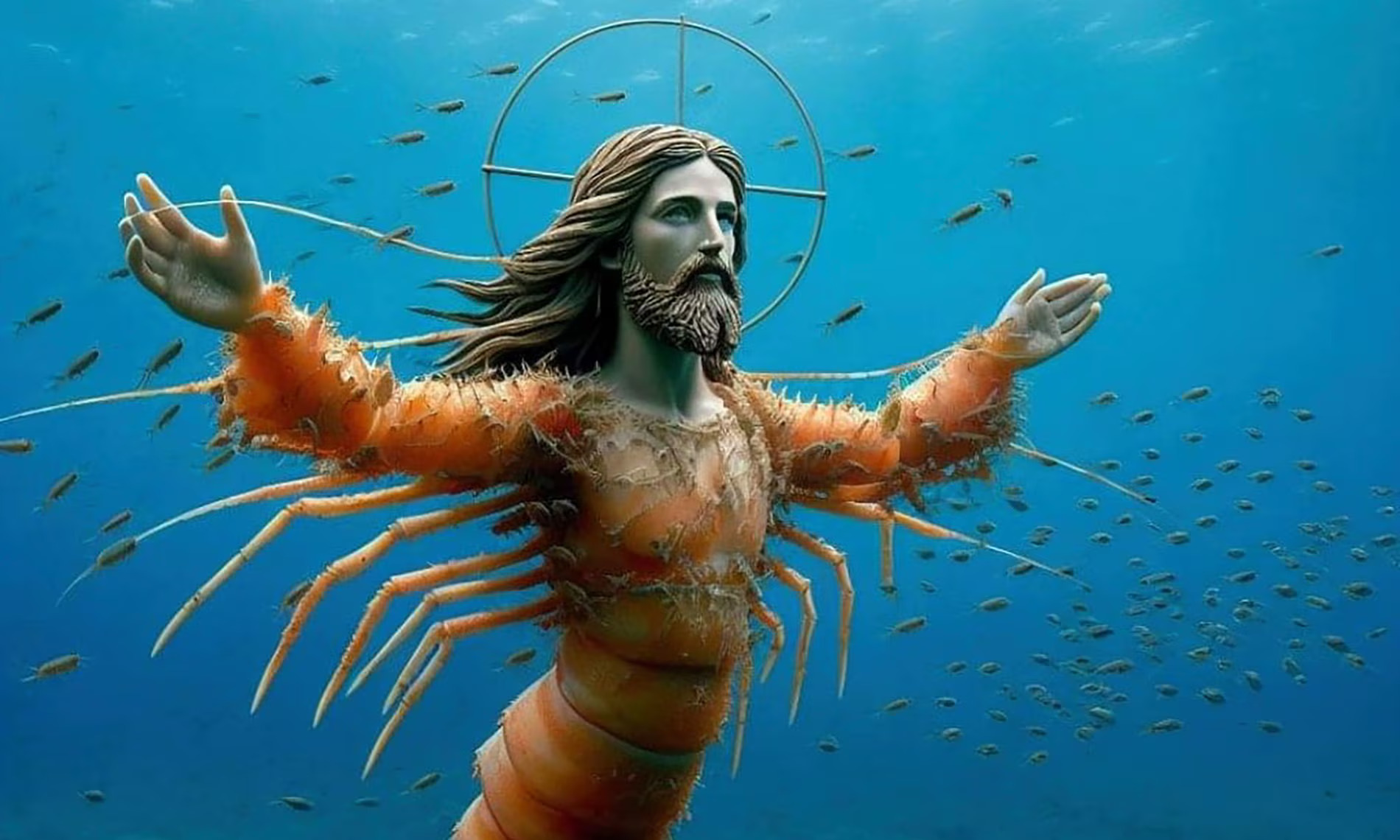
TL;DR — the direct answer: Slop is low-quality content made by AI in bulk — and Merriam-Webster made it the 2025 Word of the Year. The test is not 'was AI involved' but three things together: it looks finished and means nothing, it took almost no effort to make, and it was pushed at people who never asked for it. The famous example is Shrimp Jesus, a picture of Jesus made of shrimp that went viral on Facebook in 2024. Most slop is not a joke, though: it is engagement farming, fake news that looks real, and junk books and reports that waste your time. The fix starts with not engaging — every like and comment is the fuel that pushes it to the next feed.
What happened: In December 2025, Merriam-Webster named 'slop' its Word of the Year. Its definition: 'digital content of low quality that is produced usually in quantity by means of artificial intelligence.' The word itself is old — it meant soft mud in the 1700s and food waste in the 1800s — but in 2025 it found its subject. Merriam-Webster's own list of the year's flood says it plainly: 'absurd videos, off-kilter advertising images, cheesy propaganda, fake news that looks pretty real, junky AI-written books, workslop reports that waste coworkers' time … and lots of talking cats.' The word stuck because everyone had already seen plenty of it. The flood did not start in 2025, though. It started the moment AI image generators arrived in 2022, when online communities needed a name for the wave of low-effort AI pictures filling their feeds — and 'slop', the word for pig feed, was waiting.
What counts as slop — and what doesn't: Not everything AI-made is slop, and that distinction is the whole point. Run three tests together. 1. Low quality with a finished look. It reads or looks polished at a glance and falls apart on a second look: facts that are slightly wrong, a story that says nothing, a picture with details that don't quite hold together. Researchers call this 'superficial competence' — a veneer of quality with no substance underneath. 2. Almost no effort to make. A human could not have produced it that fast, in that volume. One page posting dozens of pictures a day is not an artist with a fast workflow; it is a machine with a prompt. 3. Thrust on people who never asked for it. This is the test programmer Simon Willison gave when he popularised the term in May 2024: 'If it's mindlessly generated and thrust upon someone who didn't ask for it, slop is the perfect term for it.' He meant it the way 'spam' named unwanted email. Flip the tests and you get what is NOT slop: a picture or draft you asked an AI tool to make, then checked, edited and stood behind. AI as a tool, with a human doing the thinking, is not slop. AI as a firehose, with nobody checking anything, is.
How to spot it in your feed: Seven signs, in the order that catches the most. 1. The caption begs for a reaction. 'Made it with my own hands!', 'Type Amen', 'This is my first cake, I will be glad for your marks' — the caption is not describing the picture, it is fishing for comments, because every comment tells the platform to show the post to more people. 2. The picture is absurd in a very specific way. Jesus made of shrimp, a crab being worshipped by other crabs, a dog rescuing a child from a plane crash — combinations no human would photograph, chosen because bizarre stops the scroll. 3. The page posts constantly. Dozens of images a day, all in the same glossy style, no author, no process, no mistakes admitted. Real creators post less and show their work. 4. The details melt when you zoom in. Hands, text, background signs, earrings that don't match — the same tells from the AI-images explainer, still worth a glance, though the newest models get more of them right. 5. The same formula, over and over. Houses and cabins, wood carvings, children with paintings, Jesus in every material — the Stanford and Georgetown researchers found the same subjects repeated across 125 spam pages, because the same prompts get reused. 6. Nobody will own it. No credit, no source, no 'made with' label, and the page's name gives nothing away. 7. It feels slightly too perfect and slightly wrong at the same time. Too smooth, colours too saturated, light that doesn't quite come from anywhere. If a picture makes you pause and you cannot say why, that pause is the tell — check the source before you share it.
Why it matters: The joke images are the least of it. The same machine that makes Shrimp Jesus makes fake news that looks real, propaganda dressed up as photographs, and AI-written books sold as if a human wrote them. In 2024, researchers at Stanford and Georgetown found that in one quarter of 2023, a single post with an AI image reached 40 million views — one of Facebook's 20 most-viewed posts — and that many people commenting on these images did not realise they were synthetic. That is the real damage: not that a funny picture exists, but that people start believing what they see, and then stop believing anything at all, including real photos. There is money in it too. Engagement is the business model — a page with a big, reactive audience can be sold, or used to push links to content farms and scam shops. And at work it has its own name now: 'workslop', the AI-written reports and documents that look finished, say nothing, and waste the next person's afternoon. The cost is attention, trust, and time — none of which come back.
Background / context: The term grew up in public. 'Slop' was already internet slang for low-effort culture by the 2010s; after the image generators of 2022 it attached itself to AI output, and in May 2024 Simon Willison's blog post gave it a definition the press could quote. The Shrimp Jesus wave followed in March 2024, and the Stanford–Georgetown study of 125 Facebook pages (published as a preprint that March, peer-reviewed in August 2024) gave the phenomenon numbers: a median of 81,000 followers per page, hundreds of millions of engagements, and one crab-Jesus post alone drawing 209,000 reactions and more than 4,000 comments. The dictionaries then caught up in a rush: Cambridge added a slop definition in June 2025, Macquarie chose 'AI slop' as its word of the year, the American Dialect Society picked 'slop', and Merriam-Webster closed the year by making it the 2025 Word of the Year. Academics are still arguing about a formal definition — a 2026 paper notes the term has 'so far resisted formal definition' — but the working shape is agreed: superficial competence, asymmetric effort, mass producibility.
What we know / what's unconfirmed: Confirmed: the definition Merriam-Webster chose, the Shrimp Jesus origin in March 2024, the Stanford–Georgetown numbers, and the three-test distinction between slop and ordinary AI help. Confirmed too: there is no agreed academic definition, and no detector or watermark can reliably sort slop from the real thing at scale — the same limits as the AI-images explainer. Unconfirmed: how much of any given feed is slop — the figures that circulate are single-source and were left out of this article for that reason. Also unconfirmed: whether labelling will fix it. Platforms are adding AI labels and the EU now requires deepfake disclosure, but most slop pages simply do not label their posts, and a label only helps if people look at it.
What happens next: The single most effective thing is also the least satisfying: do not engage. Do not like it, do not comment 'fake', do not share it to laugh at it — every interaction is a signal to the algorithm to show it to more people, and outrage counts the same as delight. Instead: hide the post, mute or unfollow the page, and report it as spam or misleading where the platform allows it. If a picture claims to show a real event, reverse-image-search it before sharing — the same check as the AI-images explainer. And apply the three tests to your own output too: if an AI tool drafted something for you, read it, check it, and cut the parts that say nothing before it goes out under your name. The feed will not clean itself up. The habit that starves slop is the same one that stops a scam text: pause, check the source, and don't feed the machine.
Q: What is AI slop?
A: Low-quality content made by AI in bulk — images, video, text or audio that looks finished but means little, produced with almost no human effort and pushed at people who never asked for it. Merriam-Webster defines it as 'digital content of low quality that is produced usually in quantity by means of artificial intelligence' and made it the 2025 Word of the Year.
Q: What is Shrimp Jesus?
A: A viral AI-generated image from March 2024 showing Jesus made of shrimp, posted on Facebook. It became the famous example of AI slop. Researchers at Stanford and Georgetown documented the pages behind such images — 125 pages, each posting at least 50 AI pictures, with a median of 81,000 followers — and found many commenters did not realise the images were synthetic.
Q: Is all AI-generated content slop?
A: No. The test is three things together: low quality, mass-produced, and thrust on people who never asked for it. Something you asked an AI tool to make, then checked and edited, is not slop. The word names unwanted, unchecked, bulk AI output — the way 'spam' names unwanted email.
Q: How do I stop seeing AI slop in my feed?
A: Don't engage with it — likes, comments and shares, even angry ones, all tell the algorithm to show it to more people. Hide the post, mute or unfollow the page, and report it as spam or misleading. Before sharing a dramatic image, reverse-image-search it to check where it really came from.
Sources: Merriam-Webster — Word of the Year 2025: Slop (published 14 Dec 2025), Associated Press — Merriam-Webster's 2025 word of the year is 'slop' (15 Dec 2025), Encyclopaedia Britannica — AI slop, Wikipedia — AI slop (term origin, Willison May 2024, dictionary adoptions), TechXplore — From shrimp Jesus to fake self-portraits (DiResta & Goldstein study, Stanford/Georgetown, 2024), The Guardian — Spam, junk … slop? The latest wave of AI behind the 'zombie internet' (19 May 2024, Shrimp Jesus image source), MINT Lab — AI Slop: Definitions and Normative Status (Kommers et al. 2026, Willison framing), and Columbia IGP — AI Slop and the Information Ecosystem (June 2026 report, no consensus definition).
AI images now fool most people at a glance. Seven checks that still work in 2026: reverse search, watermarks, credentials and the visual tells that work.

A text arrived out of nowhere with a link and a deadline. Seven checks that tell you in 30 seconds whether it's a scam — before you tap anything.
Italy has fined Meta 805 million euros after finding the Facebook app on Android phones accessed users' photos and videos without their specific consent.