COP31 Opens in Antalya as the UN Climate Chief Warns Fossil Fuel Prices Are Spreading Inflation 'Like a Cancer'
COP31 opened in Antalya on 9 November, as UN climate chief Simon Stiell warned fossil fuel 'cost chaos' is spreading inflation worldwide.
By Toijam Bimoljit Singh • 23 November 2026 • 8 min read
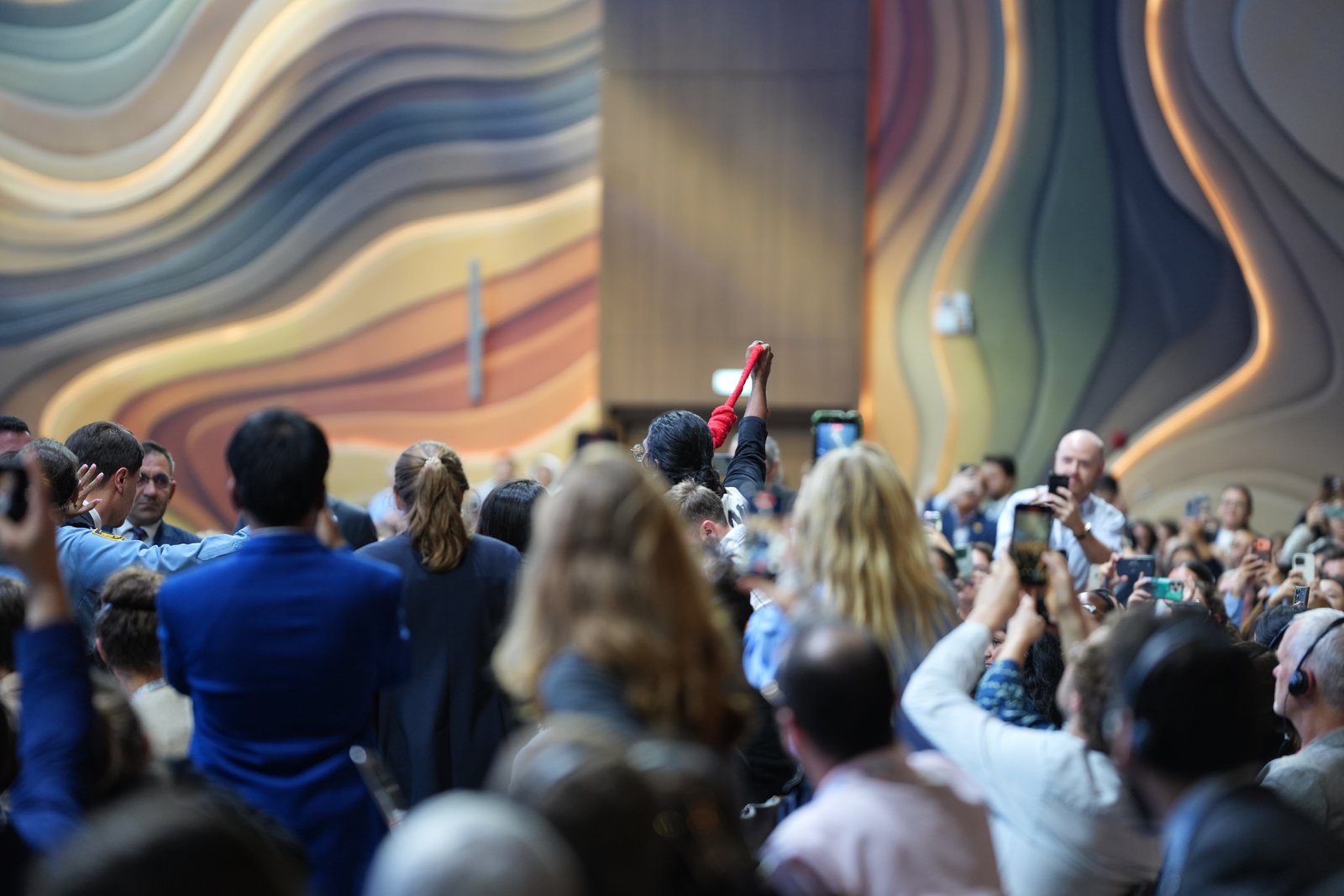
Photo: Xuthoria, CC BY-SA 4.0, via Wikimedia Commons — failure protests at COP31 in Antalya, Turkey, 21 November 2026. The photo is from the summit itself, a day before the collapse.
TL;DR — the direct answer: The COP31 climate conference in Antalya, Turkey, collapsed on Sunday, 22 November, as countries failed to agree an overarching deal after more than two weeks of negotiations that ran a record 44 hours into overtime. The breaking point was fossil fuels: the final draft of the so-called Antalya Pact made no mention of them at all, and the European Union, Panama, the Marshall Islands, Norway and others refused to endorse it. Ireland's climate minister Darragh O'Brien, speaking for the EU, said the bloc would not endorse a deal 'that does not even mention fossil fuels, which is the key driver of climate change'. COP31 president Murat Kurum acknowledged there was no consensus and the pact was not adopted, making this the longest COP in history and the first major breakdown of the UN climate talks since COP15 in Copenhagen in 2009. The United States did not take part in the talks, having pulled out of international climate action under President Donald Trump. The unresolved fights over fossil fuels and climate finance now carry over to COP32 in Addis Ababa in November 2027.
What happened: The conference was due to end on Friday, 20 November, but it stretched deep into the weekend as negotiators fought over the cover decision, the overarching agreement that sets out the summit's political message. The first draft, published on Monday, had called for 'the immediate transition away from fossil fuels in energy systems'. But every mention of fossil fuels was stripped out of each subsequent draft, despite a push by more than 100 countries to keep the language in, and the final text released on Sunday merely repeated the COP28 agreement in Dubai in 2023 to transition away from oil, gas and coal, without any new roadmap. At the closing plenary on Sunday, intended to approve the Antalya Pact, it became clear there was no consensus among the nearly 200 countries present. O'Brien, whose country holds the rotating EU presidency, told a chaotic session that the EU objected to the pact because it 'does not meet the moment', adding: 'We will not accept negotiating backwards in time. And we will not accept a COP that greenwashes fossil fuel.' Kurum then conceded the point: 'It is clear that there are parties in this hall who oppose this text. We recognise that there is no consensus on this document. Therefore, these decisions have not been adopted.'
Why it's trending: This is the first time in 17 years that a COP has ended without an overarching deal, and the symbolism is hard to overstate. The last failure of this kind was Copenhagen in 2009, a summit remembered as a humiliation for the climate process, and Antalya now joins it. The collapse also exposes the central contradiction of the talks: the world agreed in Dubai in 2023 to transition away from fossil fuels, yet three years later a draft deal could not even name them. The text's supporters included Russia, China and the Arab countries, while the EU, the UK, Panama, Switzerland, the Marshall Islands and the group of least developed countries rejected it, a split that maps almost exactly onto the divide between fossil-fuel producers and the countries most exposed to climate damage. The failure also came against a grim backdrop: the World Health Organization declared a state of emergency on the first day of the summit, citing heat, rainfall, wildfire smoke and malnutrition, and the draft would have acknowledged for the first time that global warming is on course to exceed the 1.5 degrees Celsius threshold countries had sought to preserve. Former US vice-president Al Gore called the failure 'an outrage', saying it was 'outrageous that a handful of petrostates have veto power over any mention of fossil fuels'.
Background / context: Expectations for COP31 were modest when it opened in Antalya on 9 November. No major decisions were on the official agenda, and the summit followed COP30 in Belem, Brazil, which last year marked the tenth anniversary of the Paris Agreement. But Turkey and Australia, the two co-presidents of the talks, had announced they wanted a framework decision covering the global energy crisis, attacks on science and the failure to hold warming to 1.5 degrees, and that text became the focus of the whole fortnight. The 194 delegations spent two weeks in the conference centre on the outskirts of Antalya, with the projected overshoot of 1.5 degrees confirmed by the science and the second Global Stocktake — the formal review of progress under the Paris Agreement — launched at the summit. Two issues dominated alongside fossil fuels. The first was climate finance: developing countries had sought a 120 billion dollar adaptation finance target by 2035, but the draft offered no such commitment, proposing only discussions on a pathway towards tripling adaptation support, a goal agreed at COP30. The second was carbon capture: the draft leaned on carbon-capture technologies, which campaigners said would let fossil-fuel production continue provided the carbon is captured before it reaches the atmosphere. 'Relying on carbon capture without phasing down fossil fuels is like trying to quit smoking without putting down the cigarettes,' said Matt Webb of the think tank E3G.
What we know / what's unconfirmed: Confirmed: COP31 ended on Sunday, 22 November, without the Antalya Pact being adopted, after running a record 44 hours past its scheduled close, according to Al Jazeera; Kurum said there was no consensus and the decisions were not adopted; the EU, Panama, the Marshall Islands, Norway, the UK, Switzerland and the least developed countries rejected the text, while Russia, China and the Arab countries supported it; the first draft called for an 'immediate transition away from fossil fuels in energy systems' and later drafts stripped out all mentions; more than 100 countries pushed to keep fossil-fuel language in; the draft would have acknowledged warming is on course to exceed 1.5 degrees and called for faster carbon-removal technology; developing countries sought a 120 billion dollar adaptation finance target by 2035 and the draft offered none; the US did not take part, having pulled out of international climate action under Trump; and COP32 will be held in Addis Ababa, Ethiopia, from 8 to 19 November 2027, with Ethiopia's foreign minister Gedion Timothewos as president-designate. Four points need flagging. First, the overtime: Al Jazeera says 44 hours, other reports say more than 40 hours. Second, the number of countries backing fossil-fuel language: CNN says more than 100, The Tribune says more than 130 called for a transition roadmap. Third, the word 'collapse' needs qualifying: the cover decision failed, but the summit did adopt other decisions, including a just transition mechanism, loss and damage and the global goal on adaptation, while the mitigation work programme, response measures and action for climate empowerment were rejected and deferred. Fourth, Friends of the Earth head Asad Rehman criticised the EU's rejection as hypocritical, saying Europe is expanding fossil fuels at home — that is his view, not an agreed fact.
What happens next: The calendar is already set, and the collapse did not touch it. The next formal session is the Bonn intersessional, from 7 to 17 June 2027, where the technical work resumes: the just-transition mechanism's governance, the Global Stocktake's technical assessment, and, if the presidencies choose, a fresh attempt at the cover-decision language that died in Antalya. The second Global Stocktake, launched at COP31, runs through 2027 and concludes at COP33 in 2028. Then comes COP32 in Addis Ababa from 8 to 19 November 2027, under an African presidency led by Gedion Timothewos, who told the closing session he wanted to 'restore hope, rebuild trust, and mobilize collective action'. Whether Addis can succeed where Antalya failed will depend on whether the fossil-fuel question is settled before the summit opens, not during it. Negotiators also face a choice flagged in the closing hours: convene a special meeting before next year's COP, or carry the unresolved disputes on fossil-fuel language, carbon capture and adaptation finance straight to COP32. For the countries already living with climate disasters, the wait is the point: as Rehman put it, the failure to adopt a deal has 'abandoned millions of people affected by climate-related disasters'.
Q: What happened at COP31?
A: The COP31 climate conference in Antalya, Turkey, ended on Sunday, 22 November, without an overarching deal. The final draft of the Antalya Pact made no mention of fossil fuels, and the EU, Panama, the Marshall Islands, Norway and others refused to endorse it. COP31 president Murat Kurum acknowledged there was no consensus and the pact was not adopted, after the talks ran a record 44 hours into overtime.
Q: Why did the deal collapse?
A: The breaking point was fossil fuels. The first draft had called for an 'immediate transition away from fossil fuels in energy systems', but all mentions were stripped from later drafts. The EU said it would not endorse a deal 'that does not even mention fossil fuels, which is the key driver of climate change'. Climate finance was the other sticking point: developing countries wanted a 120 billion dollar adaptation target by 2035, and the draft offered none.
Q: Is this the first time a COP has failed like this?
A: It is the first major breakdown since COP15 in Copenhagen in 2009. COP31 was also the longest COP in history. But the word 'collapse' needs qualifying: the overarching cover decision failed, while the summit did adopt other decisions, including a just transition mechanism, loss and damage and the global goal on adaptation.
Q: What happens next after COP31?
A: The next formal session is the Bonn intersessional from 7 to 17 June 2027, where the technical work resumes. COP32 follows in Addis Ababa, Ethiopia, from 8 to 19 November 2027, under president-designate Gedion Timothewos. The unresolved fights over fossil-fuel language, carbon capture and adaptation finance will carry over to Addis.
Q: Why was the United States not involved?
A: The United States did not take part in the talks. Under President Donald Trump, the US has pulled out of international climate action, so it was not among the nearly 200 countries negotiating in Antalya.
Sources: CNN — Global climate summit collapses as countries fail to agree on moving away from fossil fuels, Al Jazeera — COP31 talks break down as EU rejects deal without reference to fossil fuels, Le Monde — COP31: International community splits over phasing out fossil fuels and climate adaptation funding, The Tribune — COP31 ends in deadlock as fossil fuel divide, climate finance dispute derail final deal, and Carbon Brief Connect — Experts: Is there a precedent for events at COP31?.

COP31 opened in Antalya on 9 November, as UN climate chief Simon Stiell warned fossil fuel 'cost chaos' is spreading inflation worldwide.
11 November 20264 min read

Anthony Albanese was caught on a hot mic at COP31 joking with Chris Bowen about where to keep a mobile phone, and the clip has gone viral.
15 November 20265 min read

The International Court of Justice found Myanmar guilty of genocide against the Rohingya, the first such verdict against a state in its 80-year history.
20 November 20267 min read