LIVE
Trump, Xi and Putin Sign Peace Declaration in Shenzhen  •  Anthropic Soars Then Slides on Nasdaq Debut  •  White House Ousts Cyber Chief After a Week of Outages  • 
World

ICJ Finds Myanmar Guilty of Genocide Against the Rohingya in Historic First Verdict

By Toijam Bimoljit Singh • 20 November 2026 • 7 min read

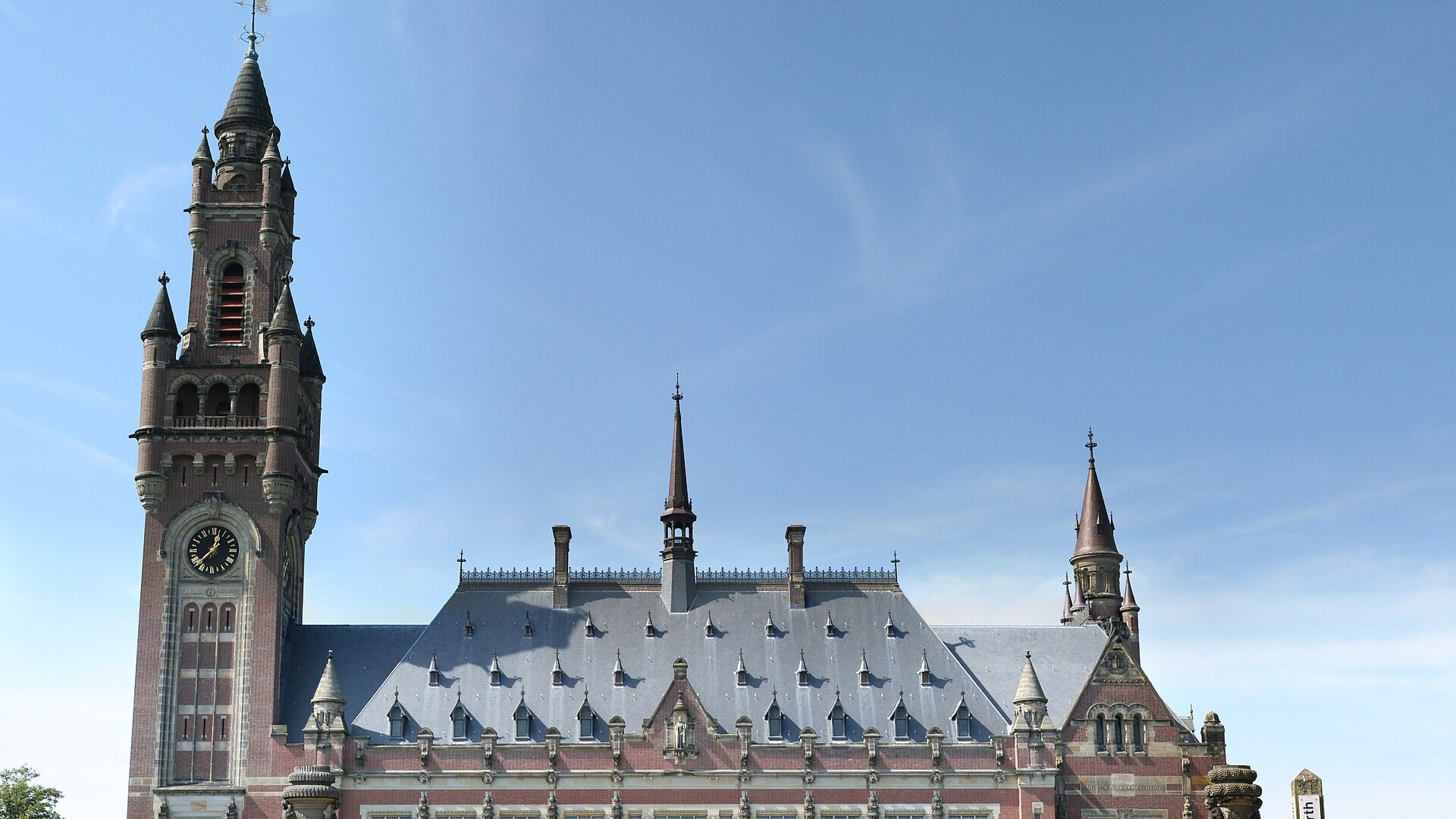
The Peace Palace in The Hague, home of the International Court of Justice, seen in a wide shot under a clear blue sky

Photo: Iamthestig, CC BY-SA 3.0, via Wikimedia Commons — the Peace Palace in The Hague, photographed 19 August 2009. The photo is from an earlier date, not the verdict itself.

TL;DR — the direct answer: The International Court of Justice has found Myanmar guilty of genocide against the Rohingya, in the first verdict of its kind in the court's 80-year history. Delivering the judgment in The Hague on Thursday, 19 November, ICJ President Yuji Iwasawa said: The Republic of the Union of Myanmar has committed genocide against the Rohingya group in northern Rakhine State. The court found that Myanmar's security forces killed around 10,000 Rohingya in so-called clearance operations in 2017, committed widespread sexual violence and extreme violence against children, and systematically destroyed Rohingya villages before replacing their inhabitants with non-Rohingya residents. The judges ruled that the only reasonable inference was that Myanmar intended to destroy the Rohingya population, in whole or in part. The court ordered Myanmar to allow the safe, voluntary and dignified return of those who fled, to investigate and punish those responsible, and to pay compensation. In Cox's Bazar in Bangladesh, now the world's biggest refugee camp, hundreds of Rohingya watched the verdict on a giant screen, many breaking down in tears.

What happened: The verdict was read out over three hours in the court's Great Hall of Justice in The Hague, in a 191-page judgment that took seven years to reach. By a 9-6 decision of the 15-judge panel, the court found that Myanmar had committed genocide and violated the 1948 Convention on the Prevention and Punishment of the Crime of Genocide, the treaty drawn up after the Second World War and the Holocaust. The judges found Myanmar responsible for three of the five categories of genocidal acts listed in the Convention, and for six violations of the treaty overall. The evidence, they said, supported the estimate that about 10,000 Rohingya were violently killed during the clearance operations, and they described the destruction of villages as systematic. Crucially, the court ruled that genocidal intent can be inferred from the context and pattern of the crimes, even without a direct written order or admission, a point the judges treated as central to the case. The ruling is final and cannot be appealed, and it is binding on Myanmar under international law.

Why it's trending: This is the first time in the history of the World Court, which was established in 1945, that its judges have found a state responsible for committing genocide. International courts have found individuals guilty of genocide before, after the Holocaust and in Rwanda and the former Yugoslavia, but never a state itself. That makes the ruling a landmark in international law, and one that will be cited in every genocide case that follows, including the case brought by South Africa against Israel, which is also before the court. For the Rohingya, one of the world's most persecuted minorities, the verdict is the first formal recognition that what happened to them in 2017 was genocide, not a counter-insurgency operation that went too far. UN Secretary-General Antonio Guterres welcomed the ruling. Myanmar had not responded as of Thursday evening, and the question now is whether a military regime that has ignored international pressure for years will pay any attention to a court it cannot be forced to obey.

Background / context: The case was brought by The Gambia in 2019 under the Genocide Convention, which allows any state party to bring a case against another state it believes has breached the treaty. It concerned the Myanmar military's crackdown in northern Rakhine State in 2017, which drove more than 700,000 Rohingya, a mostly Muslim minority, across the border into Bangladesh. The Hindu puts the number who fled at more than 700,000, while Al Jazeera puts it at more than 730,000. Most of them remain in Cox's Bazar, in camps that have become the world's largest refugee settlement, with little prospect of return while Myanmar's military remains in power and the Rohingya remain stripped of citizenship. Myanmar's defence was that the 2017 campaign was a legitimate operation against insurgents who had attacked police posts. The court rejected that defence outright, finding that the scale, pattern and targeting of the violence could not be explained as a response to an insurgency, and that the operations were directed at the Rohingya as a group.

What we know / what's unconfirmed: Confirmed: the verdict was delivered on Thursday, 19 November 2026, by ICJ President Yuji Iwasawa in The Hague; the court found Myanmar committed genocide against the Rohingya in northern Rakhine State, violating the Genocide Convention; it is the first time in the court's 80-year history that a state has been found responsible for genocide; the ruling is final, binding and cannot be appealed; the evidence pointed to around 10,000 Rohingya killed in the clearance operations; villages were systematically destroyed and replaced with non-Rohingya inhabitants; the court ordered safe, voluntary and dignified return, investigation and punishment of those responsible, and compensation; and The Gambia brought the case in 2019. Unconfirmed: the exact vote split, where Al Jazeera and Arab News report 9-6, while Le Monde describes the finding as coming by a majority of 14 judges, which does not match a 15-judge panel voting 9-6. The compensation timetable is also reported differently: one account says the amount will be determined at a later date, while another says Myanmar must submit a report within two years outlining a plan. And it remains to be seen whether Myanmar will comply at all, since the court has no police force or army of its own to enforce its orders.

What happens next: The immediate question is compliance. The court has no way to enforce its verdicts, but The Gambia can now take the case to the United Nations Security Council and ask it to act, and the ruling gives other governments and international bodies a legal basis to press Myanmar. The compensation process will take years: the amount has yet to be fixed, and Myanmar must report back on its plans. The order to allow safe return matters most to the refugees in Cox's Bazar, but few expect large-scale returns while the military regime remains in power and the Rohingya still lack citizenship and security guarantees. The longer-term effect may be legal rather than practical: the court's ruling that genocidal intent can be inferred from context, without direct evidence of orders, is a world first that will shape how future genocide cases are argued, including the South Africa case against Israel. For the Rohingya who watched the verdict on a screen in the camp, the ruling does not bring anyone home, but it does put on the record, from the world's highest court, that what was done to them was genocide.

Frequently asked questions

Q: What did the International Court of Justice decide?
A: On Thursday, 19 November 2026, the court ruled that Myanmar committed genocide against the Rohingya in northern Rakhine State, violating the 1948 Genocide Convention. It is the first time in the court's 80-year history that it has found a state responsible for genocide.

Q: How did the judges reach the genocide finding?
A: The court found that Myanmar's forces killed around 10,000 Rohingya in 2017 clearance operations, committed widespread sexual violence and extreme violence against children, and systematically destroyed villages. It ruled that the only reasonable inference was that Myanmar intended to destroy the Rohingya group, in whole or in part.

Q: Who brought the case against Myanmar?
A: The Gambia brought the case in 2019 under the Genocide Convention, which allows any state party to the treaty to bring a case against another state it believes has breached it. The case took seven years to reach a final verdict.

Q: What did the court order Myanmar to do?
A: The court ordered Myanmar to allow and facilitate the safe, voluntary and dignified return of those who fled, to investigate and punish anyone suspected of committing genocide, and to pay compensation, with the amount to be determined later.

Q: Can the verdict be enforced against Myanmar?
A: The ruling is final and binding and cannot be appealed, but the court has no way of enforcing it. The Gambia can refer the issue to the UN Security Council, which can impose measures, and Myanmar had not responded to the verdict as of Thursday evening.

Sources: The Hindu — Myanmar guilty of genocide against Rohingya, says top UN court, Al Jazeera — UN's top court finds Myanmar guilty of genocide against Rohingya, and Le Monde — Rohingya: Historic International Court of Justice ruling finds Myanmar guilty of genocide.

← Back home