Tech

Apple Vision Pro Chief Left for OpenAI

By Toijam Bimoljit Singh · Fri, 27 Nov 2026 · 10 min read

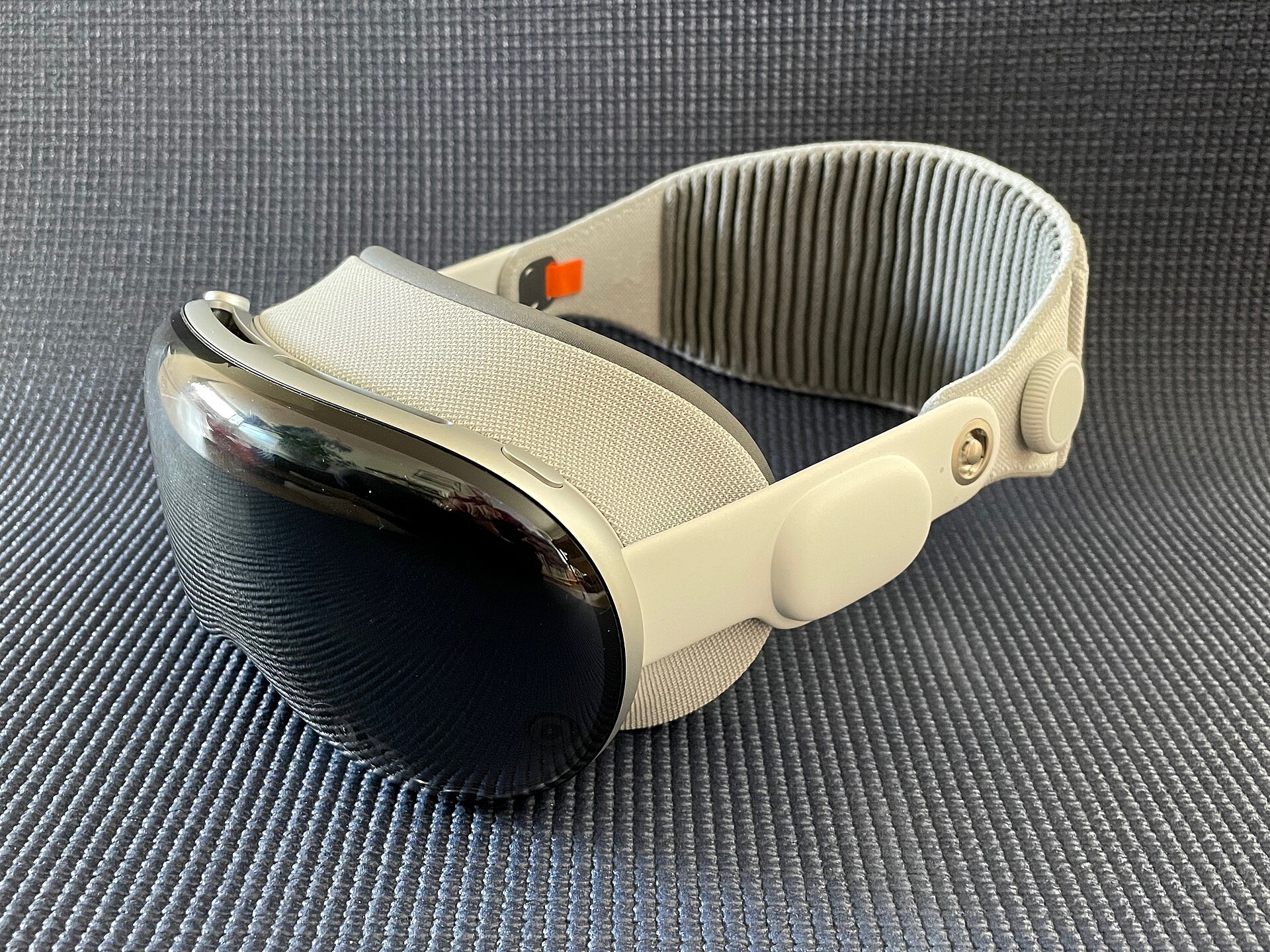
An Apple Vision Pro headset seen from the side, resting on a dark textured surface, with its light-coloured head strap curled behind it

Photo: Hay Kranen, CC BY 4.0, via Wikimedia Commons — an Apple Vision Pro headset, 26 April 2024. The photo is from an earlier date, not the departure.

TL;DR — the direct answer: Paul Meade, the Apple vice president who led hardware engineering for the Vision Pro headset and the company's smart-glasses efforts, left Apple to join OpenAI's hardware team, in a move first reported by Bloomberg in June 2026. Meade had led the Vision Pro's hardware engineering for seven years, and his departure was part of the fallout from a changing of the guard at the top of Apple: John Ternus, the longtime head of all Apple hardware engineering, was announced in April 2026 as the successor to chief executive Tim Cook, and took over on 1 September. Under the reorganisation that followed, Apple's chip chief Johny Srouji became chief hardware officer, and Meade and several other hardware vice presidents found themselves reporting to a new layer of management instead of directly to Srouji, effectively pushing them down a level. At OpenAI, Meade joined a hardware team built around Jony Ive, Apple's former design chief, whose startup io was acquired by OpenAI in May 2025 for about 6.5 billion dollars. Five months on, the move is back in the news because fresh reporting this week has sketched out the first device that team is building: a screenless, doughnut-shaped smart speaker with a camera, microphones and moving parts, expected to launch in 2027.

Key Facts at a Glance
Metric / DateKey DetailSource
26 Jun 2026Bloomberg reports Meade is leaving Apple for OpenAI's hardware unitBloomberg via 9to5Mac
1 Sep 2026John Ternus takes over from Tim Cook as Apple chief executiveBloomberg
10 Jul 2026Apple sues OpenAI and Tang Tan, alleging trade secret theft; OpenAI denies the claimsTechCrunch
25-26 Nov 2026Fresh reports describe OpenAI's first device as a screenless, doughnut-shaped speakerGadgets 360
Feb 2027A court filing says the first Ive-designed device will not ship before the end of February 2027Gadgets 360

What happened: Paul Meade, a vice president at Apple, left the company to join OpenAI's hardware unit, according to people with knowledge of the matter cited by Bloomberg's Mark Gurman in a report published on 26 June 2026. Meade was Apple's top executive in charge of the Vision Pro headset and the company's smart-glasses efforts, and he was set to leave Apple within a week of the report and then start at OpenAI, where he would work on the company's upcoming family of AI-powered devices. Neither Apple nor OpenAI commented on the report. Meade's departure was a blow to Apple: he had led hardware engineering for the Vision Pro, once seen as the company's next major computing platform, for seven years, and his team, known as the Vision Products Group, was also in charge of developing future augmented reality glasses planned for the end of this decade, as well as work on other AI-related wearable devices. Many of his responsibilities were taken on by Fletcher Rothkopf, his longtime deputy, who was in charge of the product design function for the Vision Pro and smart-glasses efforts and was one of the founders of the Vision Pro team. The move is in the news again this week, five months later, because fresh reporting on 25 and 26 November has pulled together the latest details of the first device Meade's new team is building, and because that device is now close enough to production that supply-chain reports are arguing about which factory will build it.

Why it's trending: Meade's move matters because it is the clearest sign yet that the centre of gravity in consumer hardware is shifting from Apple to OpenAI. Apple does not often lose vice presidents, and Meade is not a manager who can be replaced with a job posting: he joined Apple in 2010, worked on the iPad and then the iPhone, crossed over to the Vision Products Group in 2017, and spent almost a decade shipping the company's most ambitious product. Losing him to a rival that did not make hardware at all until last year says something about where the industry's best engineers think the future is. The timing matters too. Meade left in the middle of a leadership transition at Apple that has now played out: Ternus, his former boss, took over as chief executive on 1 September, and the reorganisation that followed pushed several hardware vice presidents down a level, reporting to Tom Marieb, the new vice president of hardware engineering, rather than directly to Srouji. That change, and a sense inside Apple that the Vision Products Group was being deprioritised after the Vision Pro's commercial struggles, appears to have been a factor in Meade's decision. And the story is trending again now because the device he went to build is finally taking shape in public: reports this week describe a screenless, doughnut-shaped smart speaker, roughly the size of a hockey puck, with a camera, microphones, sensors and moving mechanical parts designed to make it feel lifelike, priced at a reported 300 to 400 dollars, with a launch expected in 2027.

Background / context: Meade's exit was part of a wider changing of the guard at Apple that began in April 2026, when the company announced that Ternus, its longtime head of hardware engineering and Meade's former boss, would succeed Tim Cook as chief executive on 1 September 2026. Johny Srouji, Apple's chip chief, took over as chief hardware officer and launched a restructuring that merged the hardware engineering and hardware technologies organisations. Under the new structure, Meade and several other hardware vice presidents no longer reported directly to Srouji: they reported instead to Marieb, who in turn reports to Srouji, effectively demoting them without formally changing their titles. Meade was not the first senior departure in that wave: Ke Yang, who led Apple Intelligence's Answers, Knowledge and Information team, left for Meta in October 2025, and the string of vice-president level defections to rivals in AI and hardware accelerated through 2026. At OpenAI, Meade rejoined a remarkable collection of former Apple talent. Jony Ive, Apple's former chief design officer, founded the hardware startup io with Tang Tan and Evans Hankey, respectively the former heads of Apple hardware product design and industrial design, and OpenAI acquired io in May 2025 for about 6.5 billion dollars, its largest deal to date, bringing roughly 55 engineers and designers under its roof. The relationship between the two companies has since turned hostile: on 10 July 2026 Apple sued OpenAI, io and two former Apple employees, Tang Tan and Chang Liu, in federal court in California, alleging trade secret theft and breach of contract, and claiming Tan coached departing Apple employees on how to evade the company's security procedures and asked job candidates to bring Apple hardware components to interviews. OpenAI has denied the allegations. Apple sought a preliminary injunction in August, and a judge granted Apple expedited discovery in October. The lawsuit remains at an early stage and none of Apple's allegations has been proven in court.

What we know / what's unconfirmed: Confirmed: Bloomberg reported on 26 June 2026 that Paul Meade, an Apple vice president, was leaving for OpenAI's hardware unit, where he would work on a family of AI-powered devices; Meade had led Vision Pro hardware engineering for seven years and also led Apple's smart-glasses efforts, with the glasses then expected in late 2027; Fletcher Rothkopf, his longtime deputy, took on many of his responsibilities; Ternus was announced in April 2026 as Cook's successor and took over as chief executive on 1 September 2026; Srouji became chief hardware officer and reorganised hardware engineering, with Meade and other vice presidents reporting to Tom Marieb rather than directly to Srouji; OpenAI acquired Ive's startup io in May 2025 for about 6.5 billion dollars; and Apple sued OpenAI, io, Tang Tan and Chang Liu on 10 July 2026, alleging trade secret theft, which OpenAI denies. One important correction against the brief: the brief presented the departure as current news, but it was first reported in June 2026, and the two paralla.kr links in the brief are automated re-ingests of that June story with no human editor, so this article dates the move to June and treats the fresh November device reporting as the news hook. What remains unconfirmed is almost everything about the device itself. OpenAI has confirmed none of it: not the doughnut shape, not the camera and moving parts, not the 300 to 400 dollar price, and not the launch date. The reports come from unnamed people familiar with the matter and from supply-chain sources, and they conflict: one report from 19 November said Luxshare Precision would exclusively assemble the device and shipments could begin before the end of this year, while a newer round of reporting on 22 November said the order could shift to Foxconn, and a court filing said the first Ive-designed device will not ship to customers before the end of February 2027. A separate report on 20 November said the first device would be an audio headset rather than a speaker. Until OpenAI says something on the record, every detail is a report, not a fact.

What happens next: The next test for Meade's new team is the device itself. The most consistent version of the reporting says OpenAI's first consumer device will be a portable, screenless smart speaker, described by Bloomberg as a new type of home computer for the AI era, built to feel less like a gadget and more like a presence in the room, handling questions, media playback, messages and smart-home controls, with cameras and sensors to understand its surroundings. The speaker is reportedly only the start: OpenAI is also said to be developing an agentic smartphone built around a customised MediaTek Dimensity 9600 chip, with mass production targeted for the first half of 2027, and smart glasses further out, not ready for mass production until 2028. The court filing's February 2027 date is the firmest marker available: whatever OpenAI announces, the first Ive-designed hardware will not reach customers before March 2027 at the earliest. The lawsuit will run in parallel, with Apple's injunction request and expedited discovery already granted, and its outcome could shape whether OpenAI can sell the device at all. For Apple, the question is what happens to the Vision Products Group without the executive who built it: Rothkopf now carries the Vision Pro and smart-glasses programmes, the glasses are expected in late 2027, and the company has gone back to the drawing board on an enclosed headset it does not expect to ship before the end of 2028 or 2029. Meade spent seven years building Apple's vision of the future. He will now spend the next few years building OpenAI's.

Frequently asked questions

Q: Who is Paul Meade?
A: Paul Meade is an Apple vice president who led hardware engineering for the Vision Pro headset for seven years and also led the company's smart-glasses efforts. He joined Apple in 2010, worked on the iPad and then the iPhone, and crossed over to the Vision Products Group in 2017. In June 2026 he left Apple to join OpenAI's hardware team, where he works on the company's upcoming family of AI-powered devices.

Q: When did Meade leave Apple for OpenAI?
A: The move was first reported by Bloomberg's Mark Gurman on 26 June 2026, which said Meade was set to leave Apple within a week and then start at OpenAI. The story resurfaced in November 2026 through automated news aggregators republishing the June report, but the departure itself dates to June, not November. John Ternus took over from Tim Cook as Apple's chief executive on 1 September 2026, after the move was reported.

Q: Why did Meade leave Apple?
A: Bloomberg reported that the departure was part of the fallout from John Ternus becoming chief executive. Under the reorganisation led by new chief hardware officer Johny Srouji, Meade and several other hardware vice presidents began reporting to Tom Marieb, a new vice president of hardware engineering, rather than directly to Srouji, effectively pushing them down a level. A perceived de-prioritisation of the Vision Products Group after the Vision Pro's commercial struggles also appears to have been a factor. Neither Apple nor OpenAI commented on the report.

Q: What is OpenAI's first device?
A: According to fresh reporting in November 2026, OpenAI's first consumer device is a portable, screenless smart speaker, roughly the size of a hockey puck and shaped like a doughnut, with a camera, microphones, sensors and moving mechanical parts designed to make it feel lifelike. It is expected to launch in 2027 at a reported price of 300 to 400 dollars. OpenAI has confirmed none of this, and a court filing says the first device designed by Jony Ive's team will not ship to customers before the end of February 2027.

Q: Why is Apple suing OpenAI?
A: On 10 July 2026 Apple sued OpenAI, its hardware subsidiary io Products, and two former Apple employees, Tang Tan and Chang Liu, in a California federal court, alleging trade secret theft and breach of contract. Apple alleges Tan, now OpenAI's chief hardware officer, coached departing Apple employees on how to evade the company's security procedures and asked job candidates to bring Apple hardware components to interviews, and that Liu took an Apple laptop after leaving. OpenAI has denied the allegations, and the case remains at an early stage.

Sources: 9to5Mac — OpenAI poaches Apple Vision Pro and smart glasses chief, TechCrunch — Apple Vision Pro exec is reportedly leaving for OpenAI, Business Standard — Apple's vision pro and smart glasses chief Paul Meade to join OpenAI, TechCrunch — Apple sues OpenAI over alleged trade secret theft, and Gadgets 360 — OpenAI's First AI Hardware to Reportedly Have Camera, Moving Parts for Lifelike Interactions.

← Back home