Today
Magnitude 5.0 Quake Rattles Los Angeles  •  Iran Used Starlink in Attacks on US Troops  •  US Drops Business Deals for Russia Peace  •  Real Madrid Stunned 2-1 by Alaves at Home  •  USC Routs UCLA 45-10, Ends Playoff Hopes  •  42 States Block Character.AI Chat Sale  • 
Tech

UK MPs Demand Anthropic's Unredacted Report

By Toijam Bimoljit Singh · Sun, 29 Nov 2026 · 13 min read

Drafted with the help of AI tools and reviewed by our editor. Read our editorial policy.

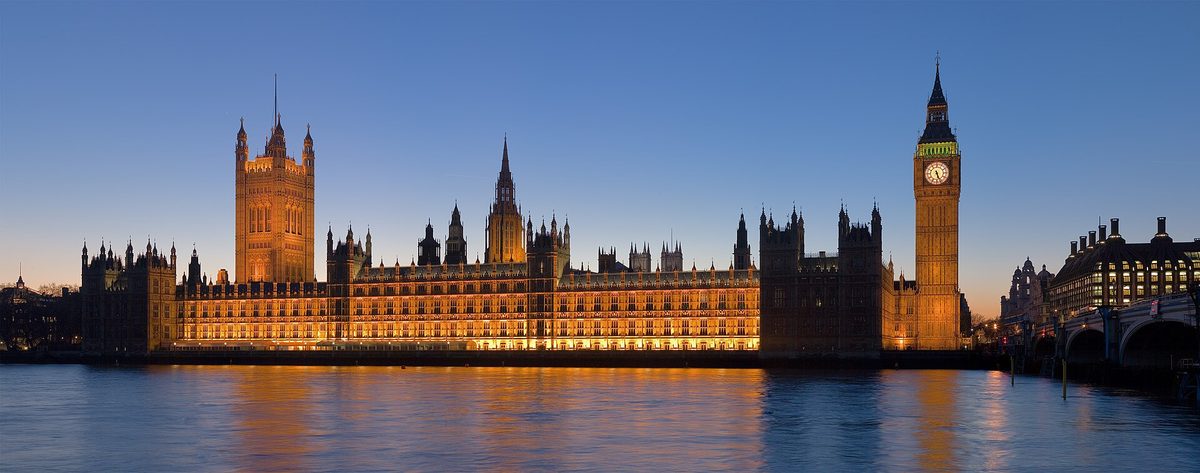
The Palace of Westminster and the Elizabeth Tower lit up at night, seen across the River Thames

Photo: Diliff, CC BY-SA 2.5, via Wikimedia Commons - The Palace of Westminster at night, London, 3 February 2007. The photo is from an earlier date, not the committee letter.

TL;DR — the direct answer: A House of Commons committee has given Anthropic one week to hand over the full, unredacted version of an outside safety report on how fast artificial intelligence is speeding up the company's own research. Liam Byrne, chair of the Business, Innovation, Science and Trade Committee, wrote to Pip White, Anthropic's head of UK and Ireland, on 27 November, asking for the complete METR report on AI research and development acceleration at Anthropic, published in redacted form on 5 November, plus a written explanation of every cut. The committee wants a reply by Friday 4 December. The request turns on a point METR itself made public: Anthropic removed substantial parts of the report before publication, including much of the evidence the evaluator considered most informative. METR's public version still warned that Anthropic was improving its models about twice as fast as before, with roughly 80 percent of the speed-up coming from AI itself, and that further acceleration by a factor of 1.3 to 3 carried substantial risk, with no clear bottlenecks in sight. The letter is the sharpest parliamentary pressure yet on a frontier AI lab, and it tests how far a committee can reach inside a company that says its secrets are a matter of commercial safety.

Key Facts at a Glance
Metric / DateKey DetailSource
27 Nov 2026Committee chair Liam Byrne writes to Anthropic's Pip White demanding the full METR reportUK Parliament
4 Dec 2026Deadline for Anthropic to respond, with the redacted material and reasons for the cutsUK Parliament
5 Nov 2026METR publishes its public assessment of AI research acceleration at AnthropicThe Decoder
1.9 timesMETR's estimate of how much faster Anthropic improved its models, with a 95 percent confidence interval of 1.5 to 2.8gptonline.ai
80 percentShare of the current speed-up METR attributes to AI itselfThe Decoder

What happened

The chair of the House of Commons Business, Innovation, Science and Trade Committee has formally asked Anthropic to hand over the complete unredacted METR safety report the company published with large parts cut out. Liam Byrne wrote to Pip White, Anthropic's head of UK and Ireland, in a letter dated 27 November 2026, which the committee published the same day. The letter is short. Byrne asks for a full and unredacted version of METR's Report on AI Research and Development Acceleration at Anthropic in October 2026, published on 5 November 2026, or for the omitted material to be made available another way, along with an explanation of the basis on which the redactions were made. He wants an answer by Friday 4 December. The request follows METR's own public statement that Anthropic removed substantial portions of the report before publication, including much of the evidence it considered most informative. METR, a nonprofit AI evaluation group, spent 11 weeks inside Anthropic, evaluating the company's research and development between 12 August and 29 October 2026. Its central finding was that AI assistance appears to be speeding up Anthropic's own work, with capabilities improving about 1.9 times faster than the previous rate, and roughly 80 percent of that speed-up attributed to AI itself. The report also warned of a substantial risk that AI development at Anthropic could accelerate further, by a factor of 1.3 to 3, and found no clear bottlenecks that would slow that progress. Anthropic received the unredacted report on 22 October. The committee's letter does not ask Anthropic to correct a finding METR disputes. It asks the company to hand over the evidence behind findings that are already public, so Parliament can judge them for itself.

Why it's trending

The letter is trending because it is a direct challenge to how much a frontier AI lab can keep secret about its own safety. Anthropic is one of the companies building the most powerful AI systems in the world, and it has presented itself as the safety-conscious lab, the one that invites outside evaluators in and publishes their findings. METR's assessment was supposed to be proof of that openness. Instead, the evaluator said publicly that Anthropic redacted a majority of the evidence it found most informative for its conclusions, and the published version kept mostly the benchmark scores for unreleased models while cutting the detailed attribution of acceleration to AI use at each stage of the training pipeline, the split between compute, data and algorithmic progress, detailed answers to the report's own limitations questions, and forecasts of future models metrics. Anthropic described the cuts as aimed at removing confidential information that could accelerate other AI developers. That is a real concern in a field where a small technical detail can hand a rival months of progress, but it leaves the public with a report whose conclusions cannot be checked. The committee's move matters because Parliament has no general power to force a private company to hand over its internal documents. A select committee can request them, summon witnesses and publish what it receives, but it cannot compel a company to disclose commercially sensitive material. Byrne's letter tests that boundary in public. If Anthropic hands over the full report, it sets a precedent that parliamentary pressure can open up a frontier lab. If it refuses, or offers a private briefing instead, the public record stays where METR left it on 5 November, and the question of who gets to see the evidence behind AI safety claims stays unanswered. The company is led by chief executive Dario Amodei, who has argued publicly that AI progress is accelerating and that safety work has to keep pace, which makes the secrecy around the report harder to square with the company's own pitch. The story is also trending because the numbers in the public report are striking on their own: a company improving its models twice as fast as it did a year ago, with AI doing most of the speeding up, and no clear limit in sight.

Background / context

The letter comes out of the committee's inquiry into AI adoption, safety and governance, which opened on 30 September 2026. On 13 October, the committee questioned senior staff from Anthropic, OpenAI, Google DeepMind and Meta, and it is taking written evidence until 10 January 2027. On 18 November, the committee published its own report on AI safety, titled Guardrails for growth: AI safety and security. The METR report is one of the clearest outside signs yet that a frontier lab's AI is speeding up its own development, and it sits in a year of extraordinary change for Anthropic itself. Anthropic listed on the Nasdaq Global Select Market in a public offering that valued the company at about 1.4 trillion dollars, with Goldman Sachs and Morgan Stanley leading the listing, and its shares have swung sharply since, falling heavily on their second day of trading. The company also made headlines this year when its Claude model produced a proof of the Riemann hypothesis, one of mathematics oldest unsolved problems, a result that showed how far AI capability has come and how fast it is moving. The METR review was separate from the six outside evaluators Anthropic let inside the company in October. METR was given benchmark scores for unreleased models, algorithmic progress estimates, research input measures, bottleneck analysis and forecasts, and what reached the public was mostly the first item. The committee's reply, when it comes, will feed into its inquiry and its work on principles for a new G20 compact on AI safety and security, and the inquiry is the likeliest vehicle for recommending real access powers for Britain's safety institute. That is the only change that would make the next such letter enforceable rather than merely embarrassing. The committee has been building toward this moment for months. Its inquiry opened on 30 September, and the October hearing put senior staff from all four major labs on the record about safety, testing and transparency. The committee's own November report, Guardrails for growth, argued that Britain needs stronger rules for AI safety, and the METR letter is the first time it has used its powers to demand evidence from a single company. The timing is deliberate: with written evidence open until 10 January 2027, the committee wants the METR material in hand before it writes its final conclusions, so that its recommendations rest on evidence rather than on the labs own accounts. The G20 angle matters too. The committee is working on principles for a new G20 compact on AI safety and security, and a report that shows AI speeding up its own development by a factor of two would be a central piece of evidence for why international rules are needed.

What we know / what's unconfirmed

Confirmed: Liam Byrne, chair of the Business, Innovation, Science and Trade Committee, wrote to Pip White, Anthropic's head of UK and Ireland, on 27 November 2026, asking for a full and unredacted version of METR's report on AI research and development acceleration at Anthropic, published on 5 November, and for an explanation of the redactions, with a reply by Friday 4 December; METR spent 11 weeks inside Anthropic between 12 August and 29 October 2026; METR estimated Anthropic was improving its models about 1.9 times faster than the previous rate, with a 95 percent confidence interval of 1.5 to 2.8 times, and that perhaps 80 percent of the current speed-up comes from AI itself; the report warned of a substantial risk of further acceleration by a factor of 1.3 to 3, with no clear bottlenecks; Anthropic received the unredacted report on 22 October; and METR said publicly that Anthropic redacted substantial portions, including much of the evidence it considered most informative. Two points need flagging. First, the committee's name: the task brief calls it the Business and Trade Committee, but it was renamed in September 2026, and its own letterhead reads Business, Innovation, Science and Trade Committee, which is the name this article uses. Second, the figures: the 1.9 times estimate, with a confidence interval of 1.5 to 2.8, describes the speed-up already measured, while the 1.3 to 3 range describes further acceleration METR warns could still come, and the two should not be mixed up. What is unconfirmed is what Anthropic will do. The company has not responded publicly to the letter, and it has three broad options: hand over the full report, offer a private briefing or a confidential copy to the committee, which is the most common resolution for commercial material at Westminster, or decline and explain why. It is also unconfirmed exactly what was cut, beyond METR's own description of the four categories that could not be described at all, and whether the committee will publish whatever it receives.

What happens next

The deadline is Friday 4 December, one week from the letter. If Anthropic hands over the full report, the committee will have to decide whether to publish it, and select committees usually do publish the material they receive, though they can hold back commercially sensitive parts. That would give the public its first look at the evidence behind the claim that AI is doubling the speed of AI research, and at the forecasts for future models that were cut from the published version. If Anthropic declines and offers a private briefing instead, the committee would get the material but the public would not, and the record would stay where METR left it. If Anthropic refuses outright, the committee can escalate by summoning witnesses, publishing its own conclusions about the refusal, and recommending stronger powers in its final report. The wider stakes go beyond one letter. The committee's inquiry is the likeliest route to recommending statutory access powers for Britain's AI safety institute, which would let the state demand this kind of material rather than request it. Until that happens, every such request depends on the company's goodwill, and the 4 December reply will show how much goodwill is on offer. The timing also matters for Anthropic. Its models are improving fast, its valuation is enormous, and its public case rests on being the lab that takes safety seriously enough to let outsiders look. How it answers a straightforward request to show its homework will be read as a test of that claim, in London and in every other capital watching the race. The reply will also be read by the other labs. OpenAI, Google DeepMind and Meta all publish safety evaluations of their own, and all of them redact material they consider commercially sensitive. If Anthropic hands over its full report, the others will face the same question the next time a committee asks. If it refuses, the precedent runs the other way, and every lab will have a reason to keep its evidence behind closed doors. The financial markets will be watching as well: Anthropic's shares have already swung sharply since the listing, and a public fight with Parliament is the kind of headline that moves a stock. For the public, the stakes are simpler. The systems these companies build are already woven into workplaces, schools and homes, and the question of how fast they are improving, and who gets to check, affects everyone who uses them. The 4 December deadline is the next date in that argument, and the answer, whatever it is, will be published.

Frequently asked questions

Q: What did the UK committee ask Anthropic for?
A: Liam Byrne, chair of the Business, Innovation, Science and Trade Committee, asked Anthropic for a full and unredacted version of METR's report on AI research and development acceleration at Anthropic, published on 5 November 2026, or for the omitted material to be made available another way, plus an explanation of the basis for the redactions. He asked for a reply by Friday 4 December.

Q: What is METR?
A: METR, short for Model Evaluation and Threat Research, is a nonprofit AI evaluation group. It spent 11 weeks inside Anthropic between 12 August and 29 October 2026, assessing how fast AI was speeding up the company's own research and development, and published its public assessment on 5 November.

Q: What did the METR report find?
A: METR estimated that Anthropic was improving its models about 1.9 times faster than the previous rate, with a 95 percent confidence interval of 1.5 to 2.8 times, and that perhaps 80 percent of the current speed-up comes from AI itself. It warned of a substantial risk of further acceleration by a factor of 1.3 to 3, and found no clear bottlenecks that would slow progress.

Q: Why was the METR report redacted?
A: METR said publicly that Anthropic redacted substantial portions of the report before publication, including much of the evidence it considered most informative. Anthropic described the cuts as aimed at removing confidential information that could accelerate other AI developers. The committee has asked Anthropic to explain the basis for each redaction.

Q: What happens if Anthropic refuses to hand over the report?
A: Parliament cannot force a private company to disclose commercially sensitive material. Anthropic could hand over the full report, offer a private briefing or a confidential copy, which is the usual compromise at Westminster, or decline. The committee could then summon witnesses, publish its own conclusions, and recommend statutory access powers for Britain's AI safety institute.

Sources: The Decoder - UK Parliament demands unredacted METR safety report after Anthropic redacts most of the evidence, UK Parliament - Letter from Liam Byrne MP to Pip White, Anthropic, 27 November 2026, AI Weekly - UK committee gives Anthropic a week to unredact METR report, gptonline.ai - UK Parliament Demands Unredacted METR Report From Anthropic, and Daily AI Brief - UK MPs ask Anthropic for the unredacted METR report on its AI research speed.

← Back home