LIVE
SpaceX Catches Starship From Orbit  •  Microsoft 365 Outage Fully Restored  •  Ramayana Crosses 1,200 Crore Worldwide
World

Trump May Hold Off on New Iran Strikes, Sources Say

By Toijam Bimoljit Singh • 15 November 2026 • 5 min read

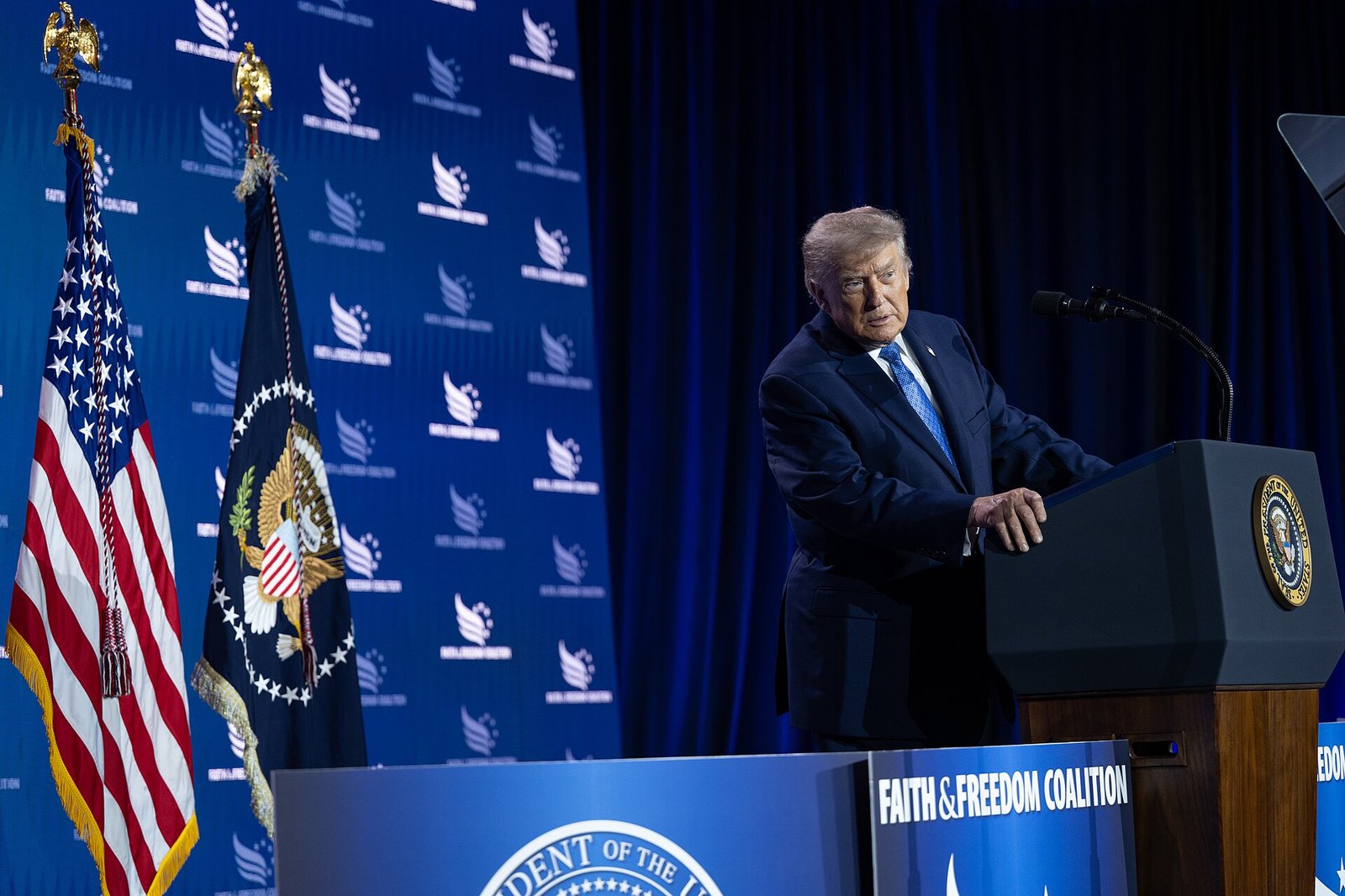
Donald Trump speaking at a podium with the US flag beside him at the Faith and Freedom Coalition conference in Washington

Photo: Molly Riley, The White House, Public domain, via Wikimedia Commons — President Donald Trump delivering remarks at the Faith and Freedom Coalition 2026 Policy Conference in Washington, D.C., on 26 June 2026.

TL;DR — the direct answer: US President Donald Trump has told senior advisers in recent days that he may hold off on attacking Iran if the United States faces no new provocations from Tehran or the Iran-backed Houthis in Yemen, according to three people familiar with the matter. The shift comes as regional allies urge restraint and US intelligence judges that sanctions and a naval blockade are already squeezing Iran's economy.

What happened: Reuters reported on Saturday, 14 November, that Trump told senior advisers in recent days that he may hold off on new strikes against Iran if the United States faces no new provocations from Tehran or the Iran-backed Houthis in Yemen, according to three people familiar with the matter. In meetings with his national security advisers and after intelligence briefings, Trump said he was considering holding off, the sources said, speaking on condition of anonymity. Trump has alternated between threats of escalation and winding down hostilities, and officials say he does not appear to have made up his mind about how to resolve the conflict, which he launched in February with Israel.

Why it's trending: The report lands at a moment when the war is politically costly for Trump at home. A Reuters/Ipsos poll before the 3 November midterms found 55 per cent of Americans said the war was not worth the cost, and Vice President JD Vance cited it as the reason Trump's Republicans lost control of Congress. Trump has also been hearing the same message from abroad: in phone calls over the past two weeks, he asked for opinions from Saudi Crown Prince Mohammed bin Salman and Turkish President Tayyip Erdogan, who both urged him not to resume attacks on Iran. Trump told the crown prince on 31 October that he planned to attack after the midterm elections, but the crown prince pleaded for him to hold off, arguing sanctions were working. He has spoken with Erdogan three times since 28 October, according to Turkey's presidency.

Background / context: The war began on 28 February, when the United States launched strikes on Iran alongside Israel, and it has driven up global fuel prices while dividing opinion in Washington. Earlier reporting described the war as effectively over, and this week the House blocked an attempt to impeach Defence Secretary Pete Hegseth, 211-204. US intelligence agencies have assessed that the naval blockade and economic sanctions are hurting the Iranian economy and would continue to put pressure on Tehran, two US officials briefed on the intelligence said. The same assessments found that renewed strikes would not significantly shift Iran's demands in negotiations. Trump has also indicated sympathy for allies in the region who have asked him not to return to a full-fledged war, and in public remarks he has played down the likelihood of major warfare resuming. 'I could end it immediately, but at the request of the nations that I am looking to protect, we are doing it [in] a little bit longer way, a bit more civilly,' he told sports broadcaster Stephen A. Smith on Thursday.

What we know / what's unconfirmed: Confirmed: Trump's private remarks to advisers as reported by Reuters, the calls with Mohammed bin Salman and Erdogan and their urging of restraint, the 31 October exchange with the crown prince, the intelligence assessments on sanctions and the blockade, and the White House statement that Trump 'is the architect and sole decision-maker who holds all the cards', adding that 'Only President Trump knows what he will do, and when.' Unconfirmed: whether Trump has made any final decision — officials say he has not — and an Israeli report that Mossad warned the United States of an alleged Iranian drone plot targeting Trump and senior administration officials. That claim, reported by the newspaper Israel Hayom, has not been independently confirmed. Israeli officials continue to lobby for another military campaign, and Mossad director Roman Gofman has travelled to Washington to meet senior Trump officials. The CIA and the Office of the Director of National Intelligence did not respond to requests for comment.

What happens next: Everything now turns on whether Tehran or the Houthis launch a fresh provocation. If they do not, Trump's reported inclination is to keep the strikes on hold and let sanctions and the blockade do the work. If they do, the president has kept the option of new strikes open and the US military remains prepared. The next signal is likely to come from Trump's own words, and from whether the reported Israeli lobbying for a renewed campaign gains traction in Washington.

Frequently asked questions

Q: What did Trump reportedly tell his advisers about Iran?
A: He told senior advisers in recent days that he may hold off on attacking Iran if the United States faces no new provocations from Tehran or the Iran-backed Houthis in Yemen, according to three people familiar with the matter.

Q: Who has urged Trump not to resume attacks on Iran?
A: Saudi Crown Prince Mohammed bin Salman and Turkish President Tayyip Erdogan, who both urged restraint in calls with Trump over the past two weeks.

Q: What do US intelligence agencies assess about sanctions on Iran?
A: They assess that the US naval blockade and economic sanctions are hurting the Iranian economy and would keep putting pressure on Tehran, while renewed strikes would not significantly shift Iran's demands in negotiations.

Q: When did the US war with Iran start?
A: On 28 February 2026, when the United States launched strikes on Iran alongside Israel. Trump has since alternated between threats of escalation and winding down hostilities.

Q: Why is the Iran war unpopular in the United States?
A: A Reuters/Ipsos poll before the 3 November midterms found 55 per cent of Americans said the war was not worth the cost, and Vice President JD Vance cited it as the reason Republicans lost control of Congress.

Sources: The Times of Israel — Trump tells advisers he may not attack Iran as long as it doesn't provoke US, sources say, Dawn — US president may hold fire on Iran unless provoked, and The Jerusalem Post — Donald Trump weighs holding off on new Iran attacks despite Israeli lobbying.

← Back home