
Tech
OpenAI Tops $10 Billion in a Single Quarter for the First Time — and Still Lost $10.9 Billion
OpenAI's quarterly revenue crossed $10 billion for the first time in Q3 2026, up about 50% from Q2, while its operating loss widened to $10.9 billion.
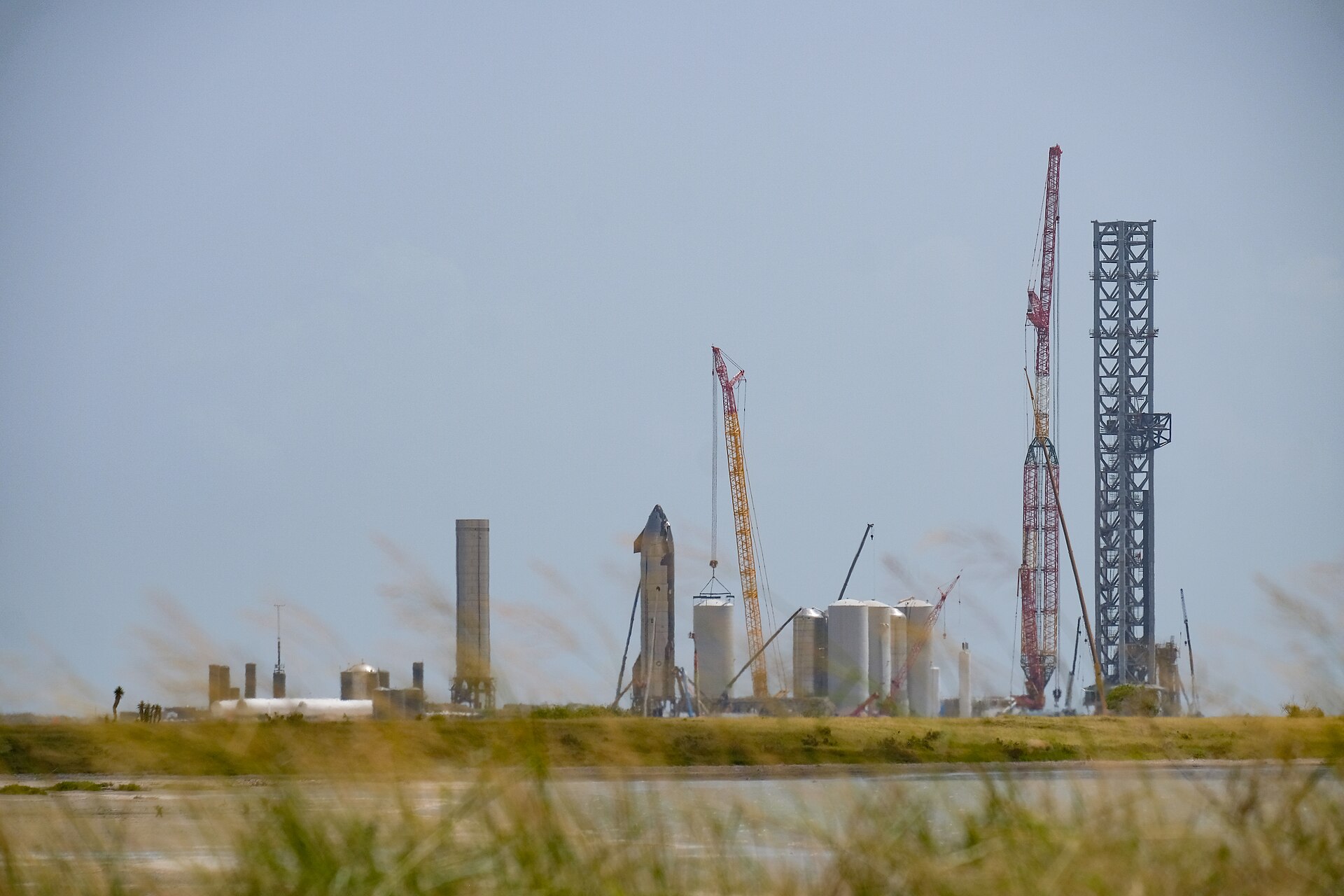
TL;DR — the direct answer: SpaceX made history on Saturday, 14 November, when its Starship spacecraft returned from orbit and was caught in mid-air by the giant mechanical arms of its launch tower in Texas — the first time any upper stage has been recovered this way after an orbital flight. The catch capped a 22.5-hour mission in which the 52-metre Ship completed 14 orbits and deployed 26 Starlink satellites. The flight was not a clean sweep: the Super Heavy booster failed to return and was destroyed over the Gulf of Mexico, so the double catch SpaceX had aimed for will have to wait.
What happened: Starship lifted off from SpaceX's Starbase facility in Texas at 5:47 p.m. Eastern time on Friday, 13 November, powered by the Super Heavy booster's 33 Raptor engines. The full stack stands 407 feet (124 metres) tall. About 22.5 hours later the upper stage — Ship 42 — came back, dropping out of thick cloud over Starbase, reigniting its engines to flip itself upright, and descending slowly into the tower's arms, nicknamed Mechazilla, at Launch Pad 2. The Super Heavy booster, Booster 22, did not make it back. Its planned tower catch was aborted automatically after it detected a guidance, navigation and control issue on the way down, and it was diverted to the Gulf of Mexico, where the flight termination system was triggered and it ended in a fiery splashdown.
Why it's trending: This was the moment SpaceX has been working towards for years. The company has caught Super Heavy boosters before — the first was on Flight 5 in 2024 — but the Ship had never been caught, and no upper stage returning from orbit had ever been recovered by a launch tower. Catching both stages is the core of SpaceX's plan to make Starship fully and rapidly reusable, which would cut the cost of spaceflight and allow far more frequent launches. It was SpaceX's 15th flight of a full-scale Starship since 2023, and only its second trip to orbit.
Background / context: Flight 15 was the fourth launch of the Starship V3 design, a substantially reworked version of the rocket. The Ship deployed 26 Starlink V3 internet satellites and passed heat-shield inspections before coming home. The booster failure was the one miss: SpaceX chief executive Elon Musk said on X that the initial reason for the diversion was that the booster was running low on fuel, while SpaceX spokesperson Dan Huot said on the webcast that the booster detected the guidance issue and aborted the catch itself. NASA, which is paying billions for Starship to land Artemis astronauts on the moon later this decade, welcomed the news; Administrator Jared Isaacman called the catch 'almost magic'.
What we know / what's unconfirmed: Confirmed: the launch time of 5:47 p.m. Eastern on 13 November, the 14 orbits and 22.5-hour mission, the deployment of all 26 Starlink V3 satellites, the catch at about 4:20 p.m. Eastern (21:20 UTC) on Saturday at Launch Pad 2, the booster's aborted catch and destruction over the Gulf, and NASA's welcome. Unconfirmed: the precise chain of events behind the booster failure. Musk pointed to low fuel and SpaceX pointed to a guidance, navigation and control issue, but the company has not published a full account of what went wrong, and it is not yet clear whether the booster problem was a fuel, software or hardware fault.
What happens next: SpaceX will study the recovered Ship and the booster's flight data before the next test flight, and the double catch — recovering both stages in a single mission — remains the goal. The company expects to begin launching Starships from Florida's Kennedy Space Center within the next few months, the starting point for NASA's next Artemis mission. NASA is targeting as soon as 2028 for Artemis IV, the first moon landing since the Apollo era. For now, Flight 15 stands as the flight that proved a spacecraft can come home from orbit and be caught.
Q: When was Starship caught by the tower?
A: On Saturday, 14 November, at about 4:20 p.m. Eastern time, roughly 22.5 hours after liftoff on Friday, 13 November, at 5:47 p.m. Eastern.
Q: What did Flight 15 achieve in orbit?
A: Ship 42 completed 14 orbits over about 22.5 hours, deployed 26 Starlink V3 satellites and passed heat-shield inspections before returning.
Q: What happened to the Super Heavy booster?
A: Its tower catch was aborted automatically after a guidance, navigation and control issue. It was diverted to the Gulf of Mexico, where the flight termination system was triggered and it was destroyed.
Q: Why does the catch matter?
A: Catching the Ship is a key step towards making Starship fully reusable. It is also vital for NASA, which is paying billions for Starship to land Artemis astronauts on the moon later this decade.
Q: Has SpaceX caught a rocket stage before?
A: Yes, but only the Super Heavy booster, first on Flight 5 in 2024. The Ship had never been caught before, and no upper stage returning from orbit had ever been caught by a tower.
Sources: USA Today — SpaceX catches Starship for first time in Texas, making space history, The Indian Express — SpaceX catches Starship spacecraft mid-air, achieves historic first, and The Statesman — SpaceX catches Starship after 14 orbits in historic Flight 15 tower landing.
OpenAI's quarterly revenue crossed $10 billion for the first time in Q3 2026, up about 50% from Q2, while its operating loss widened to $10.9 billion.

Google DeepMind's AlphaProof Code formally verified Signal's encryption down to compiled machine code — a first for a widely used protocol.
Anthropic has set its IPO price range at $70 to $78 a share, valuing the Claude maker at up to $1.405 trillion ahead of a Nasdaq debut on 19 November.