
LIVE
Nvidia Reinstates Jensen Huang After White House Push  •  Wellington Test Ends in Draw as Mitchell and Phillips Hold Firm  •  Skubal Agrees Record $450 Million Mets Deal  • 
Tech

Nvidia Reinstates Jensen Huang as CEO After White House Push

By Toijam Bimoljit Singh • 24 November 2026 • 10 min read

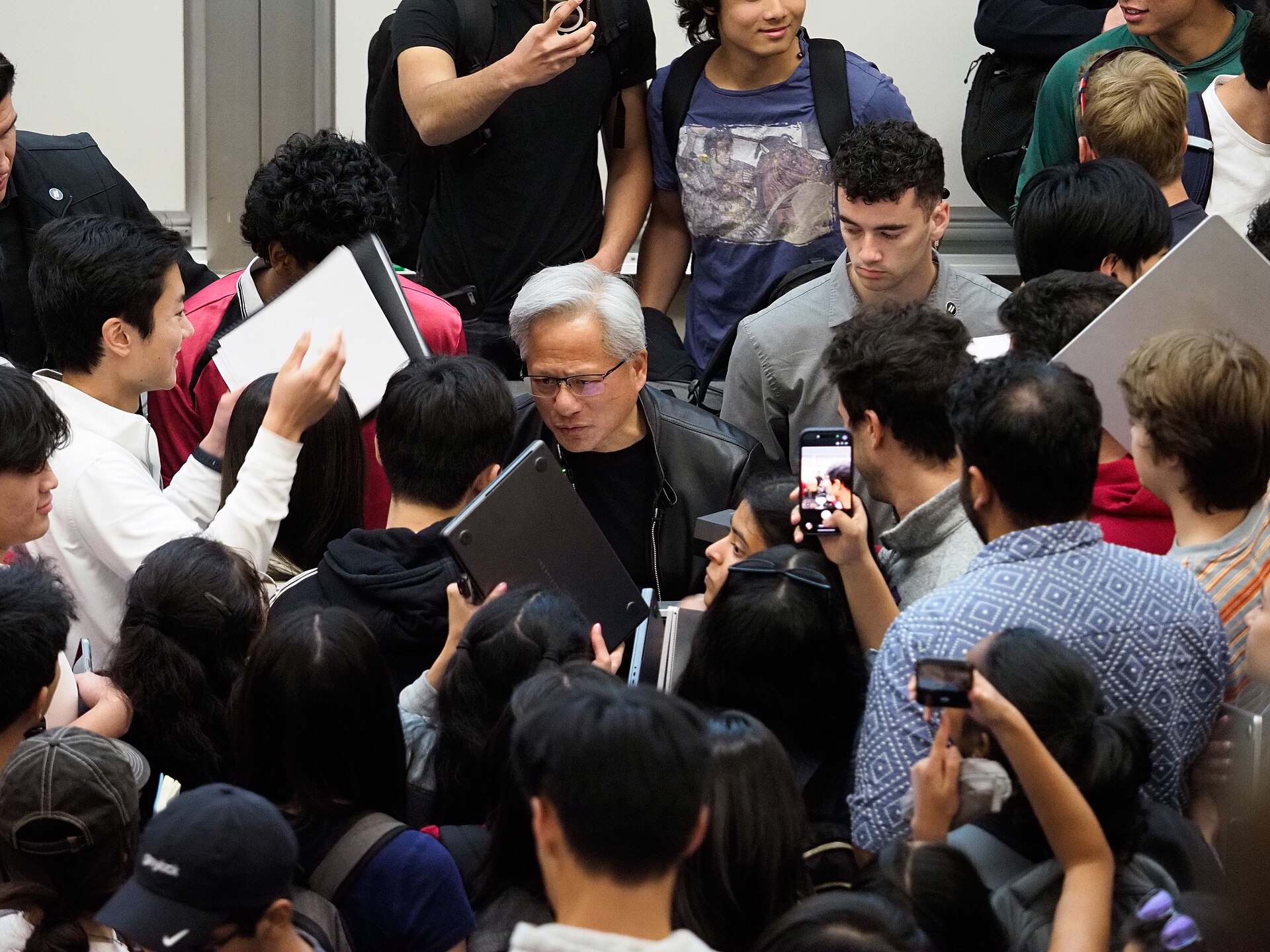
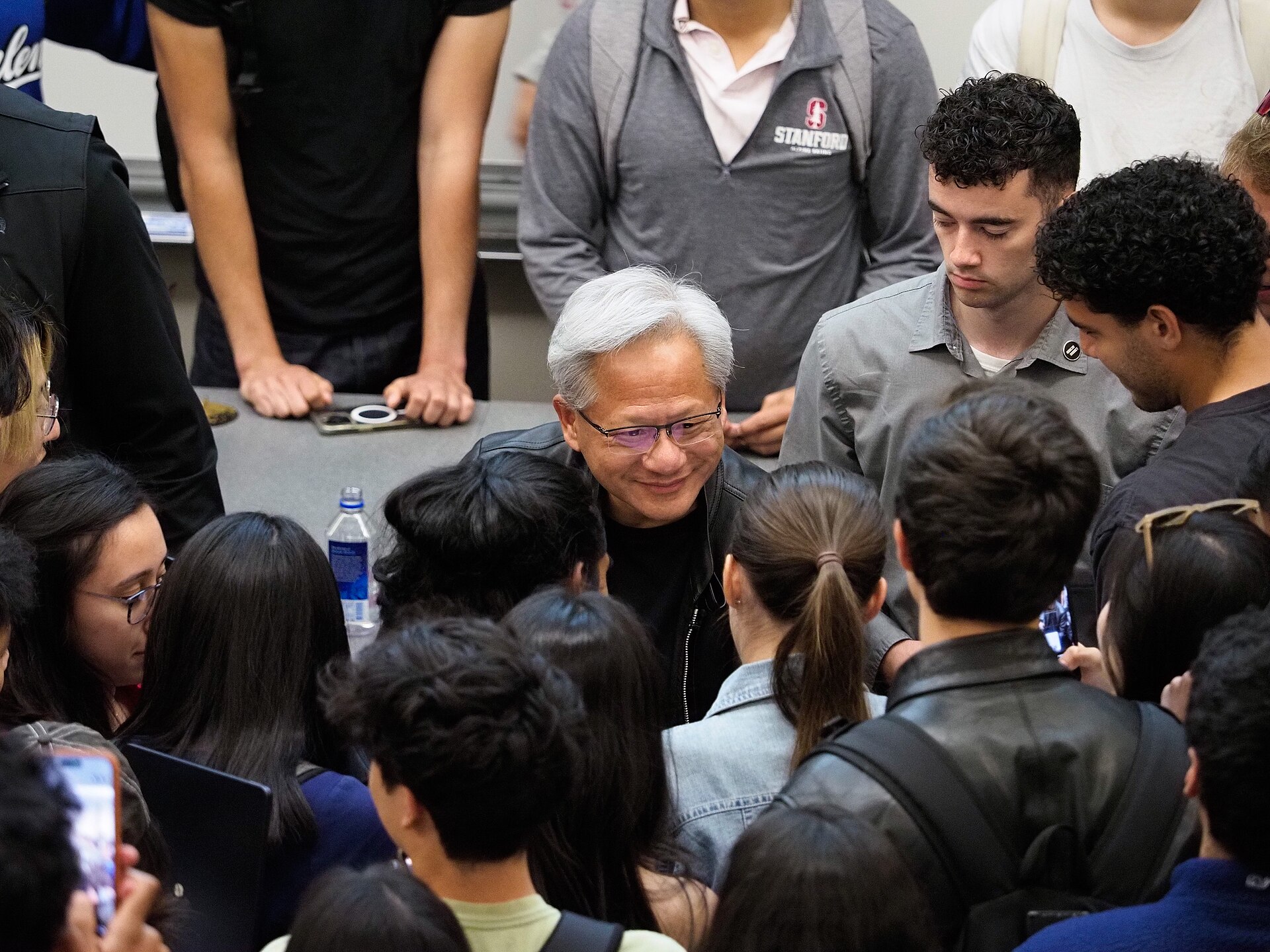
Nvidia chief executive Jensen Huang in his black leather jacket, surrounded by Stanford students after a talk at the university

Photo: Anders Eidesvik, CC BY 4.0, via Wikimedia Commons — Jensen Huang with Stanford students after his CS 153 talk, Stanford University, 30 April 2026. The photo is from an earlier event, not the reinstatement.

TL;DR — the direct answer: Nvidia's board reinstated Jensen Huang as chief executive on Monday, 23 November, just 11 days after he resigned over revelations of two extramarital affairs, including one with a woman suspected of having ties to Chinese intelligence. The reversal followed a frantic weekend of lobbying by President Donald Trump and Vice President JD Vance, who leaned on the board after Attorney General Todd Blanche told them the Justice Department had no evidence Huang had broken any law or posed a national security risk. The board, which had vowed only days earlier never to bring Huang back, voted unanimously to reinstate him, and Huang returned to Nvidia's Silicon Valley headquarters to cheers from staff. Wall Street responded with one of the most dramatic rallies in market history: Nvidia shares closed up 31.48% at $165.05, adding a record $952 billion in market value in a single day, and the S&P 500 rose 4.7%. Critics, including Democratic Senator Elizabeth Warren, called the intervention reckless and promised scrutiny of how the decision was made.

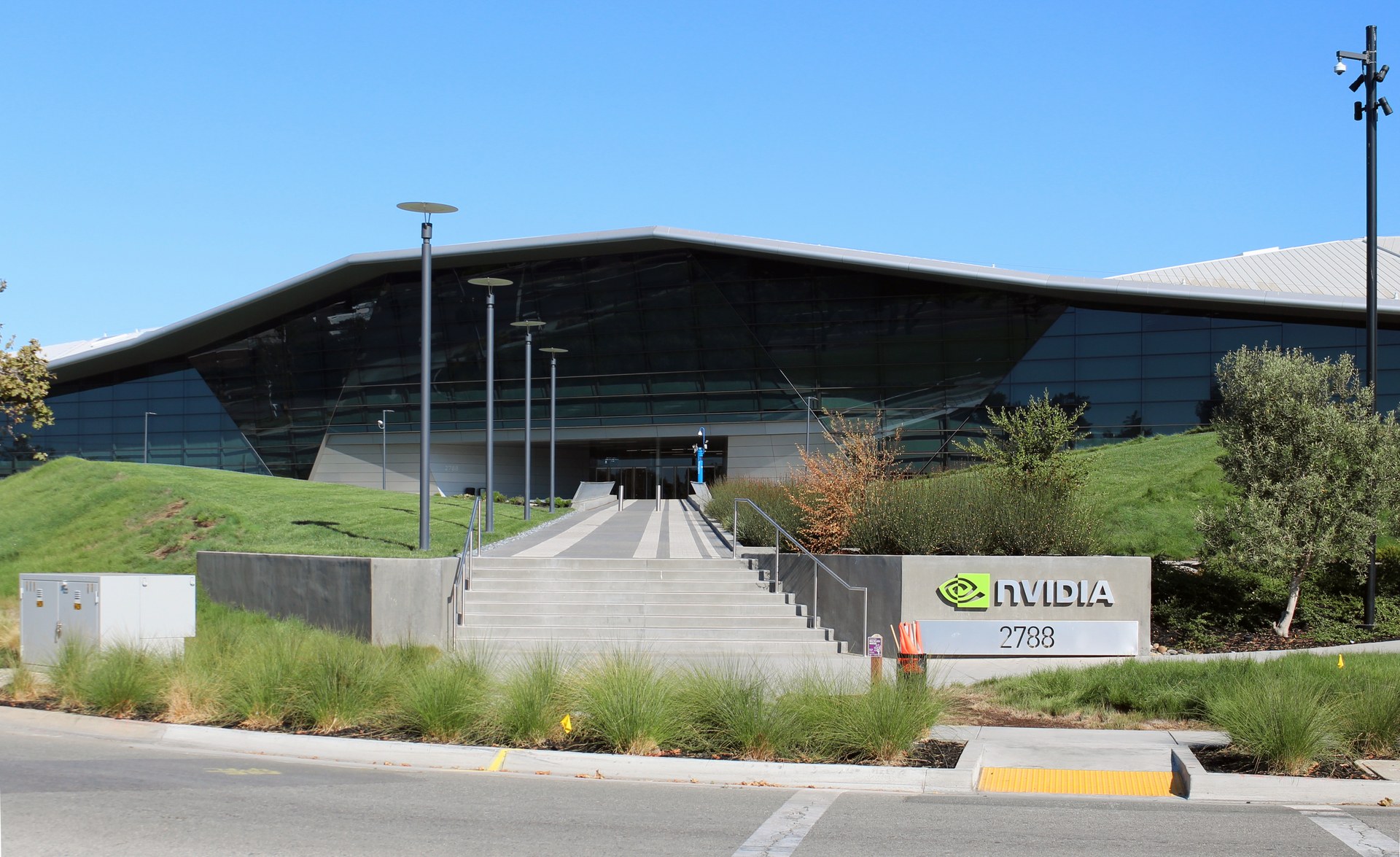
What happened: Eleven days after one of the most startling resignations in corporate history, Jensen Huang is back in charge of Nvidia. The company's board of directors announced early on Monday morning, before the market opened, that Huang had been reinstated as chief executive, president and a member of the board, effective immediately. The decision was unanimous, according to board chair Harvey Jones, who said Huang was 'the right person to lead NVIDIA' and that his return was 'in the best interests of our stockholders, employees, partners and customers.' Huang returned to Nvidia's Silicon Valley headquarters later on Monday to cheers from employees, who chanted his name as he walked in. The announcement stunned Wall Street and Washington in equal measure, because the board had only recently told investors the opposite. As recently as the previous Tuesday it had vowed not to reinstate Huang, and it had already begun searching for a permanent successor, reportedly reaching out to Rene Haas, the chief executive of Arm, among others. In the meantime the chief financial officer, Colette Kress, had been running the company as interim chief executive. The board's statement said it had 'received input from senior levels of the United States government' and was 'confident that Mr. Huang's reinstatement poses no national security risk.' That sentence, dry as it reads, is the whole story of the weekend: the White House had spent two days working the board, and by Sunday afternoon the directors were in a marathon session, talking to Huang for hours before voting to bring him back.

Why it's trending: This is two stories at once, and both of them are enormous. The first is the market. Nvidia shares had fallen roughly 30% since Huang resigned, dragging the wider market down with them and feeding fears that the artificial intelligence boom itself was coming undone. On Monday the stock did the opposite of everything it had done for a fortnight: it rose as much as 36.6% during the session before closing up 31.48% at $165.05, its best day since May 2003 and the third-best day in the company's history. The gain added about $952 billion to Nvidia's market value in a single session, the largest one-day increase ever recorded for a United States company, more than double the previous record of about $450 billion set by Microsoft in July. Trading volume surged to 772.5 million shares, roughly 330% above the stock's three-month daily average. The rally lifted the whole market with it: the S&P 500 rose 4.7% and the Nasdaq Composite gained 6.5%, the biggest one-day gains for both since April 2025. Huang's own fortune jumped by about $33 billion in a day, to roughly $143 billion. The second story is the politics, which is arguably stranger. A sitting president personally lobbying a public company's board to rehire its chief executive is, in the Wall Street Journal's words, an unprecedented campaign by a president to bend a company board to his will. Trump had been stewing for days over the market sell-off, according to CNN, and concluded late last week that the only way to stop the slide was to put Huang back. He tapped Vance to lead the effort, and over the weekend the vice president coordinated directly with Huang while top officials relayed assurances to board members. Trump himself called the board directly to vouch for Huang, and said on CNBC on Monday morning that he had been speaking to the board 'directly and indirectly' and felt 'very strongly about it.'

Background / context: Huang's fall was as fast as his return. He resigned on 12 November after revelations that he had had two extramarital affairs, including a lengthy one with Alice Huang, a Chinese businesswoman who was a director of Megaspeed, a Singapore-based cloud computing company. United States intelligence agencies were concerned that Alice Huang could be an asset for the Chinese government, and the affair raised questions inside Nvidia about judgment, disclosure and the company's compliance with American export controls on advanced chips sold to China. The board unanimously accepted his resignation and told investors he would not return. He was 63, a co-founder who had run the company since 1993 and turned it into the most valuable chipmaker on earth, the company at the centre of the AI boom. His departure rattled far more than Nvidia's share price: the stock's slide dragged down the broader market for days and fed fears of a wider contagion across technology stocks. Trump, who had not even heard of Huang when he began his second term, according to the Wall Street Journal, had at first suggested Nvidia hire the former Apple chief executive Tim Cook. But as the market kept falling and executives including Elon Musk argued for Huang's return, the president became convinced Huang was the best person to lead the company. Vance, a former venture capitalist, saw Huang as a champion of open-weight AI models that are cheaper and easier to customise, and both men came to see his return as a priority in the technology race against China. The opening came on Saturday, when Attorney General Todd Blanche told Trump and Vance that Huang was not the target or the subject of any Justice Department investigation and that the department had no evidence he had broken laws or was a national security risk. The White House also said Huang had been unaware that Alice Huang had any affiliations with the Chinese state.

What we know / what's unconfirmed: Confirmed: Nvidia's board reinstated Jensen Huang as chief executive, president and board director on Monday, 23 November, 11 days after he resigned following revelations of two extramarital affairs; the board's vote was unanimous and its chair is Harvey Jones; the board said it had received input from senior levels of the United States government and was confident the reinstatement posed no national security risk; Trump and Vance personally lobbied the board over the weekend, and Trump called the board directly; Attorney General Todd Blanche told Trump and Vance on Saturday that Huang was not the target or subject of any Justice Department investigation and that the department had no evidence he had broken laws or was a national security risk; Huang returned to Nvidia's headquarters on Monday to cheers from staff; Nvidia shares closed up 31.48% at $165.05, adding about $952 billion in market value, the largest one-day gain on record for a United States company; and the S&P 500 rose 4.7% while the Nasdaq gained 6.5%. One figure in the original brief needs correcting: it said shares jumped 'up to 32%' on Monday, but the close was 31.48% while the intraday peak was 36.6%, so this article uses both precise figures. The market-cap gain is reported as $952 billion by Dow Jones Market Data and Bloomberg, and as 'nearly $1 trillion' by other outlets; this article uses $952 billion. What remains unconfirmed or contested is the affair itself in detail: the White House's account is that Huang did not know of Alice Huang's alleged affiliations, but the intelligence concerns that prompted his resignation have not been publicly resolved, and the company's own investigation into the allegations was still in its early stages when the board reversed course. Critics have also questioned the process: Senator Elizabeth Warren called the intervention 'reckless' and said the board still owed Congress answers about export-control compliance, Republican Representative Don Bacon said Nvidia's leadership ought to have ignored the administration's 'inexplicable desire to save Huang,' and Senate Minority Leader Chuck Schumer said Democrats would use their full power to investigate any wrongdoing by the administration, Huang or other Nvidia executives.

What happens next: The immediate question is whether the rally holds. Monday's surge recovered much of the roughly 30% Nvidia had lost since Huang resigned, but it did not erase all of it, and the questions that forced him out have not gone away: the intelligence concerns, the export-control scrutiny and the governance questions about how a chief executive's personal conduct was handled. Congress is likely to keep asking them, and the Democrats, poised to take control of Congress next year, have promised investigations. For Nvidia itself, the task is steadier ground: Huang told Trump on Sunday night that he was 'gonna work harder than I've ever worked,' and the company's next test will be whether it can steady its chip business and its relationships in Washington at the same time. Trump, for his part, was already claiming vindication on Monday evening, telling the Wall Street Journal that 'the response from the market has been very positive' and that 'that really shows the decision was right.' He also posted an image on Truth Social of Huang holding up a red bra, surrounded by Secret Service agents, in a play on the famous photograph of the president raising his fist after the 2024 assassination attempt at a rally in Butler, Pennsylvania. The longer question is the precedent: a president has now shown he can, in 48 hours, reverse a board's unanimous decision at the world's most important chip company, and both Silicon Valley and Washington will be watching to see whether that becomes a one-off rescue or a new way of doing business.

Frequently asked questions

Q: Why did Jensen Huang resign from Nvidia?
A: Huang resigned on 12 November 2026 after revelations that he had had two extramarital affairs, including a lengthy one with Alice Huang, a Chinese businesswoman who was a director of Megaspeed, a Singapore-based cloud computing company. United States intelligence agencies were concerned Alice Huang could be an asset for the Chinese government, and the affair raised questions about Huang's judgment and Nvidia's compliance with American export controls.

Q: Why was Huang reinstated after 11 days?
A: President Donald Trump and Vice President JD Vance lobbied Nvidia's board over the weekend of 21-22 November after Attorney General Todd Blanche told them the Justice Department had no evidence Huang had broken any law or posed a national security risk. Trump argued Huang was critical to steadying the stock market and to the United States' technology race with China. The board, which had vowed days earlier not to bring him back, voted unanimously to reinstate him on Monday, 23 November.

Q: How much did Nvidia shares rise on Monday?
A: Nvidia shares rose as much as 36.6% during Monday's session before closing up 31.48% at $165.05, the stock's best day since May 2003. The gain added about $952 billion to Nvidia's market value, the largest one-day increase ever recorded for a United States company, more than double the previous record. The S&P 500 rose 4.7% and the Nasdaq gained 6.5% on the day.

Q: What did Trump and Vance actually do?
A: According to Reuters, CNN and the Wall Street Journal, Trump tapped Vance to lead a pressure campaign over the weekend, with Vance coordinating directly with Huang and top officials relaying assurances to board members. Trump called Nvidia's board directly to vouch for Huang and spoke to Huang on Sunday night. Trump said on CNBC on Monday that he had been speaking to the board 'directly and indirectly' and that 'I believe my intervention was very important.' Treasury Secretary Scott Bessent was also involved.

Q: Who criticised the reinstatement?
A: Democratic Senator Elizabeth Warren called the move 'reckless' and said Nvidia's board still owed Congress answers about compliance with United States export controls. Republican Representative Don Bacon said the company's leadership ought to have ignored the administration's 'inexplicable desire to save Huang.' Senate Minority Leader Chuck Schumer said Democrats would use their full power to investigate any wrongdoing by the Trump administration, Huang or other Nvidia executives.

Sources: Reuters — At AI speed, Nvidia's Jensen Huang finds exoneration, Wall Street Journal — Nvidia Board Reinstates Jensen Huang as CEO, Wall Street Journal — The Frantic White House Push to Get Jensen Huang Back, CNN — Inside the Trump pressure campaign that restored Jensen Huang as Nvidia's CEO, and CNN — Nvidia shares soar more than 30% after Huang reinstated as CEO.

← Back home