
World
Father and Daughter Detained by ICE at Seattle Airport on Way to Baptism
A father and daughter heading to a family baptism were detained by masked ICE officers on a jet bridge at Seattle-Tacoma airport, their lawyer said.

TL;DR — the direct answer: Kilmar Abrego Garcia, the Salvadoran man whose wrongful deportation to El Salvador made him a symbol of President Donald Trump's immigration crackdown, boarded a commercial flight from Washington Dulles International Airport to Madrid on Tuesday evening, 24 November 2026, leaving the United States voluntarily for Spain. ABC News observed him boarding the flight, and a source said he first stopped at a Customs and Border Protection office at the airport to have his ankle monitor removed. A federal judge had directed him to leave the United States by Tuesday, under an agreement negotiated between his lawyers and government attorneys whose terms remain sealed. His departure ends a legal battle of nearly 20 months that began when he was deported to El Salvador's notorious CECOT mega-prison in March 2025, despite a court order protecting him from removal there, and continued through a Supreme Court order for his return, criminal charges that a judge later dismissed, and government efforts to deport him instead to a country in Africa. Senator Chris Van Hollen, who visited him in El Salvador, said he was travelling to a country of his choice, a free man, unharmed and with dignity.
What happened: On Tuesday evening, Abrego Garcia, 31, walked through Washington Dulles International Airport and boarded a commercial flight bound for Madrid. Reporters from ABC News watched him step onto the plane. Before going through security, he entered a Customs and Border Protection office at the airport, where a source said he was to have an ankle monitor removed. His lawyer, Sean Hecker, confirmed that Abrego Garcia was scheduled to depart for Spain that evening. The departure followed an agreement between his lawyers and the Department of Justice that allowed him to leave voluntarily rather than face another forced removal. The Associated Press reported that a federal judge had instructed him to self-deport on Tuesday, and the Washington Post first reported that he had agreed to go voluntarily under an arrangement that would close out the removal proceedings against him. The details of the arrangement, including what it means for his immigration proceedings, have not been disclosed, because the related court order and filings remain sealed. The case had gone quiet until Friday, when documents were filed under seal, and the departure was arranged in the days that followed. His criminal defence team said on Tuesday night that he had boarded a flight to Spain on his terms after what it called a protracted fight.
Why it's trending: Abrego Garcia's case has been one of the defining stories of the second Trump administration, and its ending is as strange as its beginning. He was not supposed to be deported at all: a 2019 court order protected him from removal to El Salvador, and the government itself acknowledged that sending him there was an administrative error. Yet he spent months in a Salvadoran mega-prison, became the subject of a Supreme Court order, was brought back to face criminal charges, saw those charges dismissed as vindictive, and then faced deportation to Uganda, Eswatini, Ghana or Liberia, countries where he had no ties. His departure to Spain is, in the end, close to what his lawyers had wanted all along: a country of his choosing, reached on his own terms, rather than a forced removal to Africa. It falls well short of what administration officials had sought for a man they have described as a violent gang member. Senator Chris Van Hollen, the Maryland Democrat who travelled to El Salvador in April 2025 to press for his release, welcomed the agreement, saying it respected Abrego Garcia's right to due process. The story also matters because it closes, for now, the most visible legal challenge to the administration's deportation programme, and because the sealed terms leave open the question of whether the government got anything in return.
Background / context: Abrego Garcia entered the United States illegally as a teenager in 2011 and settled in Maryland, where he lived with his American wife, Jennifer Vasquez Sura, and their children, one of whom has autism, and worked as a sheet-metal labourer. In 2019 an immigration judge granted him withholding of removal, ruling that he could not be sent to El Salvador because he faced a clear probability of persecution there: a gang had threatened his family's pupusa business. Federal immigration authorities arrested him in Baltimore in March 2025 and deported him to El Salvador on 15 March, in violation of that order, sending him to the Terrorism Confinement Center, known as CECOT. A United States government official acknowledged the deportation resulted from an administrative error. In April 2025 the Supreme Court directed the Trump administration to facilitate his return, and he was brought back on 6 June 2025, after federal prosecutors indicted him in Tennessee on human smuggling charges stemming from a 2022 traffic stop. He pleaded not guilty. In May 2026, United States District Judge Waverly Crenshaw dismissed the indictment, finding that prosecutors had pursued the charges in retaliation for his legal challenges, a ruling the government has appealed. Costa Rica offered him refugee status in August 2025, but the administration instead pursued his removal to Liberia and other African countries. In February 2026 a Maryland federal judge barred Immigration and Customs Enforcement from detaining him again after finding the 90-day removal period had expired, and a hearing on his deportation to Liberia was abruptly cancelled in October after the two sides met privately. In all, he spent more than eight months in detention, in the United States and abroad, and was held in at least six American states.
What we know / what's unconfirmed: Confirmed: Kilmar Abrego Garcia, 31, boarded a commercial flight from Washington Dulles International Airport to Madrid on Tuesday evening, 24 November 2026; ABC News observed him boarding, and a source said he had his ankle monitor removed at a Customs and Border Protection office before security; a federal judge had directed him to leave the United States by Tuesday; his lawyers and government attorneys negotiated the agreement, whose terms remain sealed; he was deported to El Salvador on 15 March 2025 despite a 2019 court order barring his removal there; the Supreme Court directed the administration to facilitate his return in April 2025 and he was brought back on 6 June 2025; Judge Waverly Crenshaw dismissed the human smuggling charges in May 2026 as a vindictive prosecution and the government appealed; Costa Rica offered him refugee status in August 2025; and the administration had pursued his removal to Uganda, Eswatini, Ghana or Liberia. Two details in the original brief need flagging. First, the brief said he boarded a Madrid-bound flight on Tuesday, which is confirmed, but the airport is Washington Dulles, which the brief did not name. Second, some timelines give his return date as 1 June 2025, but the Wall Street Journal and other outlets report 6 June 2025, which this article uses. What remains unconfirmed is where he will settle: he may not stay in Spain long term and has not made a decision about his final destination, according to a person familiar with the matter, while the New York Times reported, citing his attorneys, that he ultimately plans to go to Mexico. The terms of the departure agreement, and what it means for the government's appeal of the dismissed criminal case, have not been disclosed.
What happens next: Abrego Garcia's immediate future is in Spain, but Spain may not be where he settles. His lawyers have told the New York Times that he ultimately plans to make his way to Mexico, though his longer-term plans have not been made clear publicly, and it is not known what status he will hold in Spain or how long he can stay. The government's appeal of the dismissal of the human smuggling charges is still pending, so the criminal case is not formally over, even though its defendant has left the country. The broader legal questions his case raised are also unresolved. The Supreme Court has allowed deportations to third countries to resume while it reviews the practice, with arguments set for December, and the sealed filings in his case may shape how that fight develops. For the administration, the departure removes its most embarrassing immigration case from the headlines on the eve of Thanksgiving, but it does so on Abrego Garcia's terms rather than its own: a voluntary departure to a country of his choosing, after nearly two years in which the government tried, and failed, to remove him to a country where he had no ties. For his family in Maryland, the departure ends a 20-month ordeal, though it also means he leaves the country where his wife and children live.
Q: Who is Kilmar Abrego Garcia?
A: Kilmar Abrego Garcia is a 31-year-old Salvadoran national who lived in Maryland with his American wife and children and worked as a sheet-metal labourer. He entered the United States illegally as a teenager in 2011. In 2019 an immigration judge granted him withholding of removal, ruling he could not be sent to El Salvador because he faced a clear probability of persecution there after a gang threatened his family's pupusa business.
Q: Why was his deportation to El Salvador wrongful?
A: Federal immigration authorities deported him to El Salvador on 15 March 2025 despite the 2019 court order protecting him from removal there. A United States government official acknowledged the deportation resulted from an administrative error. A federal judge called it a grievous error that shocks the conscience, and in April 2025 the Supreme Court directed the Trump administration to facilitate his return. He was brought back to the United States on 6 June 2025.
Q: Why did he leave for Spain?
A: After his return, the administration tried to deport him to Uganda, Eswatini, Ghana or Liberia, countries where he had no ties, while he said he was willing to go to Costa Rica, which had offered him refugee status. Under an agreement negotiated between his lawyers and government attorneys, he was allowed to leave voluntarily to a country of his choosing. A federal judge directed him to leave by Tuesday, 24 November, and he boarded a commercial flight to Madrid that evening.
Q: What happened to the human smuggling charges against him?
A: After his return in June 2025, federal prosecutors in Tennessee indicted him on human smuggling charges stemming from a 2022 traffic stop. He pleaded not guilty. In May 2026, United States District Judge Waverly Crenshaw dismissed the indictment, finding that prosecutors had pursued the charges in retaliation for his legal challenges. The Justice Department has appealed that ruling, so the case remains subject to further court proceedings.
Q: Where will Abrego Garcia go now?
A: Spain may not be his final destination. He may not stay in Spain long term and has not made a decision about his final destination, according to a person familiar with the matter. The New York Times reported, citing his attorneys, that he ultimately plans to make his way to Mexico. The terms of his departure agreement, including what it means for his immigration proceedings, have not been disclosed because the related court filings remain sealed.
Sources: USA Today — Kilmar Abrego Garcia to voluntarily leave US, ending deportation battle, Wall Street Journal — Kilmar Abrego Garcia Is Leaving the U.S. for Spain After Arranging Own Exit, Law Commentary — Kilmar Abrego Garcia Self-Deporting to Spain After Battle With Trump Administration, New York Post — Kilmar Abrego Garcia, who fought being mistakenly sent to El Salvador, is self-deporting to Spain, and ABC News via EuropeSays — Kilmar Abrego Garcia Heads to Spain After 20-Month Deportation Fight.
A father and daughter heading to a family baptism were detained by masked ICE officers on a jet bridge at Seattle-Tacoma airport, their lawyer said.

The US Supreme Court on 9 November lifted the order halting border barrier construction in Texas's Big Bend region, allowing work to resume — including…
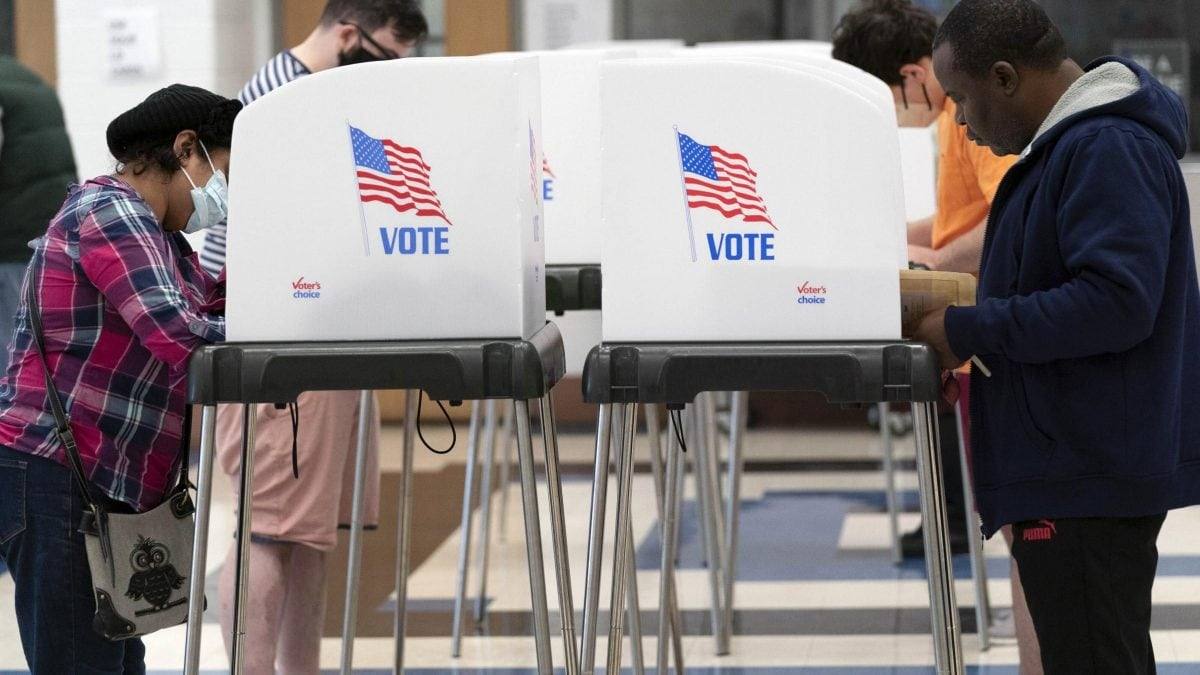
with the US midterm elections on Tuesday, 3 November, both parties are in their final campaign push. President Donald Trump, after a long rally blitz…