LIVE
US Proposes New Tariffs on 14 Trading Partners  •  Macy's Thanksgiving Parade Postponed for First Time Ever  •  NFL Thanksgiving 2026: Tripleheader Schedule and Shows  • 
World

Second Judge Blocks Trump's Birthright Citizenship Order

By Toijam Bimoljit Singh • 26 November 2026 • 10 min read

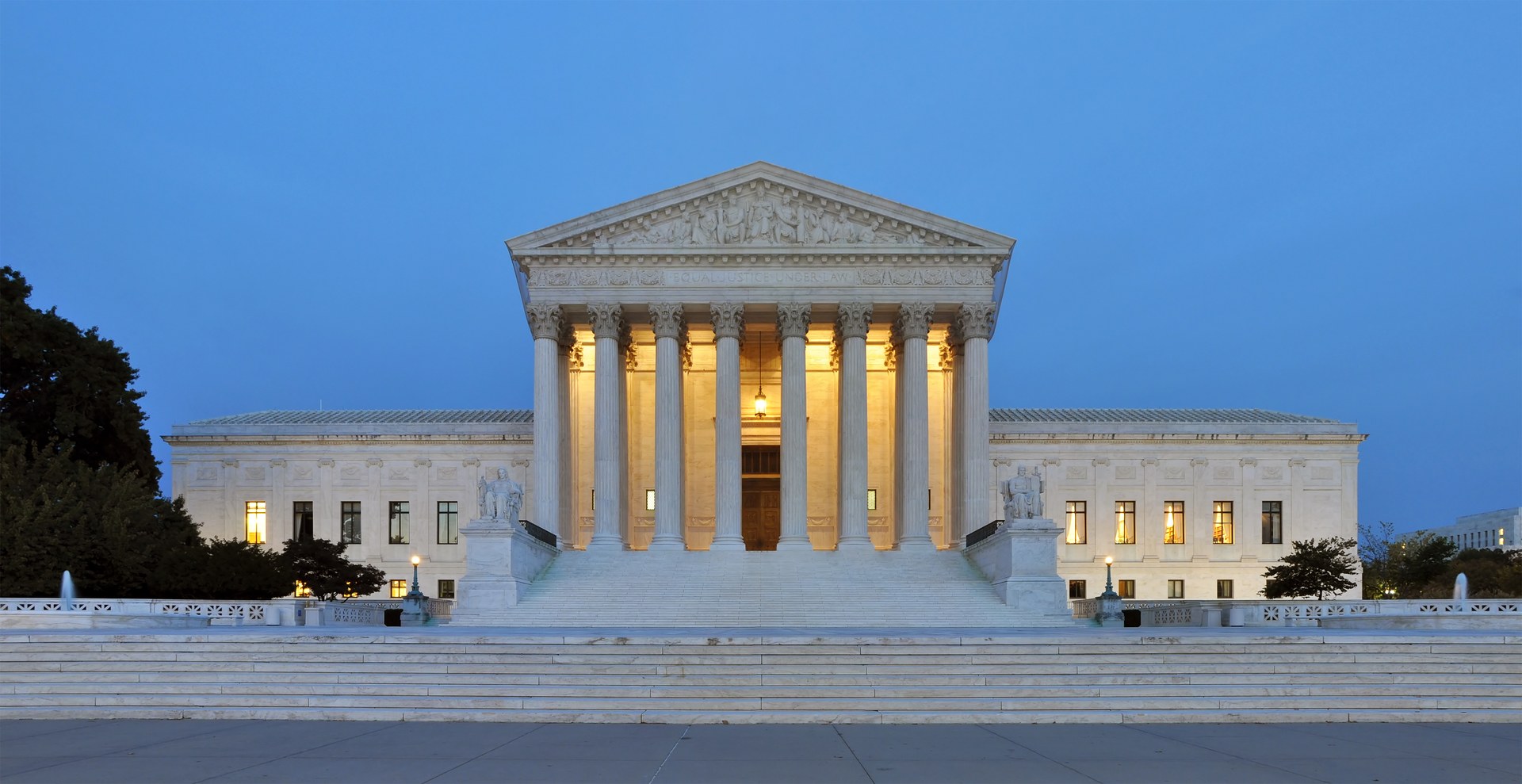
The United States Supreme Court building in Washington at dusk, its marble facade and columns lit against a deep blue sky

Photo: Joe Ravi, CC BY-SA 3.0, via Wikimedia Commons — the United States Supreme Court building at dusk, 10 October 2011. The photo is from an earlier date, not the ruling.

TL;DR — the direct answer: A second federal judge has blocked President Donald Trump's order curtailing birthright citizenship, halting enforcement of a flagship piece of his administration's immigration crackdown. US District Judge Christopher Cooper in Washington, DC, issued a preliminary injunction on Wednesday, 25 November, in a class action lawsuit filed on behalf of children who would be denied citizenship under the president's August executive order. The injunction bars the US Department of State, the US Department of Homeland Security and the Social Security Administration from enforcing the order against any children covered by the class action. Cooper wrote in a 67-page opinion that the president cannot create new exceptions to the constitutional right granted to children born in the United States, saying that as the Supreme Court has made clear, the president cannot carve out new exceptions to birthright citizenship for children born within the United States and subject to its laws. Another federal judge in Maryland, Deborah Boardman, blocked the order in September, writing that the court must, once again, preliminarily enjoin enforcement of the president's most recent attempt to strip the right to citizenship. The administration will now need to overturn both decisions in order to ever enforce the order. Trump signed the August order after the Supreme Court rejected his initial effort to impose restrictions on birthright citizenship, which the court ruled unconstitutional in June by a 6-3 vote, according to TRT World.

What happened: US District Judge Christopher Cooper in Washington, DC, issued a preliminary injunction on Wednesday, 25 November, blocking enforcement of President Donald Trump's executive order limiting the number of people eligible for birthright citizenship. The ruling came in a class action lawsuit filed on behalf of children who would be denied citizenship under the August executive order, and it bars the US Department of State, the US Department of Homeland Security and the Social Security Administration from enforcing the order against any children covered by the class action. Cooper set out his reasoning in a 67-page opinion. At its heart was a simple point: the president cannot rewrite the Constitution by executive order. As the Supreme Court has made clear, Cooper wrote, the president cannot carve out new exceptions to birthright citizenship for children born within the United States and subject to its laws. The ruling is the second to halt the August order. In September, US District Judge Deborah Boardman of Maryland also blocked enforcement of the order, writing that the court must, once again, preliminarily enjoin enforcement of the president's most recent attempt to strip the right to citizenship. The administration will now need to overturn both decisions in order to ever enforce it. The order Trump signed in August was his second attempt at restricting birthright citizenship. He signed it after the US Supreme Court rejected his initial effort to impose restrictions, with the court ruling in June by 6-3 that the earlier executive order seeking to restrict birthright citizenship was unconstitutional, according to TRT World. The new order sought to narrow birthright citizenship in a different form, and the two courts that have examined it have now both concluded, at least for now, that it cannot be enforced.

Why it's trending: Birthright citizenship is one of the most consequential questions in American immigration law, and this ruling is trending because it is the second time in three months a federal judge has stopped the president from changing it. The principle at stake is in the 14th Amendment to the Constitution, ratified in 1868 after the Civil War: children born in the United States and subject to its jurisdiction are American citizens. That rule has been understood for more than a century and a half to mean that a child born on American soil is a citizen regardless of the immigration status of the parents. Trump has sought to end that automatic grant of citizenship for children born to parents who are in the country illegally or who are here on a temporary but lawful basis, and the policy has been a flagship piece of his administration's hardline immigration crackdown. The reason the second ruling matters as much as the first is arithmetic. A single injunction can be appealed and overturned; two injunctions, from two different courts, in two different cases, mean the administration has to win twice before the order can ever take effect. The ruling is also trending because of what it says about the limits of presidential power. Cooper's opinion rests on the Supreme Court's own June ruling, which rejected Trump's first attempt. The message of the two lower-court rulings taken together is that the courts do not see the August order as a new question: they see it as the same question the Supreme Court has already answered, dressed in new language. That framing, if it holds on appeal, would leave the administration with no path to restricting birthright citizenship except through Congress or a constitutional amendment.

Background / context: The fight over birthright citizenship goes back to the 14th Amendment, ratified in 1868 after the Civil War and the Supreme Court's Dred Scott decision, which had denied citizenship to Black Americans. The amendment says that all persons born or naturalized in the United States, and subject to the jurisdiction thereof, are citizens of the United States. For more than 150 years that language has been read to grant citizenship automatically to nearly every child born on American soil. Trump's first executive order on the subject sought to end that automatic grant for children born to parents who are in the country illegally or who are here on a temporary but lawful basis, such as those on student or tourist visas. That order was challenged immediately, and in June the Supreme Court ruled 6-3 that the executive order seeking to restrict birthright citizenship was unconstitutional, according to TRT World. Rather than accept that outcome, the administration issued a new order in August, seeking to narrow birthright citizenship in a revised form. That order was challenged in turn. In September, Judge Deborah Boardman in Maryland blocked its enforcement, in a case brought by immigrant rights groups and pregnant women whose soon-to-be-born children could be affected. The Washington case decided on Wednesday is a class action, which matters: instead of protecting only the named plaintiffs, Cooper's injunction covers all children in the class who would be denied citizenship under the order, and it binds three agencies at once — the State Department, which issues passports; the Department of Homeland Security, which enforces immigration law; and the Social Security Administration, which issues Social Security numbers. The two injunctions together mean the order cannot be enforced anywhere in the country while the cases proceed.

What we know / what's unconfirmed: Confirmed: US District Judge Christopher Cooper in Washington, DC, issued a preliminary injunction on Wednesday, 25 November, in a 67-page opinion, in a class action filed on behalf of children who would be denied citizenship under the president's August executive order; the injunction bars the State Department, the Department of Homeland Security and the Social Security Administration from enforcing the order against children covered by the class; Cooper wrote that as the Supreme Court has made clear, the president cannot carve out new exceptions to birthright citizenship for children born within the United States and subject to its laws; US District Judge Deborah Boardman of Maryland blocked the order in September, writing that the court must, once again, preliminarily enjoin enforcement of the president's most recent attempt to strip the right to citizenship; the administration will need to overturn both decisions to ever enforce the order; Trump signed the August order after the Supreme Court rejected his initial effort; and TRT World describes the June Supreme Court ruling as a 6-3 decision that the earlier executive order was unconstitutional. Two points need flagging. First, the reporting differs on whether there is one order or several: Reuters describes a single August executive order, while TRT World refers to the president's August orders in the plural — this article follows Reuters and refers to one order. Second, the June Supreme Court ruling is described differently by different outlets: TRT World calls it a 6-3 ruling that the earlier executive order was unconstitutional, while Reuters describes it more narrowly as the Court having rejected the president's initial effort to impose restrictions — this article gives both descriptions and attributes them. Unconfirmed: whether the administration will appeal Cooper's ruling, and to which court; whether the two injunctions will survive appeal; whether the Supreme Court will take the case up again; and what happens to children born while the injunctions are in force, beyond the fact that the order cannot be enforced against them for now.

What happens next: The administration's next move is almost certainly an appeal. Cooper's injunction can be challenged in the US Court of Appeals for the District of Columbia Circuit, and the Maryland injunction is already on its own appellate path. The government will need to win in both circuits before the August order can be enforced anywhere, and a loss in either one keeps the order blocked. The case is also a candidate to return to the Supreme Court, which ruled on the earlier version of the policy in June. If the justices take it up again, they will be deciding whether the August order is genuinely different from the one they struck down, or whether, as both lower courts have now concluded, it is the same restriction in new language. For the families covered by the class action, the practical effect of Wednesday's ruling is that the status quo holds: the State Department, Homeland Security and the Social Security Administration cannot enforce the order against their children while the case proceeds, which means passports and Social Security numbers for newborns in the class continue to be issued as before. But a preliminary injunction is not a final judgment. It is a court's decision that the challengers are likely to win and that the order should not take effect while the case is decided. The full case still has to be litigated, and the final answer — whether a president can narrow birthright citizenship by executive order at all — may not come for months or years. Until then, the two injunctions stand as the law of the land on this question, and the administration's flagship immigration policy remains on hold.

Frequently asked questions

Q: What did Judge Cooper actually block?
A: US District Judge Christopher Cooper issued a preliminary injunction on 25 November barring the State Department, the Department of Homeland Security and the Social Security Administration from enforcing President Trump's August executive order curtailing birthright citizenship against children covered by the class action. He wrote in a 67-page opinion that the president cannot carve out new exceptions to birthright citizenship for children born in the United States and subject to its laws.

Q: Why is this the second judge to block it?
A: US District Judge Deborah Boardman of Maryland blocked the same August order in September, writing that the court must, once again, preliminarily enjoin enforcement of the president's most recent attempt to strip the right to citizenship. The administration must now overturn both decisions before the order can ever be enforced.

Q: What does the 14th Amendment say?
A: Ratified in 1868 after the Civil War, the 14th Amendment grants citizenship to all persons born or naturalized in the United States and subject to its jurisdiction. It has been understood for more than 150 years to mean that a child born on American soil is a citizen regardless of the immigration status of the parents.

Q: What did the Supreme Court decide in June?
A: According to TRT World, the Supreme Court ruled 6-3 in June that Trump's earlier executive order seeking to restrict birthright citizenship was unconstitutional. Reuters describes the same outcome more narrowly, as the Court having rejected the president's initial effort to impose restrictions. Trump signed the August order after that ruling.

Q: What happens to children born while the injunctions stand?
A: The order cannot be enforced against children covered by the class action, so the State Department, Homeland Security and the Social Security Administration must continue issuing passports and Social Security numbers as before. But the injunctions are preliminary, not final judgments, so the underlying question is still being litigated and could still reach the Supreme Court.

Sources: Reuters — Trump's newest order curtailing birthright citizenship is blocked by second judge, TRT World — Second US judge blocks Trump's latest orders curtailing birthright citizenship, Arab News — Trump's newest order curtailing birthright citizenship is blocked by second judge, and The Straits Times — Birthright citizenship blocked by second judge.

← Back home