
Tech
DeepMind's AI Just Proved Signal's Encryption With Maths — Down to the Machine Code
Google DeepMind's AlphaProof Code formally verified Signal's encryption down to compiled machine code — a first for a widely used protocol.
Drafted with the help of AI tools and reviewed by our editor. Read our editorial policy.
TL;DR — the direct answer: Google DeepMind has launched a new test that asks a different question from every AI leaderboard that came before it. Humanity's First Exam, published on 24 November 2026, does not ask whether a frontier model can solve a hard problem once. It asks whether the model can solve a simple problem, and three close variations of it, correctly every single time. The benchmark has 544 elementary text and image prompts, arranged in 136 families of four, covering 20 basic capabilities such as counting objects in a picture, following a formatting rule, doing simple arithmetic and rejecting a false premise. The accompanying technical report evaluated 18 models. The best of them, OpenAI's GPT-6.2 Astra, answered 97.8 percent of single questions correctly, but only 92.4 percent of families perfectly. Google's own Gemini 4 Neon scored 96.8 percent on single answers and 85.8 percent on the strict family measure. The gap between getting something right once and getting it right every time is the whole point of the test, and it is where even the best models still lose ground.
| Metric / Date | Key Detail | Source |
|---|---|---|
| 24 Nov 2026 | Google DeepMind launches Humanity's First Exam on Kaggle, with a technical report and a public leaderboard | TechRepublic |
| 544 prompts | Elementary text and image questions in 136 families of four, covering 20 foundational capabilities | TechRepublic |
| 18 models | Frontier and fast-tier models evaluated in the accompanying technical report | Magica |
| 97.8 percent | Best single-answer accuracy, OpenAI's GPT-6.2 Astra, against 92.4 percent on the strict family measure | TechRepublic |
| 73 percent | Share of wrong answers traced to visual perception problems, mostly misjudging positions and miscounting objects | TechRepublic |
Google DeepMind launched Humanity's First Exam on 24 November 2026, a new benchmark that tests whether AI models can reliably answer basic questions. The exam has 544 prompts, split into 136 families of four. Each family starts with one original question and adds three variations that keep the same underlying task while changing details such as wording, names, objects or the layout of an image. Of the 544 prompts, 316 are multimodal, meaning they involve an image, and 228 are text only. They cover 20 foundational capabilities, including counting objects, identifying colours, basic arithmetic, tracking positions in space, following formatting constraints and rejecting false premises. The benchmark was published on Kaggle in three parts: a live leaderboard scoring 18 frontier and fast-tier models, a public subset of 112 prompts covering 28 complete families released under a CC-BY-4.0 licence so anyone can rerun the numbers, and a private set of 432 prompts that stays hidden so vendors cannot train on the answers. A three-week competition runs on Kaggle through 15 December, asking people to submit everyday questions that models still get wrong, with 50,000 dollars in Kaggle swag on offer. The work was led by DeepMind research scientist Oran Kelly. The name is a deliberate contrast with Humanity's Last Exam, an earlier benchmark of 2,500 expert-level questions in maths, science and other fields. Where that test probes the limits of specialised knowledge, Humanity's First Exam tests abilities that humans generally find straightforward. During development, Google checked that distinction: every original prompt kept in the final benchmark was answered correctly by at least three of four independent human raters. The test also differs from the image generators that dominate AI headlines: unlike AI image generators, which create pictures, this exam tests whether a model can read a picture correctly, count what is in it and follow where things move.
The test is trending because it exposes a gap that the usual leaderboards hide. On most benchmarks, a model gets one attempt at each question, and a single correct answer counts as a pass. That flatters models that are right most of the time but wrong often enough to matter. Humanity's First Exam changes the rules. Researchers generated six responses per prompt, with no system prompt and no external tools. The main measure, called family pass to the power of four, estimates the probability of getting 16 answers right across four related questions, with four attempts per question. A prompt answered correctly five times out of six contributes only a third of a point on that measure, because only five of the 15 possible four-response subsets contain no error. The result is a much harsher picture. The five highest scoring models averaged 85.8 percent on the strict family measure despite roughly 96 to 98 percent single-answer accuracy. GPT-6.2 Astra led the evaluation at 97.8 percent on single answers and 92.4 percent on family reliability, a gap of 5.4 points. GPT-6.2 Sol scored 97.3 percent and 86.9 percent. Gemini 4 Neon, Google's own leading model, scored 96.8 percent and 85.8 percent. GPT-6 Astra scored 96.8 percent and 83.4 percent, and Gemini 4 Carbon scored 95.6 percent and 80.5 percent. Across all 18 models, the gap between solving a family at least once and answering it consistently ranged from 7.6 to 80.1 percentage points, and the two weakest models landed at 25.6 and 18.6 percent on the strict measure. That spread is why the launch is being talked about: it turns a familiar story, that frontier models are nearly perfect on easy questions, into a different one, that they are still unreliable in ways that matter when the same question is asked twice. A simple example shows why the gap matters. A model asked to count the apples in a picture might answer six correctly on the first try, then say five when the same picture is shown with the apples rearranged, and seven when the question is reworded. On a normal benchmark, the first answer counts and the model looks perfect. On Humanity's First Exam, the model has to get all four versions right, four times each, and a single slip costs it the family. That is a much closer match to how people actually use AI: they ask the same question twice, they rephrase it, they show a slightly different image, and they expect the same answer. The benchmark's other measure, family pass at four, asks only whether at least one of the 16 attempts succeeds, and every model in the top 12 sits between 99.3 and 100 percent on that easier measure, which shows the capability is there. The distance between the two scores is what the paper calls the family reliability gap, and it is the number DeepMind wants the industry to pay attention to.
The benchmark was built to break models on purpose. The team kept 321 seed questions that made at least one model in a five-model panel fail, then dropped every family that had no failing variant, so the final set is deliberately adversarial. Its scores should not be read as typical failure rates in everyday use, a point Google and the coverage both make. Even so, the pattern of failures is telling. Visual perception caused most of the wrong answers. Google's researchers attributed about 73 percent of wrong-answer attempts to visual perception problems, with misjudging positions, directions or paths accounting for 31 percent and counting objects for another 23 percent. Extra reasoning time helped on symbolic and text tasks, but gave far smaller gains on image perception, which suggests the weakness is in how models see, not how long they think. Among the top 12 models, 61 to 85 percent of prompt families containing failures had errors concentrated in just one of their four variations, which means a small change in wording or layout is often enough to flip a right answer to a wrong one. The benchmark arrives as investors press AI labs on the return on AI investment, and as companies race to put AI assistants into real workflows where a wrong answer given confidently can cost money. A model that is right 97 percent of the time still gives a wrong answer roughly once in every 33 questions, and if the same question is asked four ways, the odds of a clean sweep fall fast. That is the reliability problem DeepMind is trying to measure.
Confirmed: Google DeepMind launched Humanity's First Exam on 24 November 2026 on Kaggle; the benchmark has 544 prompts in 136 families of four, covering 20 capabilities, with 316 multimodal and 228 text-only prompts; 112 prompts are public and 432 are held back for private evaluation; the technical report evaluates 18 models, each run zero-shot with no system prompt, no search and no code, six times per prompt; the top five models averaged 85.8 percent on the strict family measure against roughly 96 to 98 percent single-answer accuracy; GPT-6.2 Astra led at 97.8 percent single-answer accuracy and 92.4 percent family reliability; Gemini 4 Neon scored 96.8 percent and 85.8 percent; visual perception caused about 73 percent of wrong answers; and a three-week Kaggle competition runs through 15 December. Two figures need flagging. TechRepublic puts the top-five average at 85.8 percent on the strict measure, while af.net reports 85.6 percent, and the visual perception share is 73 percent in TechRepublic against about 74 percent in af.net. This article uses the TechRepublic figures. There is also a moving number to watch: the technical report scores GPT-6.2 Astra at 92.4 percent family reliability, while the live Kaggle leaderboard quoted by af.net shows 90.7 percent, so this article uses the report figures and notes that the live board moves. What is unconfirmed, or at least unresolved, is what an average adult would score under the same strict rules. Google DeepMind did not publish a standardised human baseline, so there is no clean number for how far the models sit from human reliability on these questions. It is also unconfirmed how much the benchmark's adversarial design overstates failure in ordinary use, and whether the fixes that help on text tasks will ever close the gap on image perception.
The benchmark is now live on Kaggle, and the next three weeks will show how the field responds. The competition runs through 15 December, inviting researchers and users to submit everyday questions that models still get wrong, which will feed future versions of the test. The public leaderboard will keep moving as vendors run their models against the 112 public prompts, and the private set of 432 prompts will be used to check whether the public scores hold up when models cannot train on the answers. The deeper question is whether the reliability gap becomes a new front in the AI race. Until now, labs have competed on capability: who can solve the hardest maths problem, write the best code, or pass the toughest exam. Humanity's First Exam shifts the contest toward consistency, which is what matters when an AI assistant is asked to check a document, count items in a photo, or follow a formatting rule at work. Models that are right once but wrong on the retry are hard to trust with real tasks, and the benchmark gives buyers and builders a number for that distrust. The visual perception finding also points to where the next research effort will go. If roughly three quarters of failures come from misreading images, and extra reasoning does not fix it, then the fix has to come from better vision, not more thinking time. Expect the labs to say their next models close the gap, and expect the leaderboard to be the place where that claim is tested. For the companies buying AI, the benchmark offers a new way to compare vendors. A model that scores 97 percent on single answers but 85 percent on family reliability will give a wrong answer often enough to need a human in the loop, and the cost of that checking has to be counted against the price of the model. Enterprises that already use AI assistants for customer service, document review or data entry will recognise the failure mode: the assistant that is right most of the time is the hardest to supervise, because its mistakes are rare enough to slip past a tired reviewer. The benchmark also gives researchers a target. The visual perception finding points to a specific weakness, and the fact that extra reasoning does not fix it suggests the answer lies in better image understanding, not in longer chains of thought. The Kaggle competition running through 15 December will add new questions from real users, and the private set of 432 prompts will keep the leaderboard honest. If the gap narrows in the next round of models, the industry will have a number to prove it. If it does not, the question of whether AI can be trusted with routine work will stay open. The Kaggle competition will also test whether the public prompts hold up once vendors know what is in them, since the 112 public families are now open for anyone to train against.
Q: What is Humanity's First Exam?
A: It is a benchmark launched by Google DeepMind on 24 November 2026 that tests whether AI models can reliably answer basic text and image questions. It has 544 elementary prompts in 136 families of four, covering 20 foundational capabilities such as counting objects, basic arithmetic and rejecting false premises.
Q: How is Humanity's First Exam scored?
A: Each model answers every prompt six times, and the main measure estimates the probability of getting all 16 answers right across a family of four related questions, with four attempts each. A single wrong answer in the family drags the score down sharply, so the measure rewards consistency, not just getting a question right once.
Q: Which AI model scored best on the exam?
A: OpenAI's GPT-6.2 Astra led the evaluation, with 97.8 percent single-answer accuracy and 92.4 percent on the strict family reliability measure. GPT-6.2 Sol was second at 97.3 and 86.9 percent, and Google's own Gemini 4 Neon was third at 96.8 and 85.8 percent.
Q: Why do AI models fail this exam?
A: Most failures come from visual perception. Google's researchers attributed about 73 percent of wrong answers to problems reading images, with misjudging positions, directions or paths at 31 percent and miscounting objects at 23 percent. Extra reasoning time helped on text tasks but gave far smaller gains on image perception.
Q: Where can I see the benchmark and the results?
A: Humanity's First Exam is published on Kaggle, with a live leaderboard scoring 18 models, a public subset of 112 prompts anyone can rerun, and 432 prompts held back for private evaluation. A three-week competition asking for new everyday questions runs through 15 December.
Sources: TechRepublic - Google Humanity's First Exam AI Benchmark Explained, Magica - Google DeepMind launches Humanity's First Exam reliability test, NeuralMinute - Humanity's First Exam: Google's 544-Prompt Reliability Test, and af.net - DeepMind Benchmark HFE Drops Top AI Models to 85.6% Average.
Google DeepMind's AlphaProof Code formally verified Signal's encryption down to compiled machine code — a first for a widely used protocol.

Anthropic mathematician Levent Alpoge says he and Claude proved the Riemann Hypothesis, with a 17-million-line Lean formalization.
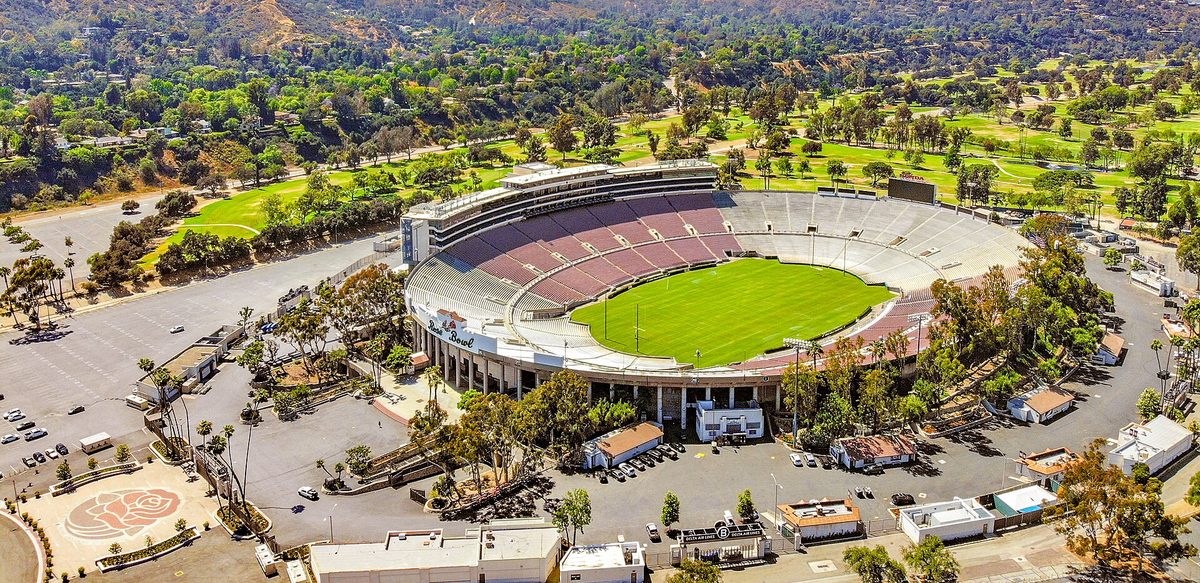
No. 15 USC thrashed No. 10 UCLA 45-10 at the Rose Bowl, ending the Bruins' dream season and leaving their Big Ten title hopes hanging by a thread.
The day’s biggest stories in your inbox every morning — free, no spam, unsubscribe anytime.