
LIVE
Jensen Huang Resigns as Nvidia CEO  •  Brooklyn Building Collapse Kills 8  •  Wall Street Falls as Gold Slides Below $4,000
Viral

The 'Dark Magic Mushroom' Is Both Psychedelic and Deadly — the First Fungus Known to Make Both

Trending Now • 13 November 2026 • 4 min read

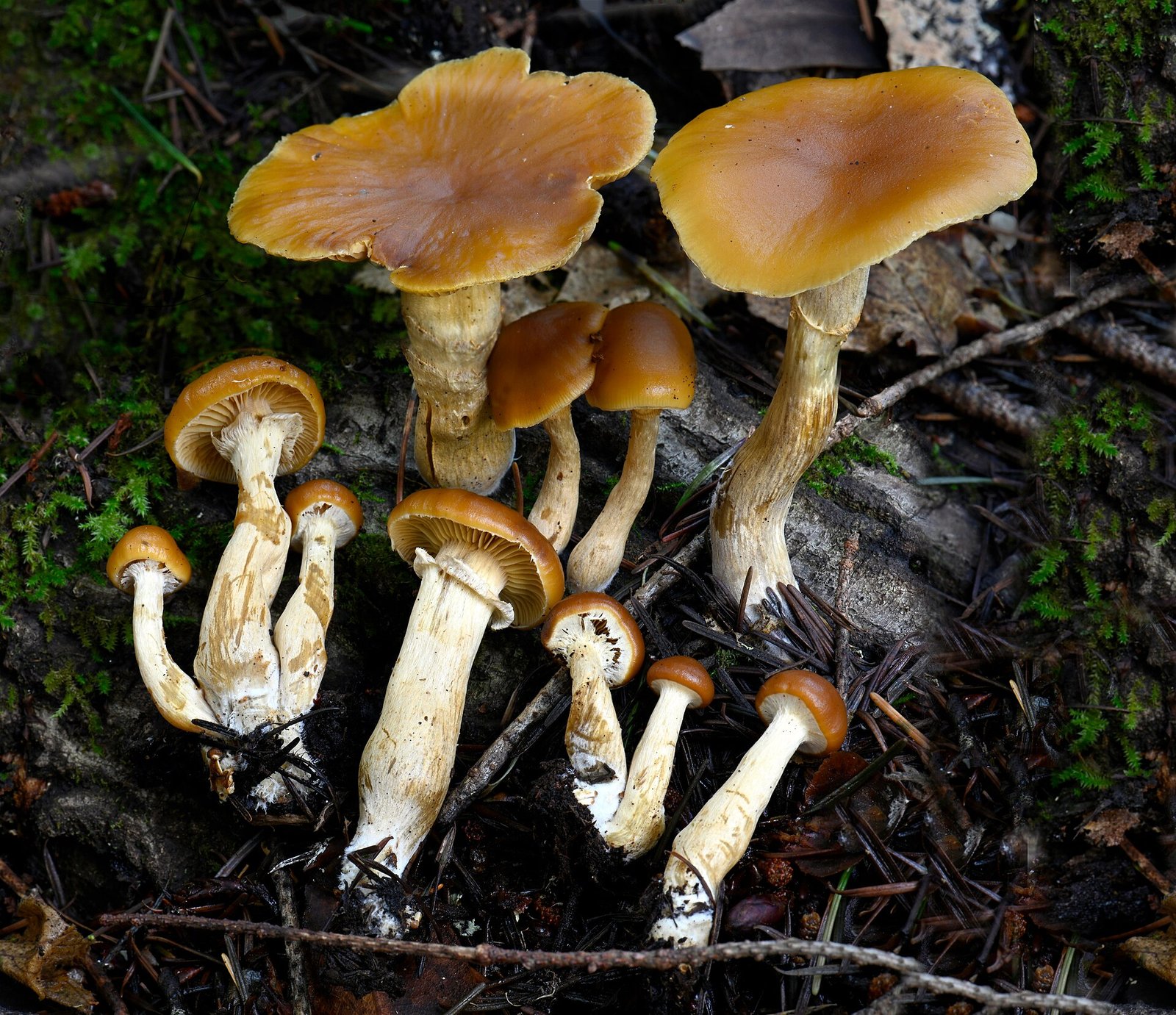
Little brown Galerina mushrooms growing on a mossy forest floor

Photo: Alan Rockefeller, CC BY-SA 4.0, via Wikimedia Commons — Galerina marginata, a close relative of G. indica (illustrative photo; no free photo of G. indica exists yet).

TL;DR — the direct answer: A tiny brown mushroom growing on rotting palm trunks in Florida's wetlands is the first fungus ever found that makes both psilocybin — the psychedelic compound in magic mushrooms — and amatoxins, the poisons behind most fatal mushroom poisonings in the world. Researchers at the University of Florida have nicknamed the species, Galerina indica, the 'dark magic mushroom'. Their study was published in the journal Current Biology on Wednesday, 11 November.

What happened: The discovery began with a colour change. Andrew Kunik, then an undergraduate working in the mycology laboratory of University of Florida plant pathologist Matthew E. Smith, was documenting fungi at the university's Ordway-Swisher Biological Station when he noticed that a little brown mushroom's flesh turned blue when handled — a reaction sometimes associated with psilocybin. Chemical analysis confirmed the presence of psilocybin and its close relative psilocin, and then found something nobody expected: two amatoxins as well. The main one was new to science, and the team named it alpha-proamanitin. The peer-reviewed paper, published in Current Biology on 11 November, makes Galerina indica the first known species to produce both compound families at once.

Why it's trending: The two chemicals were never supposed to share a body. Psilocybin and amatoxins each turn up in several unrelated groups of fungi, because the genes for both have jumped between species by horizontal gene transfer — DNA moving sideways between organisms instead of passing from parent to offspring. But until this study, no single species was known to carry both toolkits. As Kunik put it: 'There is no species of mushroom anywhere, in any group, that has been known to produce both at the same time.' The finding also breaks a rule of thumb that foragers rely on: blue bruising is often taken as a sign of a psilocybin mushroom, but this one shows that a blue-staining mushroom can also be carrying a liver-destroying poison.

Background / context: The team had gone looking for poison, not psychedelics. They wanted to know whether Florida's understudied Galerina mushrooms included unrecorded deadly species, and between January 2024 and September 2025 they collected five Galerina specimens across the south-eastern United States. Three, all taken from moss-covered palm trunks in forested wetlands, were G. indica. Every sample contained psilocybin and two amatoxins. The team also found two other previously unknown Galerina species — one that makes psilocybin but not amatoxin, and one that makes neither — and the genome work suggests the psilocybin genes arrived in the genus twice, independently, by horizontal gene transfer. Kunik first spotted the mushroom in 2025, and the team posted its findings as a preprint in July 2026 before the peer-reviewed paper appeared.

What we know / what's unconfirmed: Confirmed: the presence of both psilocybin and amatoxins in G. indica, the new toxin alpha-proamanitin, the blue-bruising clue, and the horizontal-gene-transfer explanation supported by genomic sequencing. Unconfirmed: how poisonous the mushroom actually is — the study did not test its toxicity in animals, so its real poison strength is unmeasured — and what the two chemicals do for the fungus in the wild. The team's next step is to knock out the genes for one compound or the other and watch how the mushroom fares, a direct test of what each chemical is for. The chemistry rests on three G. indica collections from Florida, and the genome on one of them.

What happens next: The researchers are clear about the safety message: a mushroom that looks ordinary, or stains blue, is not necessarily safe — and nobody should handle or eat wild Galerina mushrooms on the strength of this story. The science, though, opens a new question in fungal evolution: if the genes for both chemicals can move between species, how many other fungi are quietly carrying combinations nobody has thought to look for? The 'dark magic mushroom' may be the first of its kind that science has found. It is unlikely to be the last.

Frequently asked questions

Q: What is the 'dark magic mushroom'?
A: Galerina indica, a tiny brown mushroom found on mossy palm trunks in Florida's wetlands. It is the first known fungus to produce both psilocybin, the psychedelic compound in magic mushrooms, and amatoxins, the poisons behind most fatal mushroom poisonings.

Q: Who discovered it?
A: A team at the University of Florida, led by fungal biologist Andrew Kunik in the laboratory of plant pathologist Matthew E. Smith. The study was published in Current Biology on 11 November 2026.

Q: Is it safe to eat?
A: No — and the researchers stress the point. It contains amatoxins, the toxin family responsible for most fatal mushroom poisonings, and its actual toxicity in animals has not been tested. Blue staining is not a reliable safety test.

Q: How did scientists find it?
A: Kunik noticed the mushroom's flesh turned blue when handled — a clue sometimes linked to psilocybin. Chemical analysis then confirmed psilocybin and, unexpectedly, two amatoxins, including a previously unknown one named alpha-proamanitin.

Q: Why does one mushroom make both chemicals?
A: Genomic evidence suggests the psilocybin genes arrived by horizontal gene transfer — DNA moving sideways from another fungus — after the lineage already made amatoxins. The team thinks the combination may help defend the mushroom against being eaten.

Sources: Gizmodo — Scientists Discovered a Mushroom That's Both Toxic and Trippy, UF/IFAS Blogs — UF students discover the 'dark magic mushroom', and Martin Cid — Florida's 'dark magic mushroom' makes both psilocybin and death cap toxins.

← Back home