LIVE
Claude Claims the Riemann Hypothesis Is Proved  •  Nikhil Gupta Gets 19 Years in Pannun Plot  •  Jaiswal and Rahul Rewrite Records in Wellington  • 
World

Cyclone Akvan Crosses Odisha Coast in Heavy Rain

By Toijam Bimoljit Singh • 21 November 2026 • 8 min read

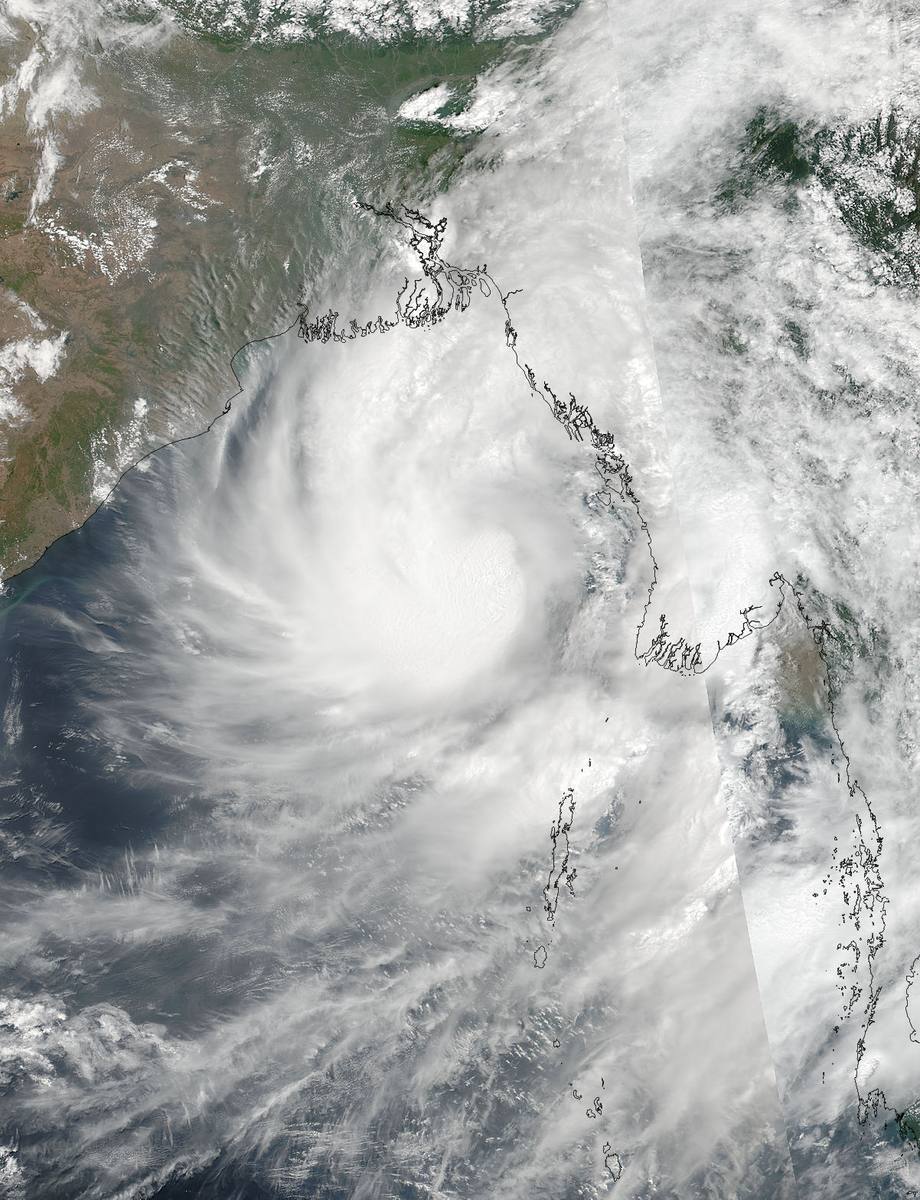
Satellite view of Cyclone Akvan's huge white cloud mass over the Bay of Bengal, with the Indian coastline visible at the left

Photo: NOAA, public domain, via Wikimedia Commons — Cyclone Akvan near peak intensity over the Bay of Bengal on 18 November 2026, seen by the VIIRS imaging instrument aboard a NOAA polar-orbiting satellite.

TL;DR — the direct answer: Cyclonic Storm Akvan crossed the Odisha and north Andhra Pradesh coast near Gopalpur on Friday morning, 20 November, bringing heavy rain and strong winds to eastern India but causing no major damage or loss of life. The India Meteorological Department said the storm came ashore between 7.30 and 8.30 in the morning with wind speeds of 70 to 80 kilometres per hour, gusting to 90, after weakening from a severe cyclonic storm in the early hours of the day. The landfall process was complete by 11.20 am, and by the evening the system had weakened into a depression over south Odisha. Disaster Management Minister Suresh Pujari said there had been no major damage or loss of life in the state, despite extremely heavy rainfall of more than 21 centimetres in parts of Odisha. Around three lakh people had been moved to safety by Thursday evening, with the total rising to about 3.7 lakh by Friday, and 9,341 cyclone shelters were open across the state. Akvan is the third cyclone to threaten Odisha in 24 days, after Arnab in late October and Murasu in early November.

What happened: The storm's final hours followed the forecast almost exactly. Akvan had intensified into a severe cyclonic storm on 18 November, but it could not hold that strength as it neared the shore, and at 2.30 in the morning on Friday it weakened into a cyclonic storm. The India Meteorological Department's press release, issued at 1.40 pm, recorded the crossing in precise terms: the storm crossed the north Andhra Pradesh and south Odisha coasts close to Gopalpur, near latitude 19.1 degrees north and longitude 84.8 degrees east, with wind speeds of 70 to 80 kilometres per hour gusting to 90, between 7.30 and 8.30 in the morning. At 8.30 it lay centred over south coastal Odisha and adjoining north coastal Andhra Pradesh, about 120 kilometres northeast of Kalingapatnam, 130 kilometres west-southwest of Puri, and 230 kilometres northeast of Visakhapatnam. The landfall process was complete by 11.20 am. By the early afternoon the system had weakened into a deep depression, with winds of 55 to 65 kilometres per hour gusting to 75, and by 5.30 pm it was a depression moving north at 12 kilometres per hour, centred about 70 kilometres south-southwest of Angul. The weather office said it would weaken further into a well-marked low-pressure area within hours.

Why it's trending: Three cyclones in 24 days is the story here, as much as this one storm. Odisha has spent most of November on alert, and Akvan arrived a fortnight after severe cyclonic storm Murasu struck the region, and less than a month after Cyclone Arnab hit the coast in late October. The scale of the preparation was enormous: hundreds of thousands of people moved out of vulnerable areas, more than 400 rescue teams deployed, thousands of shelters opened, trains cancelled, and schools and colleges closed in eight districts. That the outcome was so mild is the news. The state government reported no untoward incident while the storm crossed the coast, and the Disaster Management Minister said there was no major damage or loss of life, even as heavy rain lashed the southern districts of West Bengal, including Kolkata, and spread into Jharkhand and Bihar. The storm also matters beyond Odisha: it is the third cyclone of the 2026 North Indian Ocean season to batter India's eastern seaboard, and a government weather expert told Reuters that three cyclones forming in the Bay of Bengal within a month bears similarities to 1987, when multiple storms struck in quick succession after the monsoon.

Background / context: Akvan began as a low-pressure area over the southern Bay of Bengal on 12 November, drifted towards the east Indian coastline, and developed into a cyclonic storm on 16 November. It stalled over the central Bay on 17 November, intensified into a severe cyclonic storm the next day, and then moved slowly north-northwest towards Odisha and Andhra Pradesh. The name Akvan was given by Iran, under the regional system in which countries around the North Indian Ocean take turns naming storms. A severe cyclonic storm is the fourth-highest category on the India Meteorological Department's scale, one step below a very severe cyclonic storm, and Akvan was still classified as severe when it began its final approach. The reason it arrived weaker than feared was the sea itself: the weather office's director general, Mrutyunjay Mohapatra, said the system could not sustain its intensity over the relatively cold sea surface temperatures near the shore. The two storms before it set the pattern. Arnab made landfall on 28 October, killing 10 people in landslides according to one count, and Murasu struck near Ongole on 2 to 3 November, triggering evacuations and uprooting trees and electricity poles. Odisha's defences were already tested and already in place when Akvan arrived.

What we know / what's unconfirmed: Confirmed: Akvan crossed the north Andhra Pradesh and south Odisha coasts near Gopalpur between 7.30 and 8.30 am on Friday, 20 November, with winds of 70 to 80 kilometres per hour gusting to 90; it had weakened from a severe cyclonic storm to a cyclonic storm at 2.30 am; the landfall process was complete by 11.20 am; extremely heavy rainfall of more than 21 centimetres was recorded in Odisha in the 24 hours to 8.30 am; the weather office issued an orange alert for 14 districts, forecasting very heavy rainfall of 12 to 20 centimetres, and a yellow warning for 11 districts, forecasting 7 to 11 centimetres; 9,341 cyclone shelters were open and 2,523 relief camps were set up; and Disaster Management Minister Suresh Pujari said there was no major damage or loss of life. Unconfirmed: the exact evacuation total, which rose through the day. The Special Relief Commissioner said 2,98,676 people had been evacuated by Thursday evening, other reports put the Friday total at about 3.7 lakh, and one report says 4.40 lakh people were shifted. The rescue-team count also varies: 423 teams were reported in the field, while another count of 1,012 emergency response teams appears to cover a wider set of units. Train cancellations are reported as 69 by one account and 41 cancelled plus 29 rescheduled by another. And the death toll from the previous storm, Arnab, is given as 10 in some reports and six in others. The damage picture for Akvan itself is still early: the minister's statement is a first assessment, and a fuller survey of crops, houses and power lines will follow.

What happens next: The storm itself is over, but the rain is not. The weather office forecast fairly widespread to widespread rainfall over Gangetic West Bengal and Jharkhand on 20 and 21 November, and over Odisha through 21 to 23 November, with isolated very heavy rainfall also likely in those states on 20 November. Bihar faces rain from 20 to 22 November. The state government has ruled out any immediate flood threat despite the downpour, but officials remain on alert across Odisha and Jharkhand, with thousands of people still in shelters and warnings in place over heavy rainfall and possible crop damage. The Gundicha Temple in Puri, which was closed to visitors from 19 to 21 November, will reopen as the weather clears. Fishing operations had been prohibited along the coast while the storm approached, the East Coast Railway cancelled and rescheduled trains as a precaution, and schools and colleges in eight districts were closed for two to three days, reopening as the rain eases. The longer task is the clean-up and the count: restoring power and water where lines came down, assessing damage to homes and standing crops, and getting evacuated families home from the shelters and relief camps. For the weather office, Akvan closes a remarkable month in the Bay of Bengal, with three cyclones in less than a month, and the question now is whether the season has one more storm left in it before the winter sets in.

Frequently asked questions

Q: When and where did Cyclone Akvan make landfall?
A: Cyclone Akvan crossed the north Andhra Pradesh and south Odisha coasts near Gopalpur, in Odisha's Ganjam district, between 7.30 and 8.30 am on Friday, 20 November 2026, with winds of 70 to 80 kilometres per hour gusting to 90. The landfall process was complete by 11.20 am.

Q: How strong was Cyclone Akvan?
A: At its peak on 18 November it was a severe cyclonic storm, the fourth-highest category on the India Meteorological Department's scale. It weakened to a cyclonic storm at 2.30 am on 20 November before reaching the coast, because it could not sustain its intensity over the relatively cold sea surface temperatures near the shore.

Q: Was anyone killed by Cyclone Akvan?
A: No. Disaster Management Minister Suresh Pujari said there was no major damage or loss of life in Odisha, and the state government reported no untoward incident while the storm crossed the coast. Extremely heavy rainfall of more than 21 centimetres was recorded in parts of the state, but the early assessment is that the damage was limited.

Q: How many people were evacuated?
A: The Special Relief Commissioner said 2,98,676 people had been evacuated by Thursday evening and shifted to 2,523 relief camps. Later reports put the total at about 3.7 lakh people moved to safety, with 9,341 cyclone shelters open across Odisha and more than 400 rescue teams deployed.

Q: What happens to the storm now?
A: By Friday evening Akvan had weakened into a depression over south Odisha, moving north at 12 kilometres per hour, and was expected to weaken further into a well-marked low-pressure area. Heavy rain was forecast to continue over Odisha until 23 November, and over Gangetic West Bengal, Jharkhand and Bihar over the following days.

Sources: India Meteorological Department — Press Release, 20 November 2026, The Hindu — Cyclone Akvan crosses Odisha coast with windspeed of 70-80 kmph, The New Indian Express — Cyclone Akvan weakens into depression over Odisha after landfall, and NDTV — Cyclone Akvan Weakens Before Landfall, Odisha, Andhra Pradesh, West Bengal See Heavy Rain.

← Back home