Tech
Nvidia Falls 14% as SEC Probes Its Accounting
Nvidia shares fell 14% to $125.53 after Reuters reported the SEC is examining its accounting, wiping about $491 billion in value in a single day.
TL;DR — the direct answer: China's intelligence agency has made acquiring advanced semiconductor chips and gathering intelligence on the global chip industry a priority, running a secret campaign to overcome Western export restrictions for at least two years, according to a New York Times report published on Saturday, 21 November. The Ministry of State Security set up a working group under its chief, Chen Yixin, to lead the effort, which includes helping Chinese companies acquire and smuggle advanced chips into China and collecting intelligence about the semiconductor sector and its supply chains, the report said, citing serving and former security and intelligence officials from Asia, the United States and Europe. The report lands in the middle of the Nvidia scandal: US officials say Chinese businesswoman Alice Huang was working with the Chinese agency to spy on Jensen Huang, the chip giant's co-founder and former chief executive, who stepped down on 12 November. China has rejected the espionage claims as pure fabrication. A separate New York Times investigation published on 20 November said about $3.6 billion in Chinese government funding had flowed through companies associated with Huang's family or business associates, funding technology projects including data centres that received Nvidia chips, though it did not establish whether China's military had used computing power from those data centres.
What happened: The New York Times reported on Saturday that China's top espionage agency, the Ministry of State Security, has been running a secret campaign for at least two years to help the country's companies acquire advanced AI chips and to gather intelligence on the sector, according to several serving and former security and intelligence officials from governments outside China in Asia, the United States and Europe. When the agency updated its priorities this year, it added a revealing goal: overcoming Western barriers to technologies that President Xi Jinping sees as crucial to China's rise. At the heart of that quest are the advanced semiconductors needed to power artificial intelligence, including chips the United States has barred companies like Nvidia from exporting to China. The head of the spy agency, Chen Yixin, who holds the title of minister of state security, created a working team that leads the effort and reports directly to him, multiple foreign officials said. The group was assigned to help China's counter-blockade work — efforts to overcome export controls imposed by the United States and its allies — and its tasks include helping Chinese companies acquire and smuggle advanced chips into China and collecting intelligence about the semiconductor sector and its supply chains. In April, Chen unveiled the new mission in a Communist Party journal, writing that the agency should deepen the struggle against blockades and comprehensively advance artificial intelligence innovation, industry development and applications, and focus on tackling the chokeholds of critical technologies that cannot be obtained by asking, buying or pleading.
Why it's trending: The report connects the chip race to the biggest corporate scandal of the year. How China's spy agency is seeking to obtain advanced chips and intelligence about them has become a central question in the case of Alice Huang, a Chinese businesswoman whom US officials say the agency was working with to spy on Jensen Huang, the co-founder and former chief executive of Nvidia. Huang has not responded to requests for comment, and China has rejected the claims of espionage as pure fabrication. A separate New York Times investigation published on 20 November detailed extensive, though largely indirect, links between companies associated with Alice Huang's family and Chinese state-owned defence contractors supplying the People's Liberation Army. Citing a confidential analysis by the independent intelligence firm Strider Technologies and its own review of corporate filings, that report said around $3.6 billion in Chinese government funding had flowed through companies associated with Huang's family or business associates, funding technology projects including data centres that received Nvidia chips. The report noted, however, that the available research did not establish whether the Chinese military had actually used computing power from these data centres. The US government is also investigating Megaspeed, the Singapore-based data centre company Alice Huang ran, for illegally smuggling advanced chips into China. Megaspeed bought billions of dollars of Nvidia chips and sells high-end computing capacity to Chinese companies, letting them use Nvidia chips at data centres abroad and sidestep US rules that ban sales of the most advanced AI chips directly to Chinese firms.
Background / context: The campaign sits inside a much larger push by the ruling Communist Party to overcome Western restrictions on critical technology and close China's gap with the United States in the computing capacity needed for progress in artificial intelligence. At the top, that effort is coordinated by the Central Science and Technology Commission, a secretive Communist Party organ Xi established in 2023, not long after the US Commerce Department, in late 2022, started banning exports of Nvidia's advanced chips directly to China, out of concern the chips could help Beijing crack American encryption and design new weapons. The commission is ranked higher than ministries and is led by Ding Xuexiang, one of only seven members of the Politburo Standing Committee, who said in May that computing power is a major indicator of overall national power. Xi himself has framed the drive in the language of survival: in January he told the Politburo that China must adopt extraordinary measures to intensify the drive for core technologies in priority sectors and solve the chokehold problems holding back development of future industries, and last month he told technicians at an AI data hub under construction in northern China that, like the Red Army on the Long March, they were now on a new Long March, calling them an army in the drive for advanced technological self-reliance. The US-China Economic and Security Review Commission's 2026 report, released on 18 November, said Beijing is trying to evade Washington's export controls to acquire advanced Nvidia semiconductors for AI-powered military systems. And in an effort to close what Washington sees as a loophole, the Trump administration announced on Monday that it would move ahead with a new rule requiring overseas data centres to obtain a government licence before supplying significant volumes of computing power to firms headquartered in countries on a list that includes China, Russia and Iran. The restriction goes into effect in about 90 days.
What we know / what's unconfirmed: Confirmed: the New York Times reported on Saturday, 21 November, citing serving and former security and intelligence officials from Asia, the United States and Europe, that China's Ministry of State Security has run a campaign for at least two years to acquire advanced AI chips and gather intelligence on the semiconductor sector; Chen Yixin created a working team reporting directly to him to lead the counter-blockade effort; Xi told the Politburo in January to adopt extraordinary measures to solve chokehold problems in core technologies; Chen set out the mission in a Communist Party journal in April; the Central Science and Technology Commission, established in 2023 and led by Ding Xuexiang, coordinates the effort; the US banned exports of Nvidia's advanced chips directly to China in late 2022; the Trump administration announced on Monday a new rule requiring overseas data centres to get a licence before supplying significant volumes of computing power to firms in listed countries including China, Russia and Iran, effective in about 90 days; and the 20 November Times investigation put Chinese government funding through companies linked to Huang's family or associates at about $3.6 billion. Two points need flagging. First, the precise nature of Alice Huang's role in the ministry's chip effort remains unclear, the Times itself says, and no criminal charges against her are reported in the sources used: US officials allege she worked with the agency to spy on Jensen Huang, she has not responded, and China calls the claims pure fabrication. Second, the $3.6 billion figure comes from a Strider Technologies analysis and the Times' own review of filings, and the research did not establish whether China's military used computing power from the data centres involved. Unconfirmed: whether the new US rule will close the overseas data centre route, and how much of the smuggled chip flow the campaign actually delivered.
What happens next: The new US rule on overseas data centres takes effect in about 90 days, and it will be the first real test of whether Washington can close the route that let Chinese companies rent Nvidia computing power abroad. If it works, it could make China's pursuit of self-reliance more urgent, a goal Xi has cast as a fight for survival. The investigations will also keep moving: the US government is examining Megaspeed for illegally smuggling advanced chips into China, and the Times reported last week that Megaspeed was possibly aiding a lab with links to China's military through Alibaba, the Chinese internet giant, which is a customer and financial backer of Megaspeed. An Alibaba spokeswoman said any suggestion that Alibaba provides services to the military is groundless, and that its cloud service agreement strictly prohibits the use of its products and services for any military purpose. Jensen Huang, meanwhile, has agreed to testify at a public US Senate hearing and to a closed-door interview with three House committees on 1 December, which would be his first public testimony since stepping down. His testimony is likely to be the next moment when the chip-smuggling questions are put to someone at the centre of the story in public.
Q: What did the New York Times report about China and AI chips?
A: The Times reported on Saturday, 21 November, that China's Ministry of State Security has run a secret campaign for at least two years to acquire advanced AI chips and gather intelligence on the semiconductor sector, citing serving and former security and intelligence officials from Asia, the United States and Europe. The agency's chief, Chen Yixin, set up a working team reporting directly to him to lead the effort.
Q: What does the campaign involve?
A: According to the report, the working group helps Chinese companies acquire and smuggle advanced chips into China, overcoming US and allied export controls, and collects intelligence about the semiconductor sector and its supply chains. It is described as part of China's counter-blockade work, coordinated at the top by the Central Science and Technology Commission set up by Xi Jinping in 2023.
Q: Who is Alice Huang and what is she accused of?
A: Alice Huang is a Chinese businesswoman whom US officials say the Chinese intelligence agency was working with to spy on Jensen Huang, Nvidia's co-founder and former chief executive. She ran Megaspeed, a Singapore-based data centre company that bought billions of dollars of Nvidia chips. She has not responded to requests for comment, China calls the claims pure fabrication, and no criminal charges against her are reported in the sources used.
Q: What did the Times find about funding linked to her family?
A: A separate Times investigation published on 20 November said about $3.6 billion in Chinese government funding had flowed through companies associated with Huang's family or business associates, funding technology projects including data centres that received Nvidia chips. The report noted the research did not establish whether China's military had actually used computing power from those data centres.
Q: What is the US doing to close the loophole?
A: The Trump administration announced on Monday that it would move ahead with a new rule requiring overseas data centres to obtain a government licence before supplying significant volumes of computing power to firms headquartered in countries on a list that includes China, Russia and Iran. The restriction goes into effect in about 90 days.
Sources: Business Standard — China's spies set sights on AI semiconductors years before Nvidia scandal, Deccan Chronicle — China's Spy Agency Made Advanced AI Chips Priority, Ran Campaign To Acquire Them: Report, The Reader — China ran 2-year spy campaign to acquire advanced AI chips, and Samachar Daily — China pursues Nvidia chips, $9bn AI data centre link.
Nvidia shares fell 14% to $125.53 after Reuters reported the SEC is examining its accounting, wiping about $491 billion in value in a single day.
The Information reports Alice Huang allegedly helped move $7.5 billion of Nvidia chips to China since 2023, as Nvidia's board probe of Jensen Huang widens.
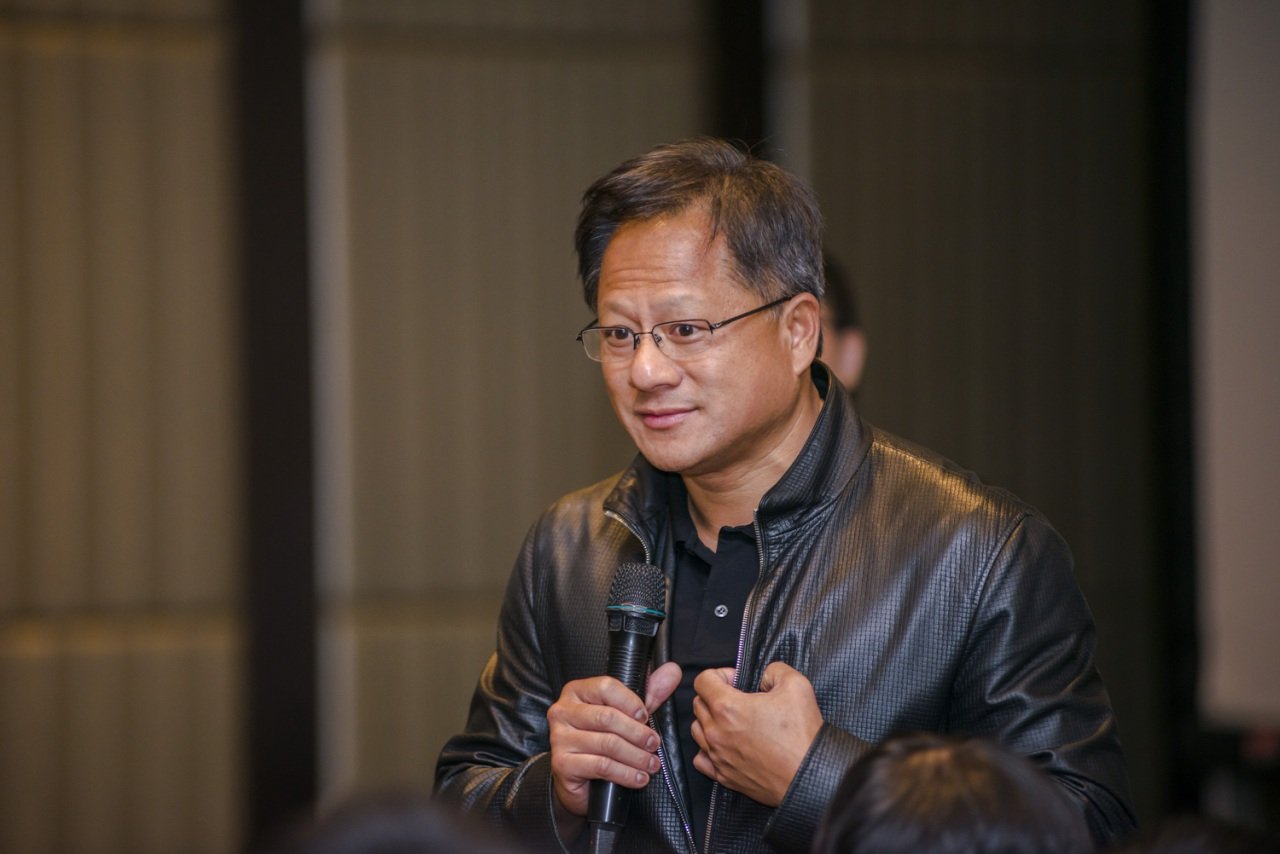
Nvidia co-founder Jensen Huang has resigned as CEO, president and director with immediate effect, and chief financial officer Colette Kress is interim CEO.